
Pruning hydrangeas: when, how hard and by type
By the GardenWorld editorial team, updated on
Want to see this in your garden?
Full design in HD: €7.99
How you prune a hydrangea depends on the wood on which it flowers. A mophead hydrangea flowers on last year's wood: you prune it lightly, after flowering from late August to September, by cutting away only the spent flowers and dead wood, and never hard. In winter and spring you leave it alone. Panicle hydrangea and Annabelle flower on new wood: you cut these back substantially in March, Annabelle to 30 to 50 cm above the ground and a panicle hydrangea by a third to half. You prune a climbing hydrangea lightly after flowering in July or August, a mountain hydrangea in late August.
Pruning hydrangeas by type and situation
| Type or situation | When | How hard | Guide |
|---|---|---|---|
| Mophead hydrangea (Hydrangea macrophylla) | After flowering, late August to September; not from November to March | Only the spent flower head and dead wood, never hard | Pruning mophead hydrangea |
| Panicle hydrangea (Hydrangea paniculata) | Mid-March to mid-April | A third to half, to the desired height | Pruning panicle hydrangea |
| Annabelle (Hydrangea arborescens) | March | Everything back to 30 to 50 cm above the ground | Pruning Annabelle |
| Oakleaf hydrangea (Hydrangea quercifolia) | March | Only dead wood and old flower heads | Pruning oakleaf hydrangea |
| Climbing hydrangea (Hydrangea petiolaris) | After flowering, July or August | At most 10 to 20 per cent of growth per year | Pruning climbing hydrangea |
| Mountain hydrangea (Hydrangea serrata) | After flowering, late August | At most 20 to 30 per cent, not in March | Pruning mountain hydrangea |
| Rough-leaved hydrangea (Hydrangea aspera) | After flowering, late August to September | Flowers 10 to 15 cm below the cluster, thin out 20 to 30 per cent of side shoots | Pruning rough-leaved hydrangea |
| Young hydrangea, first year | The entire first year | Only dead or damaged wood | Pruning young hydrangea |
| Old, overgrown shrub | June, just after flowering | Dead and pencil-thin wood away, then in one go to 60 to 80 cm, or spread over two years, one side each year | Rejuvenating old hydrangea |
| Frost damage | March to May | Back to healthy, green wood | Hydrangea and frost damage |
| Hydrangea in pot | After flowering, September or October; frost damage in March | Mophead hydrangea only the spent flowers, panicle hydrangea to 30 to 40 cm; after severe frost damage to 20 to 30 cm | Pruning pot hydrangea |
Old wood or new wood: the rule behind everything

A mophead hydrangea forms its flower buds in autumn, at the top of the branches that have grown that year. Those buds overwinter outside and open the following summer. Anyone who cuts back such a shrub hard in spring is cutting away precisely this summer's flowers. The same applies to oakleaf, mountain and rough-leaved hydrangea and to climbing hydrangea. That is why you prune a mophead hydrangea lightly and after flowering. If you doubt which branches are dead in spring, wait until May: then you will see which ones shoot. You can read more about the right time in when to prune a mophead hydrangea.
Panicle hydrangea and Annabelle make their flowers on the shoots that grow in spring. Vigorous pruning in March gives strong stems and full flowering, as explained in when to prune a panicle hydrangea. If you do not know which you have: a mophead hydrangea has rounded or flat flower heads, a panicle hydrangea has long, pointed plumes and Annabelle has large, white balls.
Free preview
Create your own garden design
Young hydrangea
In the first year after planting you prune hardly at all. Remove only dead or damaged wood, do not cut into the tips and never take away more than 10 to 20 per cent of the plant. From the second spring onwards you prune panicle hydrangea and Annabelle like a mature shrub. The complete approach by season is in pruning young hydrangea.
Mature hydrangea: annual maintenance
With a mature mophead hydrangea the work remains limited: after flowering remove the spent flowers, take out dead wood and possibly remove some of the oldest stems at the base if the shrub becomes too dense. Weak, thin branches that bear no flowers you thin out after flowering, as described in removing weak branches from hydrangea. What needs to be done after summer by type is in pruning hydrangea after flowering.
Pruning does not change the colour of a mophead hydrangea; that depends on the acidity of the soil. If you want to keep blue flowers, read keeping hydrangeas blue. Anyone who wants to give hydrangeas a place where they come into their own can first try them out in a garden design of their own garden.
Neglected or oversized hydrangea
You tackle an old, overgrown shrub in two steps: first remove all dead wood and pencil-thin branches, then the shrub itself. Panicle hydrangea and Annabelle tolerate being cut back vigorously in one go in March. For an old, overgrown shrub our guide describes one hard pruning in June, just after flowering: everything back to 60 to 80 cm, so that the shrub still grows for four to five months before winter. If you want to proceed more cautiously, spread it over two years: the first year cut back one side hard, the next year the other side. In both cases expect little flowering for one to two years; you can read how to approach this in rejuvenating old hydrangea. If your hydrangea does not flower, first check whether it has been pruned hard in spring or has had frost, as explained in hydrangea does not flower.
Frost damage, pot and hedge

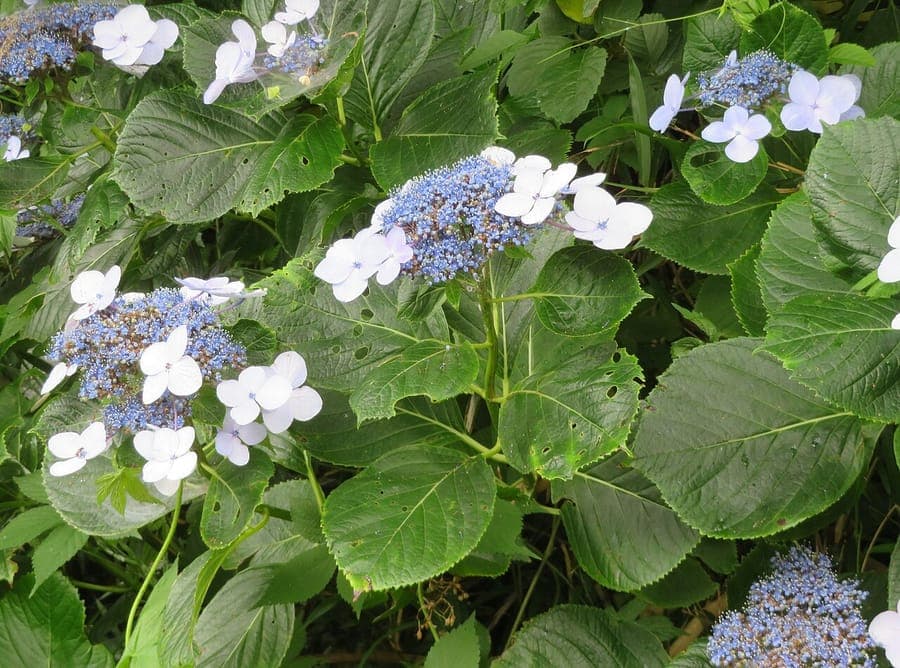
Photo by Cowboy Bob Sorensen on Unsplash
After a severe winter or late frost you wait until spring to see which branches are really dead; some branches that seem dead in April still shoot in May. Then prune back to healthy, green wood, as in hydrangeas and frost damage and frozen hydrangea buds. A mophead hydrangea in a pot you cut in September or October only the spent flowers; a panicle hydrangea in a pot you cut back then to 30 to 40 cm, so that it remains compact. Prune a pot hydrangea somewhat more cautiously than in the ground and place the pot in a sheltered spot in winter: roots in a pot freeze more quickly. See pruning pot hydrangea.
For a hedge the panicle hydrangea is the best choice: you cut it back in March to the desired height and shape and again in May for neat edges. An oakleaf hydrangea grows too naturally and irregularly for a formal hedge.
Step-by-step plan
Step 1: See which hydrangea you have
Rounded or flat flower heads indicate a mophead hydrangea, long pointed plumes a panicle hydrangea, large white balls Annabelle. This step-by-step plan is for the mophead hydrangea, the most planted type.
Step 2: Wait until after flowering
Prune a mophead hydrangea when flowering is over and the clusters fade, usually late August to September. In spring you do not cut it back: then you remove this summer's flower buds.
Step 3: Cut off the spent flowers
Cut off each spent flower head, just above the first healthy buds below. Leave the rest of the branch: that is where the plant makes next year's flowers.
Step 4: Remove dead wood
Branches that are grey or black, dry and brittle you cut away to healthy wood or to the base. If in doubt, leave the branch: in May you will clearly see which branches shoot.
Step 5: Thin out a shrub that is too dense
If the shrub is very dense, saw away a few of the oldest, thickest stems at the base. Never take away more than a third of the shrub and do not shorten the rest.
The last good moment
You prune a mophead hydrangea after flowering, preferably in September. From November to March you do not prune it: the flower buds for next summer are already at the tops of the branches, and what you cut away will not flower. You prune panicle hydrangea and Annabelle by mid-April at the latest. Can you still prune in October? Only dead or damaged wood and spent flowers.
Rejuvenating: how far can you cut back?
That depends on the type. You can cut back panicle hydrangea and Annabelle hard in one go in March, Annabelle even to 20 cm, and they flower again the same summer. An old, overgrown shrub you cut back in June, just after flowering, in one go to 60 to 80 cm, after all dead and pencil-thin wood has been removed. More cautious is to spread that over two years: the first year one side, the next year the other. Expect little flowering for one to two years.
Can you prune wrongly? The most common mistakes
Yes. The three mistakes made most often: cutting back a mophead hydrangea hard in spring (then you cut away this summer's flower buds), pruning all hydrangeas in the same way, and cutting away dead-looking branches too early in spring, while they can still shoot in May. Pruning panicle hydrangea and Annabelle too cautiously gives long, floppy branches with fewer flowers.
Frequently asked questions
How short can you prune a hydrangea?
That depends on the type. Annabelle may be cut back to 30 to 50 cm above the ground, or to 20 cm for a smaller shrub, and a panicle hydrangea by a third to half. With a mophead hydrangea you cut after flowering only the spent flower head, just above the first healthy buds; cutting back hard costs next year's flowering.
How do I get more flowers on my hydrangea?
Prune according to type: cut a mophead hydrangea only lightly, after flowering, and never hard in spring, and cut back panicle hydrangea and Annabelle substantially in March. Give the plant enough light; Annabelle and panicle hydrangea flower best with about six hours of sun per day.
When should I prune my hydrangea Annabelle?
In March, just before the growing season begins. Cut all stems back to 30 to 50 cm above the ground; Annabelle flowers on new wood and gives abundant flowers the same summer. Pruning too cautiously gives long, floppy stems with flowers only at the top.
Should I prune a neglected hydrangea?
Yes, but not always in one go. First remove all dead wood and thin, weak branches. A panicle hydrangea or Annabelle you then cut back substantially in March; an old, overgrown shrub you cut back in June, just after flowering, to 60 to 80 cm, or you spread that over two years, a different side each year.
Do you leave spent hydrangea flowers on in winter?
You may. With a mophead hydrangea you usually cut off the spent clusters after flowering, just above the first healthy buds, but you can also leave them as winter decoration and remove them in early January; then do not cut deeper into the branch. With a panicle hydrangea or Annabelle the old flowers automatically go with the pruning in March.
Create your own garden design
Upload a photo, pick a style, and get a photorealistic design with plant list in under a minute.
Full design in HD: €7.99


Related articles
PlantingHow to prune hortensia macrophylla (mophead hydrangea): complete guide
Mophead hydrangeas bloom on old wood. Learn the correct pruning strategy so you don't lose next summer's flowers.
PlantingHow to prune hortensia paniculata (panicle hydrangea): complete guide
Panicle hydrangeas bloom on new wood. Learn how to prune hard in spring for maximum blooms and tidy form.
 Planting
How to prune hortensia arborescens (Annabelle): complete guide
Annabelle is the easiest hydrangea to prune. Learn how to cut this shrub to ground level for big white flowers.