
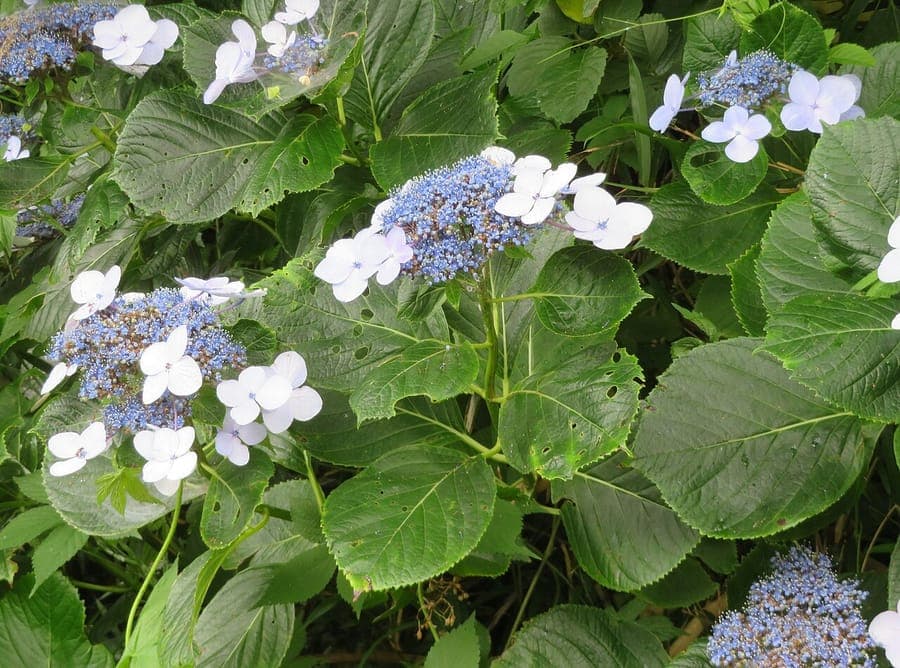
belvedere04 / CC BY 4.0, via Wikimedia Commons
Bigleaf Hydrangea: complete guide
Hydrangea macrophylla
Want to see Bigleaf Hydrangea: complete guide in your garden?
1 minute, no credit card
Overview
The Bigleaf Hydrangea (Hydrangea macrophylla) ranks among the most iconic garden plants in the temperate world. With its enormous, globe-shaped flower heads that provide weeks of colour in borders and on patios, it is no surprise that the hydrangea has been a garden staple for generations. The plant originates from Japan and China, where it has been cultivated for centuries and carries symbolic meanings of gratitude and sincerity.
Whether you want to brighten a shady corner or create a lush border for your front garden, the hydrangea offers a solution. On gardenworld.app you can create a garden design that accounts for the specific requirements of hydrangeas - shade, moisture, and the right soil acidity. Hydrangea macrophylla grows 100–180 cm tall and wide and comes in two main forms: the mophead with large round flower clusters and the lacecap with flat, umbrella-shaped inflorescences. Both forms are available in pink, blue, purple, white, and red.
Appearance and bloom cycle
The hydrangea flowers from June to September, and often into October if the weather stays mild. Mophead varieties produce round flower clusters measuring 15–25 cm across, while lacecap types form flat corymbs with fertile florets at the centre surrounded by larger sterile flowers at the edge. The flower colour is fascinatingly variable: the same plant may bloom pink in one garden and blue in another, depending on the soil pH.
The leaves are large (10–20 cm), oval, glossy dark green, and coarsely toothed. In autumn, the foliage of some cultivars turns red or purple before dropping. Stems are sturdy and woody, light brown to green. The spent flower heads dry beautifully on the plant and provide winter silhouette - many gardeners leave them in place until spring. Popular cultivars include 'Endless Summer' (repeat-flowering), 'Nikko Blue' (sky blue), 'Masja' (deep red), and 'Madame Emile Mouillere' (white).
Ideal location
Unlike many other flowering shrubs, the hydrangea prefers partial shade to full sun. The ideal spot receives morning sun and afternoon shade, or dappled light throughout the day. Beneath trees, along the north side of a wall, or in the shelter of a fence are typical locations where hydrangeas thrive.
In full sun, the flowers scorch quickly - especially white and light-pink cultivars - and the plant wilts in hot weather even with adequate water. Deep shade, conversely, leads to reduced flowering. A sheltered spot out of the wind is advisable because late frost in April–May can damage flower buds. Space hydrangeas 100–120 cm apart to allow room for their generous spread.
Soil requirements
Soil is critical for hydrangeas - not just for growth but also for flower colour. Hydrangeas demand moisture-retentive, humus-rich soil that holds water well without becoming waterlogged. When planting, work a generous quantity of compost, leaf mould, or peat substitute into the soil. On dry sandy ground, add extra organic matter and apply a thick mulch layer.
Soil pH determines flower colour: below pH 5.5, flowers turn blue (due to aluminium uptake); above pH 6.0, they become pink. Intermediate values produce purple and lilac shades. White cultivars are not pH-sensitive. For blue flowers, work aluminium sulphate (40 g per plant, twice a year) into the soil or use a specialist hydrangea feed for blue blooms, available at most garden centres. For pink flowers, add garden lime to raise the pH.
Watering
The name 'Hydrangea' derives from the Greek 'hydor' (water) and 'angeion' (vessel) - and that tells you everything. Hydrangeas are thirsty plants that need regular watering. During the growing season (April–September), provide 10–15 litres per plant two to three times a week in dry weather. Check the soil daily in hot spells - when the top 3 cm is dry, it is time to water.
A thick mulch layer of 5–8 cm (compost, bark, or leaf mould) around the plant helps enormously to retain moisture and keep roots cool. Water early in the morning at the base of the plant. Avoid wetting the foliage, as damp leaves encourage powdery mildew and other fungal diseases. Container hydrangeas dry out much faster than ground-planted specimens - choose a generous pot (minimum 40 cm diameter) and check daily.
Free design
Want to see Bigleaf Hydrangea: complete guide in your garden? Make a free design now.
Pruning
Pruning hydrangeas is a topic that confuses many gardeners. The crucial point is that most Hydrangea macrophylla cultivars flower on old wood - the flower buds form in late summer of the previous year. If you prune these buds away, you will have no flowers the following year.
The best pruning method is: in March–April, remove only the spent flower heads by cutting just above the first pair of healthy buds below. Also remove dead and damaged wood. Never remove more than one-third of the plant in a single session. Every three to four years, cut a few of the oldest stems out at ground level for rejuvenation. Repeat-flowering cultivars such as 'Endless Summer' bloom on both old and new wood, so they tolerate harder pruning. Good pruning tools for hydrangea shrubs are available at most garden centres.
Maintenance calendar
March–April: Prune spent flower heads and dead wood. Apply the first feed with a slow-release organic fertiliser or specialist hydrangea food. Remove any frost damage.
May: New shoots grow rapidly. Check for aphids and slugs. Apply a thick mulch layer or top up the existing one.
June–August: Full bloom. Water regularly - this is the period when hydrangeas need the most moisture. Feed every four weeks with a liquid fertiliser until mid-August.
September–October: Flowering diminishes. Stop feeding to allow the plant to harden off for winter. Leave the spent flower heads on the plant - they protect the buds underneath from frost.
November–February: Dormancy. In severe frost (below -10°C), protect the plant with a thick mulch layer around the base and optionally fleece or hessian around the branches. Winter protection is especially important in the first year after planting.
Winter hardiness
Hydrangea macrophylla is moderately hardy, surviving temperatures down to approximately -15°C to -20°C (USDA zones 6–9). The roots and wood survive most UK and northern European winters without issue, but the flower buds - which form in autumn - are more vulnerable. Late frost in April–May is the greatest threat to flowering: a single night at -3°C to -5°C can destroy every flower bud.
Protection is straightforward: cover the plant with fleece or an old sheet when late frost is forecast. Ensure the covering reaches the branch tips where the buds sit. Plant hydrangeas in a sheltered spot, out of cold easterly winds. Container hydrangeas can be moved into an unheated shed or garage (0–5°C) during severe cold. Repeat-flowering cultivars are less vulnerable because they also bloom on new wood.
Companion plants
Hydrangeas combine beautifully with other shade-loving plants. Underplanting with hostas, ferns, heucheras, and astilbes creates a lush, layered display. The large leaves and round flower forms of the hydrangea contrast well with the fine textures of ferns and ornamental grasses.
For a romantic shade border, pair hydrangeas with Box (Buxus sempervirens) as a structural evergreen, Rugosa Roses (Rosa rugosa) on the sunnier edges, and rodgersia or ligularia as bold-leaved background plants. Avoid pairing with Mediterranean plants such as lavender - their needs are diametrically opposed. Butterfly Bushes (Buddleja davidii) can provide attractive height variation at the sunny margin of a hydrangea border.
Final thoughts
The hydrangea is a plant that gives generously: months of flowering, dramatic colours, and a lush appearance that transforms even the shadiest corners of your garden. With the right position, sufficient water, and careful pruning, hydrangeas reward you year after year with spectacular flower clusters.
Purchase your hydrangeas from a reputable garden centre - choose cultivars proven hardy in your climate, such as 'Endless Summer', 'Nikko Blue', or 'Masja'. On gardenworld.app you can create a garden design that showcases hydrangeas alongside the perfect companion planting for your specific garden. Choose your favourite colour, adjust your soil pH, and enjoy a garden that blooms all summer long.
Want to see Bigleaf Hydrangea: complete guide in your garden? Make a free design now.
Upload a photo, pick a style, and get a photorealistic design with plant list in under a minute.
No credit card required


Similar plants
Rugosa Rose: complete guide
Rosa rugosa
Everything about the Rugosa Rose (Rosa rugosa): planting, pruning, care and winter hardiness. Practical tips for abundant blooms in your garden.
English Lavender: complete guide
Lavandula angustifolia
Everything about English Lavender (Lavandula angustifolia): planting, pruning, care and overwintering. Practical tips for lush purple blooms.
Common Boxwood: complete guide
Buxus sempervirens
Everything about Common Boxwood (Buxus sempervirens): planting, pruning, topiary and box moth control. Practical tips for healthy, green hedges and shapes.