
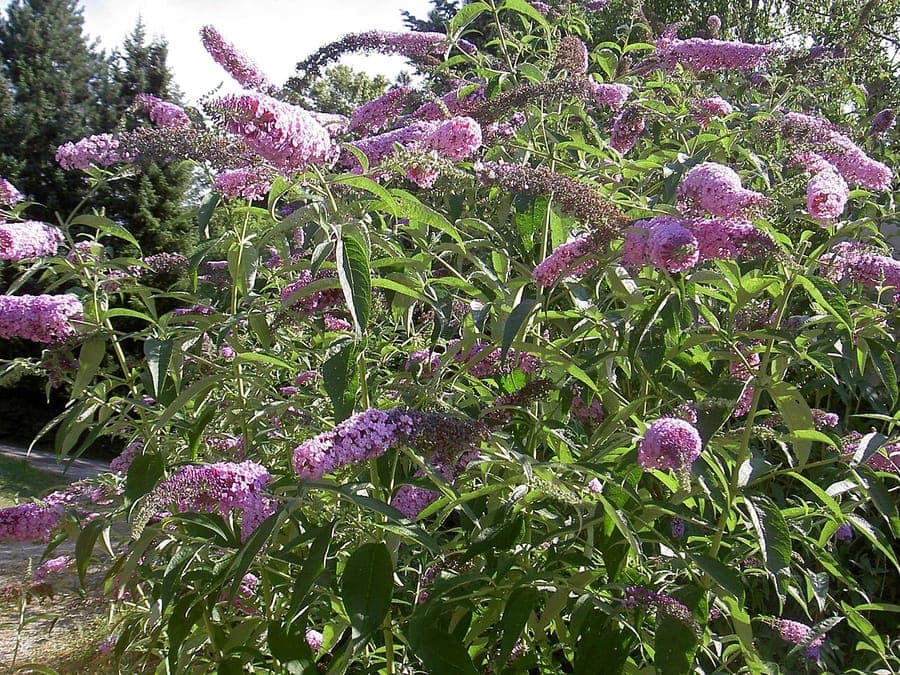
Pruning butterfly bush: when and how, by species or situation
By the GardenWorld editorial team, updated on
Want to see this in your garden?
Full design in HD: €7.99
A butterfly bush (Buddleja davidii) is pruned hard once a year, in early spring: in March or April, when the severest frost has passed and the lowest buds begin to swell. Cut all branches back to 30 to 50 cm above the ground, just above a healthy bud. If you want a taller shrub, stop at 60 to 80 cm. The shrub flowers on new wood, so the better you prune, the more young shoots and the more flower clusters you will get from June into autumn. In summer you only cut off spent flower clusters. Buddleja alternifolia and Buddleja globosa differ, as shown per species in the table below.
Pruning butterfly bush by species and situation
| Species or situation | When | How deep | Guide |
|---|---|---|---|
| Common butterfly bush (Buddleja davidii), annual pruning | March | All branches back to 30 to 50 cm; a young plant to 40 to 50 cm | Hard pruning Buddleja davidii |
| Recognising the right moment | April, as soon as the lowest buds swell | Back to 60 to 80 cm, branches thinner than a pencil completely away | When to prune butterfly bush |
| Late pruning, if spring was missed | May | Halve the long branches from last year approximately | Pruning butterfly bush in May |
| Buddleja alternifolia | Immediately after flowering, late June to early July | Spent branches away, back to 30 to 40 cm, or 50 to 60 cm for milder pruning | Pruning Buddleja alternifolia |
| Buddleja globosa | March lightly; late August remove seed clusters | Only dead wood, crossing branches and overly long shoots; no hard pruning | Pruning Buddleja globosa |
| Butterfly bush in pot | March | Back to 40 to 50 cm above the pot rim | Pruning Buddleja in pot |
| Preventing self-seeding | Immediately after flowering, from August to October | Spent clusters to the first healthy leaf below | Buddleja against self-seeding |
| Old, overgrown shrub | March | Everything back to 50 to 80 cm | Hard pruning Buddleja davidii |
Common butterfly bush: one hard pruning per year
The common butterfly bush grows quickly: without pruning you will get long, floppy branches after a few years that only flower at the top and the shrub becomes bare at the bottom. Because it flowers on this year's wood, you can cut it back substantially every spring. A mature shrub goes back to 30 to 40 cm, a young plant you keep at 40 to 50 cm so it first builds a sturdy framework. How to tackle this and what tools you need for thick branches, read in Hard pruning Buddleja davidii. Within a few weeks the new shoots appear and by summer the shrub is full again.
Free preview
Create your own garden design
March, April or May?
Guides differ on the precise month. In Hard pruning Buddleja davidii the major pruning falls in March, in when to prune butterfly bush in April, at the moment when the lowest buds swell and a green tip becomes visible. That bud test is the safest measure: if it is still severely cold or you see nothing moving yet, wait a week. If you have missed spring, it can still be done in May, as described in pruning butterfly bush in May. The flowering then shifts somewhat. After May you no longer prune hard.
Buddleja alternifolia and Buddleja globosa
Not every butterfly bush flowers on new wood. Buddleja alternifolia flowers in May and June on last year's wood. If you prune it hard in March, you cut away all the flower buds. Therefore prune it immediately after flowering, as explained in Pruning Buddleja alternifolia. The orange ball butterfly bush, Buddleja globosa, requires only light pruning: dead wood and crossing branches away and shorten overly long shoots, see Pruning Buddleja globosa.
In pots and against self-seeding
A butterfly bush in a pot is also pruned in March, to 40 to 50 cm above the pot rim, and you keep it in shape with regular water and feeding. The details are in Pruning Buddleja in pot. Every butterfly bush forms abundant light seed after flowering that travels with the wind. Therefore cut off the spent clusters before the seed ripens and dispose of them with household waste, not on the compost heap. When to do this per species, read in Buddleja against self-seeding. If you are still looking for a sunny spot for a butterfly bush, try it out first in a garden design of your own garden.
Step-by-step plan
Step 1: Choose the moment in spring
Wait until the severest frost has passed, in March or April. Look at the lowest buds: if they are swelling and you see a green tip, it is time. Prune on a dry day.
Step 2: Prepare the tools
Sharp secateurs for thin branches, loppers for branches up to approximately 15 mm and a saw for thicker wood. Clean the blades before you start.
Step 3: First remove dead and weak wood
Cut dead, brown branches back to the base, as well as branches thinner than a pencil and branches that hang downwards or cross others.
Step 4: Cut the rest back to 30 to 50 cm
Prune each remaining branch back to 30 to 50 cm above the ground, at an angle and approximately half a centimetre above a healthy bud. Keep a young plant at 40 to 50 cm. For a taller shrub you stop at 60 to 80 cm, as in when to prune butterfly bush.
Step 5: Clear up and let it grow
Remove the prunings and give some compost around the base. Until flowering you do not prune anymore: every shoot you cut now is one flower cluster less.
Step 6: Cut off spent clusters in summer
After flowering, from August to October, cut off the spent clusters to the first healthy leaf. This gives new flowers and prevents self-seeding.
The last good moment
Do the hard pruning at the latest in May. The later, the later the flowering. After May you only cut off spent clusters. In October and November you do not prune hard: fresh wounds and young shoots can then freeze. If you are too late, only remove dead branches and wait until spring.
Rejuvenating: how far can you cut back?
A common butterfly bush tolerates hard pruning well. An old, overgrown shrub you cut back in March in one go to 50 to 80 cm. It shoots within a few weeks and is back in shape after a season or two. Completely to the ground is also possible, but then it costs you flowering. Afterwards you keep it compact with the normal annual pruning.
Can you prune wrongly? The most common mistakes
Yes. The three mistakes made most often: pruning too cautiously, causing the shrub to become long and bare and only flower at the top, pruning hard in summer, causing the flower buds to disappear, and leaving spent clusters hanging, so the shrub self-seeds everywhere. With Buddleja alternifolia, hard pruning in March is the biggest mistake: it flowers on last year's wood.
Frequently asked questions
In which month should you prune a butterfly bush?
A common butterfly bush is pruned in March or April, when the severest frost has passed and the lowest buds swell. Those who miss spring can still prune in May, but then the shrub flowers somewhat later. Buddleja alternifolia is the exception: prune it immediately after flowering, late June or early July.
What is the last moment to prune a butterfly bush?
Do the hard pruning at the latest in May. In summer you only cut off spent clusters and in autumn only dead branches. Hard pruning in October or November is not advisable, because fresh pruning wounds and young shoots can then freeze.
How far back can you prune a butterfly bush?
A mature shrub may go back to 30 to 40 cm above the ground every year, a young one to 40 to 50 cm. An old, overgrown shrub you cut back in March to 50 to 80 cm. It will shoot again, but flowering may disappoint in the first year. Always cut just above a healthy bud.
Can you prune a butterfly bush incorrectly?
Yes. The three mistakes made most often: pruning too cautiously, causing the shrub to become long and bare and only flower at the top, pruning hard in summer, losing flower buds, and cutting a Buddleja alternifolia hard in March. A common butterfly bush forgives much: after too hard pruning it simply shoots again.
What can a butterfly bush not tolerate?
A butterfly bush cannot tolerate soil where water remains standing, especially not in a pot without holes in the bottom. It wants full sun, at least six hours per day. In shade it hardly flowers. If you leave the spent clusters hanging, it will self-seed everywhere in the vicinity.
Create your own garden design
Upload a photo, pick a style, and get a photorealistic design with plant list in under a minute.
Full design in HD: €7.99


Related articles
PlantingHow to prune Buddleja davidii: heavy annual pruning
Butterfly bushes grow fast and age without pruning. Learn how to prune Buddleja hard annually for compact, abundant blooms.
 Planting
When exactly to prune butterfly bush: complete guide
Prune butterfly bush at the right moment for shape and bloom. Learn exact timing for full flower balls all season.
PlantingHow to prune Buddleja alternifolia right after flowering
Buddleja alternifolia flowers on last year's wood. Prune right after bloom for optimal shape and abundant flowers next year.