
Crimean linden: complete guide
Tilia × euchlora
Want to see Crimean linden: complete guide in your garden?
1 minute, no credit card
Overview
The Crimean linden (Tilia × euchlora) is a hybrid between two lime species and belongs to the family Malvaceae. This hybrid derives from crosses between linden trees from the Caucasus and Black Sea regions. It is a mid-sized to large deciduous tree reaching up to 25 meters in height, with a dense, broad crown that is excellent for landscape planting and urban greenery.
The Crimean linden is renowned for its rapid growth, hardiness, and exceptional suitability for a variety of growing conditions. In Europe, it is a popular choice for parks, avenues, and larger private gardens where an impressive shade tree is desired. The tree traditionally carries the name of its origin, although the exact hybridization occurred under controlled conditions.
Appearance and bloom cycle
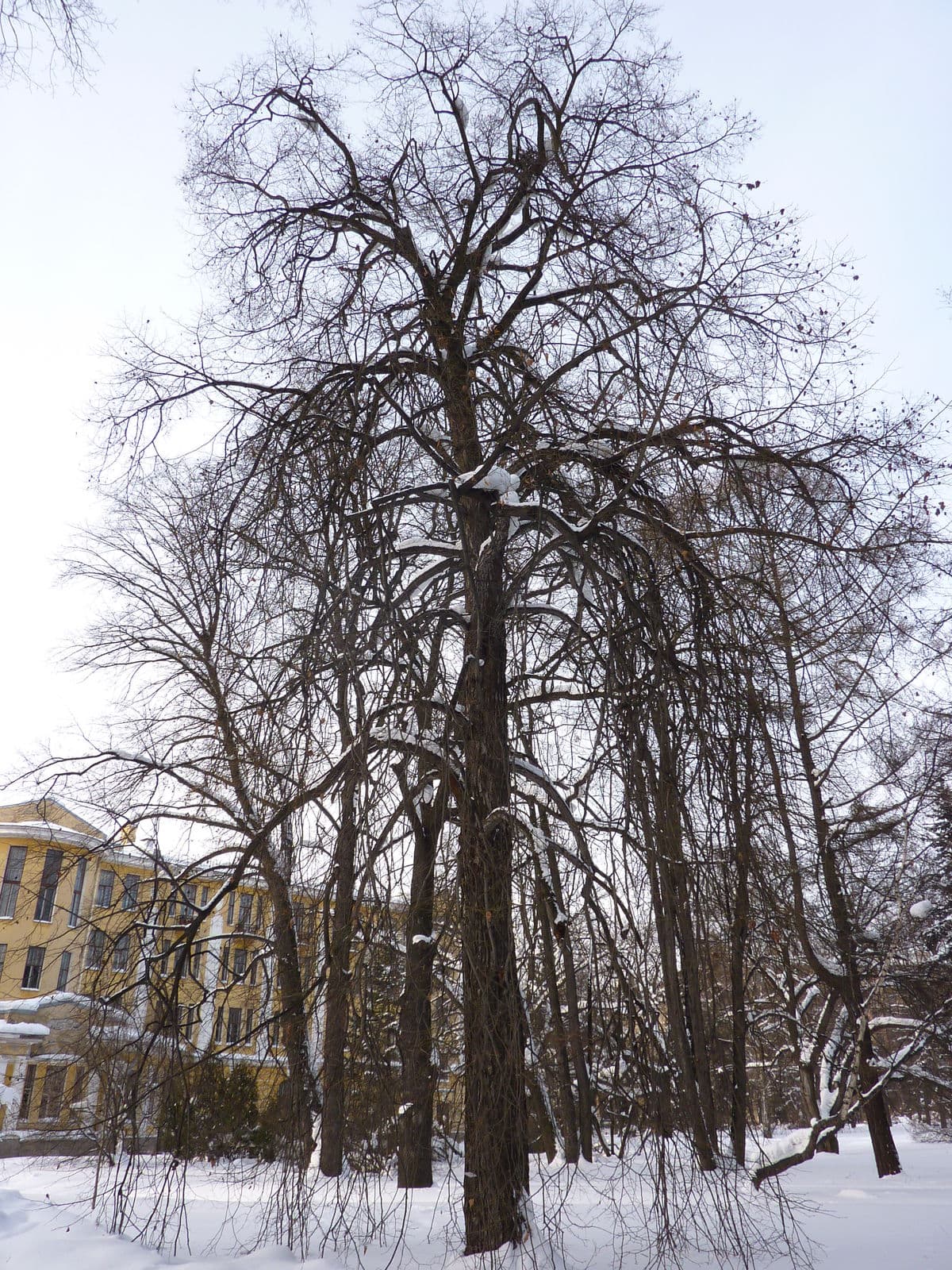
The Crimean linden grows into a majestic tree with a regular, densely branched crown. The trunk is dark gray to grayish-brown, with characteristic bark that becomes rougher on older specimens. The leaves are heart-shaped to oval, approximately 8-12 cm long and 6-10 cm wide, with a smooth, glossy surface that is dark green on the upper side and lighter green underneath.
From May to June, the characteristic linden flowers appear. These grow in small, fragrant flower clusters (cymae) attached to a long, green bract. The flowers are cream-yellow to soft yellow in color, small blooms approximately 1 cm across, extremely valuable for bee colonies and other pollinators. After flowering, small round, slightly fuzzy fruits (nutlets) develop, ripening in September-October.
Fall color is typically yellowish to ochre, and the tree sheds its leaves fairly late in the season. Older trees often display interesting fissured bark patterns.
Ideal location
The Crimean linden grows best in a fully sunny location or in very light part shade. In full sun, the tree reaches its maximum density and flowering profusely. The tree tolerates urban conditions well, including polluted air, as this hybrid is sufficiently robust against stress.
The tree requires a minimum of 3-4 hours of direct sunlight per day for optimal growth. In locations with excessive shade, the crown becomes less dense and flowering may diminish. Protection from heavy wind gusts is beneficial, although the tree itself is fairly wind-resistant.
Position the tree where its mature size (up to 25 m tall and 15-18 m wide) can be accommodated. This tree is unsuitable for small gardens due to its ultimate size. Ideal are open growth perspectives where the tree can assume its natural form.
Soil requirements
The Crimean linden is not picky regarding soil type but thrives best in fertile, well-draining soil with sufficient nutrients. The ideal pH is between 6.0 and 7.5, thus nearly neutral. The tree tolerates slightly acidic soils (pH 5.8) as well as weakly alkaline soils (up to pH 7.8).
The tree does not perform optimally long-term in compact, clayey soil; sandy or loamy soils are considerably better. Ensure good drainage to prevent water stagnation. Despite its preference for moderately moist soil, the tree, once established, is fairly drought-tolerant.
Addition of compost or ripened organic material at planting time aids root establishment and moisture retention in poor soils. In heavy clay soils, amendment is necessary through the addition of sand, gravel, and organic matter.
Free design
Want to see Crimean linden: complete guide in your garden? Make a free design now.
Watering
After planting, young trees need regular watering, especially during the growing season (April through September). Ensure the soil around the tree remains approximately 8-12 cm deep and moist, but not waterlogged. During periods of natural rainfall, supplemental irrigation can usually be stopped.
Older, established trees are fairly drought-tolerant and under normal conditions require no supplemental irrigation except during prolonged dry periods (more than 4 weeks without rain). In such cases, a thorough soaking of 50-100 liters of water per tree is worthwhile.
Avoid heavy, daily watering. Place the drip irrigation approximately 1-2 meters from the trunk and water the root zone evenly. Mulch around the tree to a distance of approximately 1.5 meters helps retain moisture and regulate root temperature.
Pruning
The Crimean linden naturally grows in a favorable balance and does not require much formal pruning. In the first few years after planting, gentle formative pruning can help shape the tree structure, but this is optional in well-growing specimens.
Remove dead, damaged, or crossing branches as needed. This can best be done in late winter (February) or early spring (March) before the growing season begins. Heavy pruning can limit flowering the following season.
In urban parks, maintenance pruning is sometimes done at 3-4 meters height for pedestrians, but this is not necessary in private gardens. Only in exceptional cases where branches grow into underlying structures is pruning strictly necessary.
Maintenance calendar
March-April: Check for winter damage; perform gentle formative pruning if needed. Apply an organic fertilizer around the tree.
May-June: The tree flowers abundantly. Enjoy the fragrance and spectacle. No further interventions needed.
July-August: Monitor for drought stress, especially young trees. Supplementary feeding may be beneficial in fertile soils.
September-October: Fruits ripen; some litter cleanup may be needed. Foliage colors and falls.
November-January: Tree is dormant. No work needed. Remove leaves from the root zone to prevent rot.
Winter hardiness
The Crimean linden is very winter-hardy and suitable for USDA hardiness zones 5-8 (European zones 5-8). This means the tree can withstand temperatures as low as -20°C to -25°C without serious damage. In most of Europe, including the Netherlands, Belgium, Germany, and France, this tree is completely winter-hardy.
Once established, mature specimens require no winter protection. Young trees may benefit in their first winter from mulching around the base (15-20 cm) to provide extra root protection. Remove this mulch in spring to prevent disease.
The tree tolerates wet freezes and repeated freeze-thaw cycles well. Ensure young plants are not in low-lying, moist depressions where frost air stagnates.
Companion plants
The Crimean linden combines well with other shade-tolerant plants beneath its canopy. Consider: shade-tolerant groundcovers such as ivy (Hedera helix), Polystichum ferns, and grasses such as Carex pendula.
At the edge of the shade zone, ornamental shrubs can thrive, such as Rhamnus frangula, Ilex aquifolium, and Cornus alba. For sunny underplanting outside the shade zone, perennials are possible: Rudbeckia, Achillea, and Salvia nemorosa.
As tree companions, other large trees work well such as oaks or maples, with spacing of at least 8-10 meters essential to prevent crown crossing and minimize food competition.
Closing
The Crimean linden represents a classic choice for those seeking a majestic, reliable shade tree with a long lifespan. With minimal maintenance requirements and excellent hardiness, it is a valuable addition to large landscapes. Both landscape architects and nature lovers appreciate this tree for its fragrance, form, and ecological value. For more information about garden planning, GardenWorld experts can provide advice and sketch designs. Visit GardenWorld for personalized garden advice and GardenWorld plant database for further data.
Want to see Crimean linden: complete guide in your garden? Make a free design now.
Upload a photo, pick a style, and get a photorealistic design with plant list in under a minute.
10,000+ gardens designed already
No credit card required


Similar plants
California flannelbush: complete guide
Fremontodendron californicum
Everything about California flannelbush (Fremontodendron californicum): sunny placement, drainage, pruning and care for this spectacular yellow-flowering shrub.
Hairy rose mallow: complete guide
Hibiscus moscheutos subsp. lasiocarpos
Full growing guide for hairy rose mallow (Hibiscus moscheutos subsp. lasiocarpos): location, soil, watering, winter hardiness and garden design tips.
Island mallow: complete guide
Malva assurgentiflora
Island mallow (Malva assurgentiflora) is a fast-growing flowering shrub with bold pink-purple blooms, perfect for warm, sunny gardens.