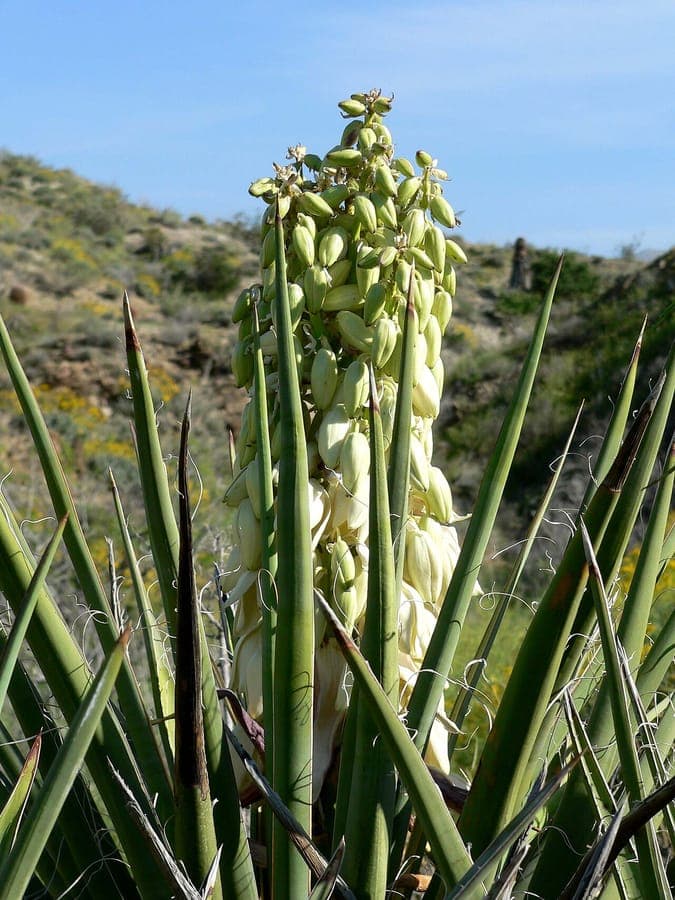
Stan Shebs / CC BY-SA 3.0, via Wikimedia Commons
Yucca schidigera: complete guide
Yucca schidigera
Want to see Yucca schidigera: complete guide in your garden?
Full design in HD: €7.99
Look after your Yucca schidigera with the GardenWorld app
Identify plants with your camera and get a care calendar with reminders for this plant.


Overview
Yucca schidigera, commonly called Mohave yucca or mojave yucca, is one of the most imposing and visually dramatic yucca species available for landscape planting. This tree-form specimen ranges from southern Nevada through Arizona into Mexico, where it dominates arid landscapes with epic visual presence. With potential heights of 12-20 feet and thick woody trunks, this is not a plant for timid gardeners but rather for those seeking architectural drama in grand xeriscapes.
Appearance and Bloom
Yucca schidigera grows as a true tree, potentially reaching 4-6 meters in height under ideal conditions. Trunks are noticeably thicker than other yucca species, developing interesting bark texture with age. Leaves are long, coarse-textured, grey-green to blue-green, clustered in dense crowns at branch tips. The entire plant silhouette is visible from considerable distance. Mature specimens produce massive flower spikes in spring to early summer bearing white to pale yellow flowers. These fragrant blooms attract pollinators and mark the seasonal pinnacle.
Ideal Location
Mohave yucca demands absolute full sun. This is not a shade or part-shade plant. Position it on the sunniest available site in your garden. It works spectacularly as a solitary specimen on open lawn, as an entry accent, or anchoring a large desert landscape design. Due to its ultimate size, provide abundant space; this plant will eventually outgrow most planting sites. Wind tolerance is excellent; it actually performs better in exposed, windy locations.
Soil
Drainage potential is fundamental. Sandy, gravelly, and rocky substrate is preferred. Heavy clay soils cannot be used without substantial amendment. Add gravel, sand, and perlite until at least 40-50% of the planting volume is improved. This plant thrives in poor soil and resents constant nutrition. Neutral to slightly acidic pH (6.0-7.5) is acceptable. Drainage matters more than fertility; better drainage overrides all other considerations. Ensure raised planting location if native soil retains moisture.
Free preview
Want to see Yucca schidigera: complete guide in your garden? Make a free preview of your design.
Watering
Once established, Yucca schidigera requires minimal water. During the first growing season, water regularly for good establishment, which may take 6-12 months. After that, water drastically declines. In arid climates, supplemental water may be completely unnecessary. In rainy regions, watering may never be needed. Check soil before watering; only irrigate when completely dry. Overwatering is the primary failure cause. This plant is engineered for drought.
Pruning
Pruning is very limited for this tree form. Remove only dead leaves at the base or damaged foliage. The natural tree form is what you want to preserve. Spent flower spikes can be removed but are not necessary. Old basal leaves may darken and can be carefully removed. Wear long sleeves and gloves; leaf margins are dangerously sharp. Avoid aggressive pruning.
Maintenance Calendar
Spring (Mar-Apr): Inspect for winter damage. Summer: Minimal care; no water in normal years. Fall: Winter preparation; drainage check. Winter: Observation only; no intervention needed.
Winter Hardiness
Yucca schidigera is hardy to USDA zone 8a-9a (-12 to -5 degrees Celsius). In zone 7, it will likely die in normal winters. Plant on very well-draining raised ground in colder zones. Heavy snow or wet winters in zone 8a can be fatal, especially for young plants. In its native Nevada/Arizona/Mexico range, it tolerates normal winters readily. In zone 8a protect young plant material against wet conditions. No mulch; drainage is always paramount.
Companion Plants
Mohave yucca is so dominant that companion selection must be careful. Plant smaller desert specimens around the base: creeping sedums, verbena, desert marigold. Smaller agave species create interesting form partners. Ornamental grasses like feather grass or blue grama provide good contrast. Avoid nutrient-hungry plants. Leave space; this yucca dislikes crowding. Stone and gravel form beautiful hardscape partners.
Closing Thoughts
Yucca schidigera is for large gardens with strong design vision. This is not a plant you will overlook or forget. If you seek dramatic architecture that will grow and mature for decades, Mohave yucca is your answer. Seedlings are available from desert plant specialists. Visit Gardenworld.app to position and visualize this impressive specimen perfectly within your landscape design.
Frequently asked questions about Yucca schidigera
Is Yucca schidigera winter hardy?
Yucca schidigera is hardy to USDA zone 8a-9a (-12 to -5 degrees Celsius). In zone 7, it will likely die in normal winters.
When and how do you prune Yucca schidigera?
Pruning is very limited for this tree form. Remove only dead leaves at the base or damaged foliage.
How much water does Yucca schidigera need?
Once established, Yucca schidigera requires minimal water. During the first growing season, water regularly for good establishment, which may take 6-12 months.
Where does Yucca schidigera grow best?
Mohave yucca demands absolute full sun. This is not a shade or part-shade plant.
What soil does Yucca schidigera need?
Drainage potential is fundamental. Sandy, gravelly, and rocky substrate is preferred.

See it in your garden
See Yucca schidigera in your garden
One photo of your garden and a few questions. You see the result in about a minute.
Try it with a photoIdentify this plant in your own garden. Identify a plant
Similar plants
Great camas (Camassia leichtlinii): planting and care
Camassia leichtlinii
Everything about great camas (Camassia leichtlinii): planting the bulbs, heavy wet soil, naturalising in grass, hardiness and the best partners for a flowering meadow.
Pineapple lily (Eucomis bicolor): planting, care and overwintering
Eucomis bicolor
Everything about the pineapple lily (Eucomis bicolor): planting the bulbs, watering and feeding, overwintering in pots or the ground, and the best border partners.
Pineapple lily (Eucomis comosa): growing and overwintering
Eucomis comosa
Eucomis comosa is the tallest and best-known pineapple lily, with creamy spikes topped by a leafy tuft in late summer. Planting, overwintering and leaf cuttings.
