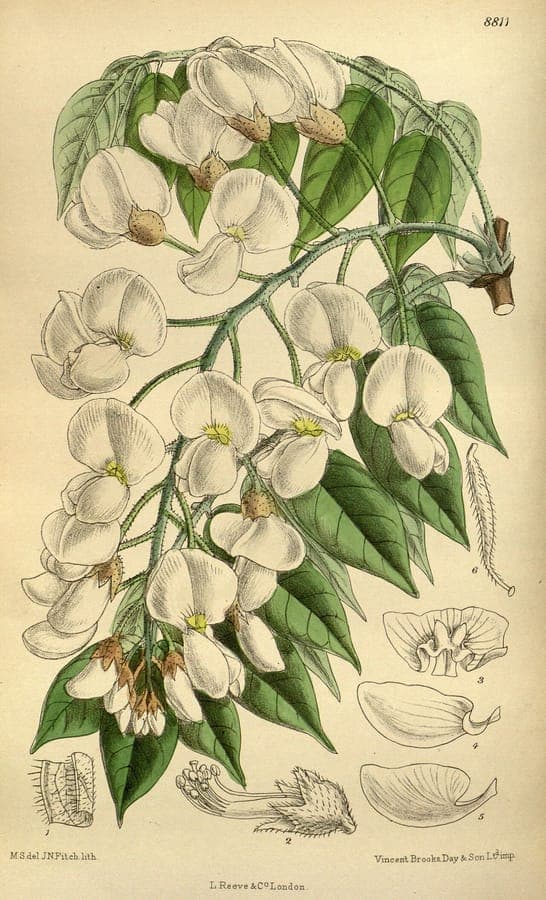
M.S. del., J.N.Fitch lith. / Public domain, via Wikimedia Commons
Wisteria brachybotrys: complete guide to silky wisteria care
Wisteria brachybotrys
Want to see Wisteria brachybotrys: complete guide to silky wisteria care in your garden?
Full design in HD: €7.99
Look after your Wisteria brachybotrys with the GardenWorld app
Identify plants with your camera and get a care calendar with reminders for this plant.


Overview
Wisteria brachybotrys, the silky wisteria, is an elegant flowering vine from the Fabaceae family. This ornamental plant is native to China and Japan and is also known as yama-fuji (Japanese for mountain wisteria). Unlike many wisteria species, this plant grows more compactly and produces shorter, densely clustered flower racemes.
This vine offers years of spring flowering with exquisite purple or white blooms. With its refined appearance, it is a classic choice for pergolas, fences, and arbors.
Appearance and Bloom
Wisteria brachybotrys reaches 6-10 meters or more, depending on support and care. Leaves are compound, pinnate, approximately 20-25 centimeters long, with 9-13 small leaflets. They color beautifully yellow in autumn.
Flowers are the showpiece: small, fragrant purple or white flowers clustered in short (5-15 cm), compact racemes. Flowering occurs in spring, before most foliage appears. The scent is pleasant and delicate, very attractive to pollinators.
Ideal Location
Wisteria brachybotrys grows best in warm, sunny positions. Ensure at least 6-8 hours of direct sunlight daily for optimal flowering. Partial shade is tolerated but produces fewer flowers.
Provide sturdy support: pergola, fence, or trellis. This plant grows vigorously and can become heavy; weak support breaks under the load. Ensure adequate space for growth.
Soil
Wisteria brachybotrys performs best in well-draining, moderately fertile soil. A pH around 6-7 is ideal. It also accepts somewhat acidic soil. Avoid waterlogging; this causes root rot.
Add organic material when planting. Regular feeding during growth season promotes flowering.
Free preview
Want to see Wisteria brachybotrys: complete guide to silky wisteria care in your garden? Make a free preview of your design.
Watering
Once established, this vine is fairly drought-tolerant. During growth and flowering season (spring-summer) water when soil feels dry. In autumn and winter water much less.
Ensure good drainage; waterlogging poses serious risk. Mulching around the base helps moisture retention and temperature regulation.
Pruning
Wisteria brachybotrys requires regular pruning to maintain shape and flowering. After flowering (June-July) cut back side shoots to approximately 30 centimeters. In late winter (February-March) heavier pruning is possible, but always retain main branches.
Remove dead, diseased, or weak wood. Also remove growth rubbing against support.
Maintenance Calendar
February-March: Prune in late winter; thin weak growth. April-May: Flowering; water regularly. June-July: Flowering ends; prune side shoots. August-September: Side shoots grow; check for pests. October-January: Rest period; minimal water, prepare for next season.
Winter Hardiness
Wisteria brachybotrys is winter-hardy to approximately -10 to -15°C. In temperate climates such as the UK it can overwinter outdoors. In harsher climates you can take protective measures such as wrapping young branches.
Companion Plants
This vine combines beautifully with other flowering climbers. Clematis, passion flower, or other wisterias create stunning combinations. Also at the base, early bulbs (snowdrops, crocuses) grow beautifully under the still-bare branches in spring.
Conclusion
The silky wisteria deserves a place in every garden with adequate space. With its refined flowering, pleasant scent, and elegant form, it is a classic choice for pergolas and arbors. Install this vine and enjoy full spring bloom for years to come.
Seedlings are available at garden centers. Choose healthy plants with strong stems. Visit gardenworld.app for more garden plant guides and design ideas.
Frequently asked questions about Wisteria brachybotrys
Is Wisteria brachybotrys winter hardy?
Wisteria brachybotrys is winter-hardy to approximately -10 to -15°C. In temperate climates such as the UK it can overwinter outdoors.
When and how do you prune Wisteria brachybotrys?
Wisteria brachybotrys requires regular pruning to maintain shape and flowering. After flowering (June-July) cut back side shoots to approximately 30 centimeters.
How much water does Wisteria brachybotrys need?
Once established, this vine is fairly drought-tolerant. During growth and flowering season (spring-summer) water when soil feels dry.
Where does Wisteria brachybotrys grow best?
Wisteria brachybotrys grows best in warm, sunny positions. Ensure at least 6-8 hours of direct sunlight daily for optimal flowering.
What soil does Wisteria brachybotrys need?
Wisteria brachybotrys performs best in well-draining, moderately fertile soil. A pH around 6-7 is ideal.

See it in your garden
See Wisteria brachybotrys in your garden
One photo of your garden and a few questions. You see the result in about a minute.
Try it with a photoIdentify this plant in your own garden. Identify a plant
Similar plants
Pineapple broom (Argyrocytisus battandieri): complete guide
Argyrocytisus battandieri
Everything about pineapple broom (Argyrocytisus battandieri), the Moroccan wall shrub with silver leaves and pineapple-scented flowers: site, pruning and hardiness.
Blue false indigo: complete guide
Baptisia australis
Everything about blue false indigo (Baptisia australis): position, soil, watering, cutting back, hardiness and toxicity. A long-lived prairie perennial with indigo flowers.
Warminster broom (Cytisus × praecox): complete guide
Cytisus × praecox
Everything about Warminster broom (Cytisus × praecox): position, poor soil, pruning after flowering, hardiness and what you need to know about its toxicity.
