
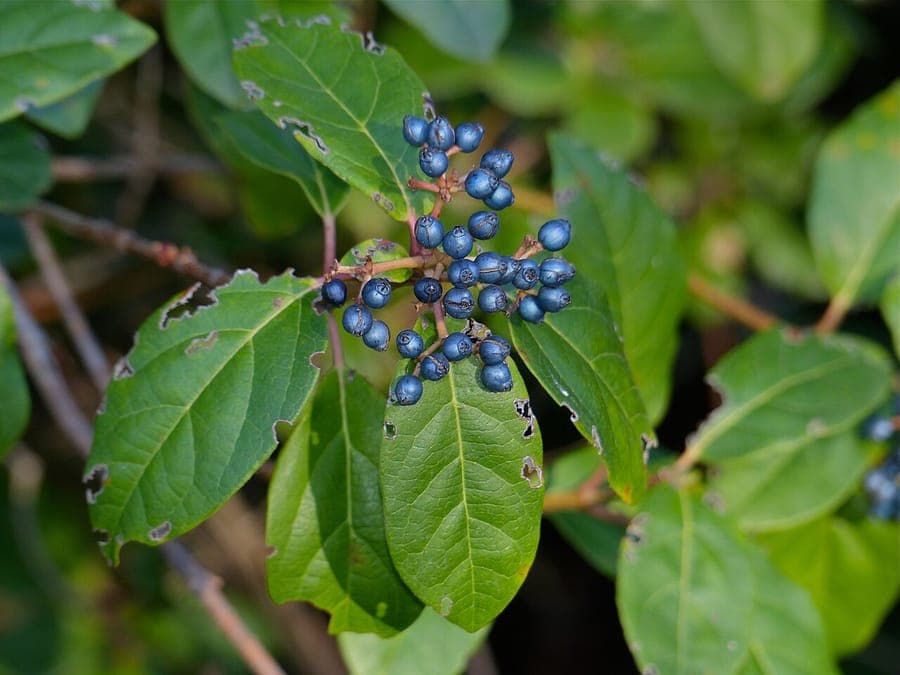
Bernard DUPONT from FRANCE / CC BY-SA 2.0, via Wikimedia Commons
Laurustinus: complete guide
Viburnum tinus
Want to see Laurustinus: complete guide in your garden?
1 minute, no credit card
Overview
Viburnum tinus - commonly known as laurustinus - is one of the few shrubs that brightens the dead of winter with genuine flowers. From November to April, dense flat-topped clusters of small white blooms open from pink buds, precisely when the rest of the garden lies dormant. This evergreen shrub from the Mediterranean basin combines winter flowering with glossy dark green foliage and decorative blue-black berries, offering ornamental interest every month of the year.
Laurustinus has grown steadily in popularity across temperate gardens, equally at home as a standalone specimen, in a mixed hedge, or in a large container on a terrace. On gardenworld.app you can create a garden design where Viburnum tinus provides structure and winter colour in exactly the right spot. The shrub reaches 2–3.5 metres in height and 1.5–3 metres in width, with a compact, rounded habit. Popular cultivars include 'Eve Price' (more compact, with deep pink buds), 'Gwenllian' (profusely flowering, pink buds opening white), and 'Spirit' (extra winter-hardy, compact growth).
Appearance and bloom
The foliage of Viburnum tinus is oval, leathery, 4–10 cm long, and glossy dark green on the upper surface, paler beneath. The leaves remain on the plant year-round, forming a dense, decorative screen that works superbly as a privacy hedge or windbreak. The foliage releases a faintly unpleasant scent when crushed - no issue in the garden, but worth knowing if you plan to use cut branches indoors.
The flowering is the headline act. From November onward, flat flower clusters (cymes) of 5–10 cm across appear, each composed of dozens of small five-petalled florets. The buds start deep rose to pink and open to creamy white - this simultaneous display of pink buds and white flowers is exceptionally charming. Flowering peaks in February and March but may begin in November during mild winters and continue through to April. The blooms attract early pollinators - a rare food source during the cold months. After flowering, small oval berries appear, ripening from green through blue to metallic dark blue-black, eagerly taken by blackbirds and thrushes.
Ideal location
Viburnum tinus is remarkably flexible regarding light and grows well in full sun, partial shade, and even light shade. This makes it ideal for positions where many other evergreen shrubs struggle. Flowering is most abundant in full sun to light partial shade; in deeper shade the plant flowers less but the foliage remains healthy.
The shrub appreciates some shelter from biting north and east winds, which can damage flower buds during harsh winters. A position along a wall, fence, or in the lee of larger planting is ideal. In urban gardens across the UK, the shrub thrives thanks to the milder microclimate. It tolerates sea spray and salt-laden air, making it a sound choice for coastal gardens from Cornwall to the Carolinas. A spacing of 80–100 cm creates a dense hedge; as a standalone specimen, allow 1.5–2 metres of space.
Soil requirements
Viburnum tinus is one of the most soil-tolerant shrubs in cultivation. It grows on clay, loam, sand, and even chalky ground. The ideal soil is moisture-retentive yet well-drained, with a pH between 5.5 and 8.0. On heavy clay it performs well provided the ground does not sit waterlogged for weeks in winter.
Enrich poor sandy soil at planting time with a generous shovelful of compost to improve moisture retention. On extremely wet ground, consider planting slightly raised or installing drainage. The shrub shows little susceptibility to soil-borne diseases and is unaffected by the box blight that has driven many gardeners to seek alternatives - Viburnum tinus makes an excellent substitute for box in low to medium hedges. Garden centres across the UK, USA, and Australia stock container-grown plants in various sizes.
Watering
Viburnum tinus has moderate moisture needs and is reasonably drought-tolerant once established. During the first and second year after planting, regular watering is important: give 10–15 litres per plant weekly to build a strong root system. Mulch the base with a 5–8 cm layer of compost or bark chips.
From the third year, supplementary watering is only needed during extended drought (more than three weeks). In an average British or northern European climate, an established plant manages perfectly well on rainfall alone. On very dry sandy soil, occasional supplementary watering during hot summers is sensible. Water at the base and avoid wetting the foliage, particularly in autumn and winter when fungal diseases such as mildew may strike. Container-grown plants dry out faster: check two to three times per week and use a pot at least 40 cm in diameter.
Free design
Want to see Laurustinus: complete guide in your garden? Make a free design now.
Pruning
Viburnum tinus needs little pruning, but an annual maintenance trim keeps the shrub compact and healthy. Always prune immediately after flowering, in April or May - prune later and you risk removing the flower buds that will bloom the following winter.
During pruning, remove dead, diseased, or crossing branches and shape the shrub as desired. For a formal hedge, lightly clip the top and sides. Viburnum tinus tolerates hard renovation pruning well: if the shrub has become too large or bare at the base, you can cut it to 30–50 cm from the ground in spring. It will resprout within two to three months, though it takes a year to flower again. Hedge trimming is done once or twice a year, after flowering and optionally again in late summer.
Maintenance calendar
November–February: The flowering season. Enjoy the blooms and monitor for frost damage in severe cold. Protect flower buds with horticultural fleece if temperatures drop below -8°C.
March–April: End of flowering, start of berry formation. Berries gradually colour from green to blue. Apply the first feed with an organic fertiliser or slow-release granules.
May: Pruning time. Shape the shrub immediately after flowering. Remove dead wood and crossing branches. Apply a mulch layer.
June–July: Active growth. Berries ripen to dark blue-black. Check for scale insects and mealybugs - treat with a soft-soap spray if needed.
August–September: Second light trim if desired (not too late, or you lose flower buds). The shrub begins setting flower buds for winter.
October: The first pink buds become visible. Apply winter protection to vulnerable specimens if hard frost is forecast.
Winter hardiness
Viburnum tinus is hardy to approximately -12°C to -15°C (USDA zones 7–10). In most winters across southern and western England, Wales, London, coastal regions, and much of the south-eastern United States, the shrub sails through without damage. In colder inland areas and during exceptionally harsh winters, the plant may suffer above-ground damage.
The flower buds are the most vulnerable part: at temperatures below -8°C they can freeze, resulting in the loss of winter blooms. The foliage may turn brown at -12°C, but the shrub recovers in spring provided the roots are intact. The cultivar 'Spirit' has been selected for extra hardiness and tolerates temperatures down to -15°C. Protect exposed specimens with fleece around the canopy and a thick mulch layer around the base. In severe frost you can also drape the shrub with a temporary frame of bamboo canes and horticultural fleece.
Companion plants
Viburnum tinus is a versatile shrub that fits into both formal and informal gardens. In a mixed hedge it combines handsomely with other evergreens such as Prunus laurocerasus (cherry laurel), Photinia, and Elaeagnus. As a specimen, it forms a fine backdrop for a perennial border.
At the base of the shrub, shade-tolerant ground covers such as Vinca minor (periwinkle), Pachysandra, and Hedera (ivy) work well. For a winter-flowering combination, plant Viburnum tinus alongside Hamamelis (witch hazel), Chimonanthus (wintersweet), and Helleborus (Christmas rose) - together they create a border that flowers from November through March. Hydrangeas (Hydrangea macrophylla) are excellent neighbours on the partially shaded side. Box (Buxus sempervirens) as a low hedge in front creates a classic, layered composition.
Closing
Viburnum tinus is the shrub that delivers when other plants rest. Its winter flowers, evergreen foliage, and ornamental berries make it one of the most valuable shrubs for small and medium-sized gardens. The low maintenance requirements and broad soil tolerance are a welcome bonus.
Choose the cultivar that suits your climate: 'Eve Price' for a compact garden, 'Gwenllian' for maximum bloom, or 'Spirit' for extra cold tolerance in harsher regions. Garden centres stock a good range, and specialist nurseries offer rarer selections. On gardenworld.app you can create a garden design where Viburnum tinus brings colour to the winter months and structure year-round. Plant a laurustinus in a sheltered spot this autumn and enjoy flowers throughout winter while the rest of the garden sleeps.
Want to see Laurustinus: complete guide in your garden? Make a free design now.
Upload a photo, pick a style, and get a photorealistic design with plant list in under a minute.
No credit card required


Similar plants
Common Boxwood: complete guide
Buxus sempervirens
Everything about Common Boxwood (Buxus sempervirens): planting, pruning, topiary and box moth control. Practical tips for healthy, green hedges and shapes.
Bigleaf Hydrangea: complete guide
Hydrangea macrophylla
Everything about the Bigleaf Hydrangea (Hydrangea macrophylla): planting, pruning, flower colour control and winter protection. Practical tips for lush blooms.
Butterfly Bush: complete guide
Buddleja davidii
Everything about the Butterfly Bush (Buddleja davidii): planting, pruning, care and attracting butterflies. Practical tips for a blooming butterfly garden.