Discover plants for your garden — filter by sun, water, bloom time and more.
230 plants
Abelia x grandiflora
Glossy Abelia is a graceful, semi-evergreen shrub producing an abundance of small, fragrant white-pink bell-shaped flowers from June to October. Bronze-tinted young foliage and persistent red calyces after flowering extend the decorative season. One of the longest-blooming garden shrubs.
Acanthus mollis
Bear's Breeches is an architectural perennial with large, deeply lobed, glossy dark green leaves that have inspired the Corinthian column in architecture for centuries. In summer, impressive flower spikes up to 1.5 metres tall bear white and purple hooded blooms. A true eye-catcher in any border.
Acer campestre
The field maple is a native, medium-sized tree with a rounded, dense crown and five-lobed leaves that turn a stunning golden-yellow in autumn. The tree is exceptionally wind-resistant and tolerates pruning superbly, making it widely used as a hedging tree. A valuable tree for birds and insects.
Acer palmatum
The Japanese maple is a graceful tree or large shrub with deeply lobed, palmate leaves that turn spectacular shades of red, orange, or gold in autumn. Its elegant growth habit makes it a focal point in any garden. Hundreds of cultivars exist, from compact and rounded to broad and spreading.
Achillea millefolium
Yarrow is a robust native perennial with finely divided, fern-like foliage and flat flower clusters in yellow, white, or pink. The plant blooms prolifically from June to September, attracting countless pollinators. Yarrow is remarkably drought-resistant and fits almost any garden style, from prairie borders to wildflower meadows.
Actaea simplex
Bugbane is a stately shade plant that blooms late in the season with elegant, fragrant white flower spires above dark purple foliage. The slender flower spikes appear in September and October when most plants have finished blooming. The combination of dark foliage and white flowers is breathtaking.
Actinidia kolomikta
Kolomikta Vine is a striking climber, prized above all for its spectacular foliage that flushes white and pink in spring as if painted. Small, fragrant white flowers appear in June. A unique ornamental climber that lends a distinctive accent to walls and pergolas.
Agapanthus africanus
The African Lily produces spectacular globe-shaped flower heads in blue or white on sturdy, tall stems above strap-like foliage. It blooms from June to August and lends a Mediterranean feel to any patio or container planting. In mild climates the plant is evergreen.
Agave americana
The century plant is an imposing rosette-forming succulent with broad, blue-green, sharply pointed leaves reaching up to two metres in length. The plant grows for decades before flowering once with a spectacular, multi-metre tall flower stalk — after which the mother plant dies, leaving behind offsets. As an architectural focal point it fits perfectly in modern and Mediterranean gardens.
Ajania pacifica
The Pacific chrysanthemum is a compact perennial with silver-green leaves edged in white. In October and November it produces abundant small, button-like yellow flowers. An ideal late-season bloomer that requires very little care.
Ajuga reptans
Bugleweed is a robust ground cover that spreads rapidly through runners. From April to June, dense spikes of blue-purple flowers rise above the dark green, glossy foliage. The plant is evergreen and forms a continuous carpet within a single growing season.
Akebia quinata
The chocolate vine is a vigorous, twining climber with graceful five-lobed foliage and unusual chocolate-purple flowers appearing in April and May. The blooms release a subtle, sweet fragrance reminiscent of chocolate and vanilla. In warm weather, striking pear-shaped fruits may develop.
Albizia julibrissin
The Silk Tree is an exotic presence with a broad, umbrella-shaped crown and finely divided, fern-like foliage. From June to August, striking, fluffy pink flowers appear that look like silken tassels. The tree brings a Mediterranean atmosphere to the garden and attracts butterflies and bees. The leaves fold together at dusk.
Alchemilla mollis
Lady's Mantle is a reliable perennial treasured for its beautiful, scalloped leaves that catch dewdrops like tiny pearls. From June to July, clouds of delicate yellow-green flowers appear, making excellent cut flowers. The plant forms attractive, rounded clumps and works beautifully as edging.
Allium giganteum
Giant allium is a striking bulb plant with large, globe-shaped purple flower heads on sturdy stems. The blooms appear in May and June and attract plenty of bees and butterflies. The dried seed heads remain decorative in the border well into autumn.
Amelanchier lamarckii
The snowy mespilus is a versatile ornamental tree with something to offer in every season. In April, cloud-like white blossom appears, followed by copper-bronze emerging foliage. In summer, dark purple edible berries ripen. The highlight is autumn, when the leaves turn spectacular shades of orange and red. A perfect tree for small gardens.
Amsonia tabernaemontana
Eastern bluestar is an elegant, low-maintenance perennial with willow-like leaves and ice-blue, star-shaped flowers in loose clusters in May and June. The narrow foliage turns a stunning golden yellow in autumn, making the plant decorative across two seasons. Over the years it forms a sturdy, vase-shaped silhouette.
Anemone blanda
Grecian Windflower is a charming, low-growing bulb that begins blooming as early as February with star-shaped flowers in blue, pink, or white. The fine, fern-like foliage forms low carpets that naturalise beautifully under trees and shrubs. One of the earliest spring bulbs to bring colour.
Anemone hupehensis
The Japanese anemone is an elegant perennial that graces the garden from August to October with graceful, saucer-shaped flowers in pink or white. On tall, wiry stems the blooms dance above the dark green, three-lobed foliage. The plant truly comes into its own in the second or third year, forming lush colonies.
Aquilegia vulgaris
Common Columbine is a charming perennial with graceful, spurred flowers in purple, blue, and pink hues. The grey-green, three-lobed leaves form a loose rosette. From May to June, the distinctive blooms appear on slender, branched stems — a delightful sight in any partly shaded border.
Aronia melanocarpa
Black Chokeberry is a compact, versatile shrub with year-round interest. In May, clusters of white blossom appear, followed by glossy black berries rich in antioxidants. In autumn, the foliage turns a spectacular red to deep purple. The plant is extremely hardy and tolerates variable soil conditions.
Aruncus dioicus
Goat's beard is a stately, woodland perennial with large, compound leaves and spectacular creamy-white flower plumes that rise above the foliage in June and July. This native plant can reach 180 cm tall and is perfect for partial shade beneath trees or along waterways.
Aster novae-angliae
New England Aster is the queen of the autumn garden, producing masses of purple to pink daisy-like flowers. From September to October, this vigorous perennial creates a colourful display buzzing with butterflies and bees. An indispensable plant for late-season colour.
Astilbe × arendsii
False Spirea is an elegant shade plant with feathery plumes in pink, red, or white above deeply cut foliage. It blooms from June to August, and the plumes retain their ornamental value even when dried. Astilbe thrives in moist, shady spots where many other plants struggle.
Athyrium filix-femina
The lady fern is a graceful, native fern with finely divided, light green fronds that have an airier and more elegant appearance than most other ferns. The plant forms attractive, funnel-shaped clumps that unfurl with charming, coiled fiddleheads in spring. A perfect companion for hostas and other shade-loving plants.
Baptisia australis
Blue wild indigo is a stately, long-lived perennial with blue-green trifoliate leaves and striking racemes of indigo-blue, lupin-like flowers in May and June. After flowering, decorative inflated dark seed pods appear that remain attractive into winter. The plant forms a sturdy, shrub-like clump that grows larger and more impressive each year.
Berberis thunbergii
Japanese Barberry is a compact, thorny shrub that captivates year-round with purple-red foliage, yellow spring flowers and red autumn berries. The plant excels as an informal hedge or a solitary accent. Thorns make the shrub a natural barrier.
Bergenia cordifolia
Elephant's Ears is a tough ground cover with large, leathery leaves that turn a stunning red in autumn and winter. From March to May, clusters of pink flowers appear on sturdy stems. The plant is evergreen, extremely hardy, and thrives in almost any position.
Betula pendula
Silver Birch is a graceful, fast-growing tree with striking white bark that peels in thin layers over the years. The fine, pendulous branches give the tree an airy, elegant silhouette. In autumn, the small triangular leaves turn bright yellow.
Bougainvillea spectabilis
Bougainvillea is a spectacular climber famed for its overwhelming mass of brightly coloured bracts in pink, purple or red. The true flowers are small and white, hidden among the showy bracts. This vigorous plant covers walls and pergolas in a dazzling tapestry of colour from May to October.
Brunnera macrophylla
Siberian Bugloss is an elegant shade plant with clouds of small sky-blue flowers above large, heart-shaped foliage. Blooming occurs in April and May, reminiscent of common forget-me-nots. The silver-toned leaves of popular cultivars remain decorative throughout the season.
Buddleja davidii
Butterfly Bush is the ultimate butterfly magnet with long, fragrant flower spikes in purple, pink or white from July to September. The shrub grows quickly and flowers abundantly, even in poor soil. On every warm summer day, dozens of butterflies flock to the honey-sweet blooms.
Buxus sempervirens
Boxwood is an evergreen shrub with small, glossy dark green leaves that is ideal for topiary and hedging. The plant grows slowly and can live for hundreds of years. Small green-yellow flowers appear in April and May, attracting early bees.
Calamagrostis x acutiflora
Feather Reed Grass is an elegant, stiffly upright ornamental grass with narrow, plume-like flower heads that appear in summer and fade to beige in autumn. Its compact, columnar silhouette makes it perfect as a vertical accent in borders and as a repeating element in modern gardens.
Callicarpa bodinieri
Beautyberry is a striking shrub that truly shines in autumn and winter thanks to clusters of glossy, violet-purple berries along its bare branches. In summer, modest pink flowers appear and the green foliage turns yellow in autumn. Plant several specimens close together for optimal berry production.
Callistemon citrinus
The crimson bottlebrush is a striking Australian shrub with cylindrical, vivid red flower spikes that look exactly like bottle brushes — hence the name. The flowers are packed with nectar, attracting bees and birds. The narrow, leathery leaves release a lemon scent when bruised. A spectacular container plant for sunny terraces.
Camellia japonica
Japanese camellia is a stunning evergreen shrub with glossy dark green foliage and spectacular, rosette-shaped flowers in red, pink or white appearing from January to April — a welcome splash of colour in early spring. The elegant blooms resemble roses and can be double or single-petalled.
Campanula persicifolia
The peach-leaved bellflower is a graceful perennial with slender stems bearing open, bell-shaped flowers in blue or white. Blooming in June and July, the plant self-seeds modestly, gradually drifting through the border. The narrow, glossy foliage forms compact rosettes at the base.
Campsis radicans
Trumpet vine is a spectacular climber with large, trumpet-shaped flowers in fiery orange to red. From July to September, exotic-looking flower clusters appear at the tips of the branches. The plant climbs with aerial roots and can reach impressive heights. A real showstopper on a warm, sheltered wall.
Canna indica
Indian shot is a spectacular tuberous plant with large, banana-like leaves and striking flowers in fiery red, orange or yellow from July until the first frost. The plant brings an exotic, tropical look to borders and patios and combines beautifully with ornamental grasses and other late bloomers.
Carex morrowii
Japanese Sedge is an elegant, evergreen ornamental grass with finely arching leaves often edged in white or cream. The plant forms neat, dome-shaped clumps that remain decorative year-round. Ideal for shady spots where few other ornamental grasses thrive.
Carpinus betulus
The European hornbeam is a versatile native tree that excels both as a free-standing specimen and in hedge form. The ribbed, serrated leaves turn golden-yellow in autumn and — like beech — remain on the hedge throughout winter. The tree has a characteristically muscular trunk pattern.
Catalpa bignonioides
The Indian Bean Tree is a distinctive ornamental tree with enormous, heart-shaped leaves and large panicles of white, trumpet-shaped flowers with yellow and purple markings in June and July. After flowering, long, slender seed pods hang on the tree well into winter. An excellent shade tree.
Ceanothus thyrsiflorus
California Lilac is a spectacular, evergreen shrub covered in masses of sky-blue flower panicles in spring. The small, glossy dark green leaves provide an attractive backdrop year-round. One of the few shrubs that produce truly blue flowers.
Centranthus ruber
Red Valerian is a carefree, long-flowering perennial with clusters of small red to pink flowers on grey-green stems. Blooming from May to September, it thrives even in the most impoverished conditions — in cracks, on walls, and in dry soil.
Cercis siliquastrum
The Judas tree is a spectacular small tree that bears bright pink flowers directly on the bare branches and even the trunk in April and May — a rare phenomenon called cauliflory. After flowering, heart-shaped blue-green leaves appear, giving the tree a Mediterranean character. The Judas tree slowly develops into a graceful, multi-stemmed specimen.
Chaenomeles speciosa
Japanese Quince is among the earliest-flowering shrubs in spring. From February, fiery red, pink, or white flowers can appear on still-bare branches. Later, small, hard quince fruits follow that are edible when cooked. The thorny branches also make the plant suitable as an informal hedge.
Chelone obliqua
Turtlehead gets its name from its unusual flower shape that resembles a turtle's head. The pink, lip-shaped flowers appear in dense spikes from August to September. This sturdy plant thrives in moist, shady spots and is perfect for waterside planting.
Choisya ternata
The Mexican orange is an evergreen shrub with glossy, trifoliate leaves that release a delightful orange scent when touched. In April and May masses of star-shaped white flowers appear that are equally fragrant. A versatile shrub for both sun and partial shade.
Cistus ladanifer
The gum rockrose is an aromatic evergreen shrub from the Mediterranean with sticky, resin-scented leaves and large, papery white flowers with a striking dark blotch at the base of each petal. Each flower opens for just one day, but the plant produces new buds for weeks through May and June.
Citrus limon
The lemon tree is an elegant evergreen that can bloom and bear fruit almost year-round. Its wonderfully fragrant white flowers appear in clusters and give way to bright yellow fruits. As a container plant it is popular on sunny terraces and in conservatories.
Clematis montana
Mountain clematis is a fast-growing climber that becomes smothered in white or pink flowers during May and June. The plant can cover large surfaces in a short time, making it ideal for growing over pergolas, fences, and unsightly walls. The lightly fragrant blooms appear on the previous year's wood.
Clematis viticella
The Italian clematis is a vigorous, healthy climber producing an abundance of medium-sized, bell-shaped purple to blue flowers from July to September. Unlike many other clematis species, it is highly resistant to the dreaded clematis wilt. Ideal for pergolas, fences, and trees.
Convallaria majalis
Lily of the Valley is an enchanting shade plant with delightfully fragrant, small white bell-shaped flowers on arching stems. The plant blooms in April and May, spreading an unforgettable sweet scent through the garden. Note: all parts of the plant are poisonous.
Coreopsis grandiflora
Tickseed is a cheerful perennial that floods the garden with bright yellow daisy-like flowers from June to September. The plant grows compactly and is particularly suited to dry, sunny borders. Butterflies and bees happily visit the blooms.
Cornus kousa
Japanese Dogwood is an elegant large shrub or small tree with striking white bracts that sit like stars on the branches in June and July. In autumn, raspberry-shaped red fruits appear and the foliage turns deep crimson. The horizontal branching pattern gives the tree year-round character.
Cornus sanguinea
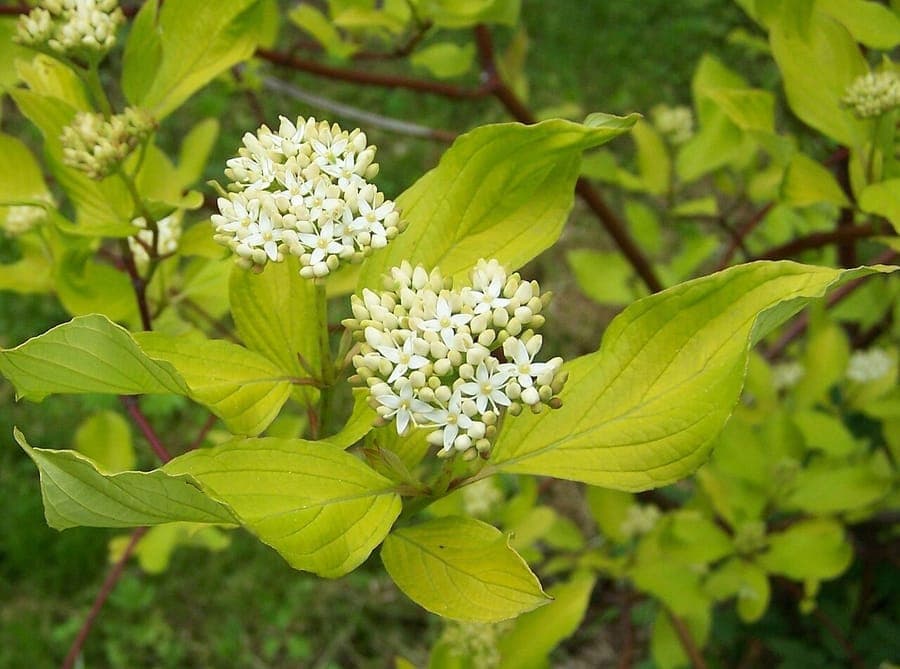
Common dogwood is a native shrub with white flower clusters in June, dark blue berries in late summer, and striking red foliage and red stems in autumn and winter. The blood-red winter stems in particular make this shrub a valuable asset for the winter garden.
Cortaderia selloana
Pampas Grass is an imposing ornamental grass with tall, silvery or pink plumes rising above narrow, arching foliage from September to November. The plumes can reach 3.5 metres and provide a spectacular autumn and winter silhouette. A true eye-catcher in any garden.
Corydalis lutea
Yellow corydalis is a charming, long-flowering perennial with fern-like light green foliage and clusters of yellow, spurred flowers. From May to October it continually produces new blooms. The plant self-seeds effortlessly in wall crevices and between stones.
Corylus avellana
The hazel is a native large shrub or small tree that enlivens the garden as early as February and March with long, golden-yellow catkins — one of the first food sources for bees after winter. In autumn, hazelnuts follow in their characteristic green husks. Hazel grows multi-stemmed and makes a beautiful native hedge or specimen.
Cotinus coggygria
The smoke tree is a spectacular ornamental shrub with cloud-like, fluffy flower plumes in shades of pink appearing in June and July, giving the tree its 'smoky' appearance. Cultivars with dark purple foliage provide dramatic colour throughout the season. Autumn colour is equally impressive.
Cotoneaster horizontalis
Wall Cotoneaster is a versatile shrub with a distinctive herringbone branch pattern. Tiny pink flowers appear in June attracting bees, followed by masses of bright red berries in autumn. The small leaves turn a beautiful red before falling.
Crambe cordifolia
Greater Sea Kale is a spectacular perennial that produces a cloud of thousands of tiny white flowers on widely branching stems in June and July. The bloom resembles a giant white Gypsophila and is truly breathtaking. The large, rounded, dark green leaves form a substantial rosette at the base. An unmatched presence in the summer border.
Crocosmia 'Lucifer'
Montbretia 'Lucifer' is a spectacular bulb with fiery red, funnel-shaped flowers on gracefully arching stems. Blooming occurs in July and August above sword-shaped green foliage. The vivid red colour makes this cultivar one of the most striking summer bloomers in the border.
Crocosmia masoniorum
Giant Montbretia is a striking bulbous plant with arching flower stems laden with fiery orange, funnel-shaped blooms. The sword-shaped leaves form dense clumps and the flowering lasts from July to September. An excellent choice for warm colour schemes in summer borders.
Crocus vernus
The Spring Crocus is one of the very first flowers to open in February and March, in shades of purple, yellow, or white. The small chalice-shaped blooms often appear before the foliage has fully developed. Crocuses naturalise beautifully in lawns and are an early food source for bees after winter.
Cytisus scoparius
Common Broom is a cheerfully flowering shrub that becomes smothered in bright yellow, butterfly-shaped flowers in May and June. The fine, broom-like green stems give the plant an airy look, even in winter. Broom is especially suited to dry, poor soil and enriches the ground with nitrogen through root nodules.
Dahlia pinnata
The dahlia is the queen of the late summer garden, with an overwhelming variety of flower forms and colours. From July until the first frost, this tuberous plant tirelessly produces blooms in red, pink, yellow, or white — from small pompons to dinner-plate-sized flowers. Dahlias make excellent cut flowers lasting weeks in a vase.
Daphne odora
Winter daphne is a compact evergreen shrub with leathery dark green foliage and exceptionally fragrant pink-white flowers that appear in the depths of winter, from February to March. The penetrating, sweet scent can be detected metres away. A jewel for the sheltered garden.
Delphinium elatum
Larkspur is an imposing border plant whose tall spikes of blue to purple flowers become the focal point of any garden. It blooms in June and July and can reach up to 180 cm. The plant is toxic if ingested, but indispensable for those seeking dramatic vertical accents.
Deutzia gracilis
Slender deutzia is a graceful, compact shrub that becomes covered in clusters of pure white, star-shaped flowers in May and June. The slender, arching branches bow under the weight of blooms, creating an elegant cascading effect. This small shrub fits any garden and is particularly suited to front gardens.
Dianthus caryophyllus
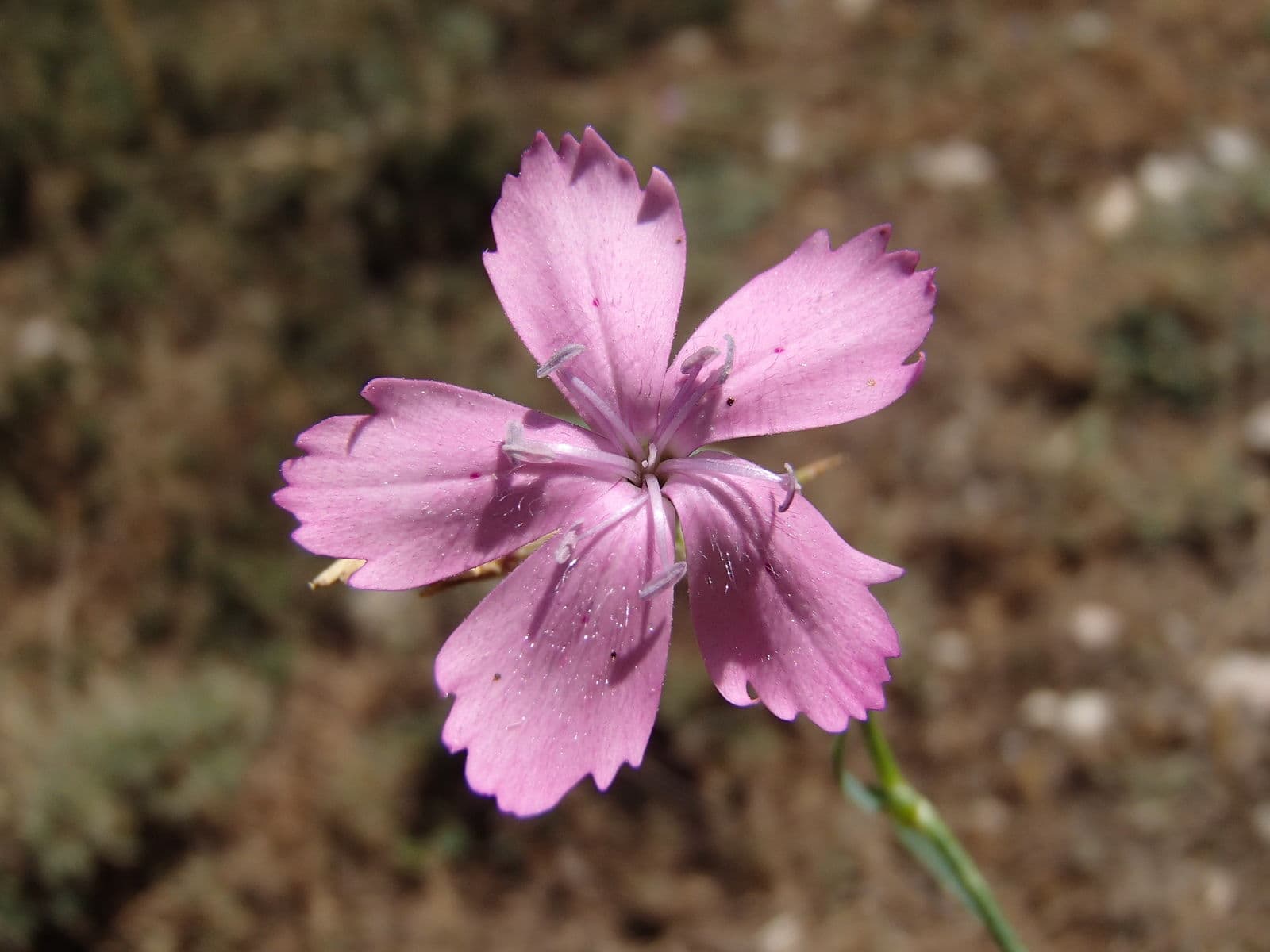
The carnation is a classic garden plant with fragrant, ruffled flowers in shades of pink, red, and white. The blue-green, grass-like foliage forms a compact, cushion-shaped mound. Carnations bloom profusely from June to August and are popular with pollinators.
Dicentra spectabilis
Bleeding Heart is a charming perennial with gracefully arching flower sprays full of heart-shaped pink and white blooms. Flowering appears from April to June above refined blue-green foliage. After blooming, the plant retreats and the foliage disappears entirely.
Digitalis purpurea
Foxglove is an imposing plant with tall flower spikes packed with thimble-shaped blooms in purple, pink, or white. The flowers appear from June to July on one-sided spires reaching up to one and a half metres. The plant is biennial but self-sows reliably, returning each summer. Note: all parts are poisonous.
Dryopteris filix-mas
The male fern is a robust, native fern that forms a stately funnel of bipinnate fronds. The foliage is bright green and elegantly arching, creating a lush atmosphere in shaded garden areas. The plant is semi-evergreen to evergreen and tolerates more drought than most ferns. A reliable choice for shade borders and woodland gardens.
Echinacea purpurea
Purple Coneflower is a sturdy perennial with distinctive pink-purple petals surrounding an orange-brown cone. The flowers appear from July to September and are a magnet for butterflies and bees. In autumn and winter, the seed heads attract goldfinches and other seed-eating birds.
Elaeagnus × ebbingei
Ebbinge's Silverberry is a fast-growing, evergreen shrub with leathery, silver-green leaves that are brilliantly silver on the underside. In October and November, small, creamy-white, wonderfully fragrant flowers appear. The plant is remarkably versatile: excellent as a hedge, windbreak, or specimen. Tolerates sea wind and urban conditions.
Eranthis hyemalis
Winter Aconite is a cheerful yellow spring flower that wakes the garden from its winter sleep alongside snowdrops. The butter-yellow cup-shaped blooms are surrounded by a green collar of leaves. The tubers naturalise happily and eventually form golden carpets beneath trees and shrubs.
Eryngium planum
Sea Holly is a striking perennial with steel-blue, thistle-like flower heads on branching stems. Blooming in July and August, it adds unique texture and colour to sunny borders. Excellent as a dried flower and a magnet for pollinators.
Euonymus alatus
The burning bush is a broadly spreading shrub famous for its spectacular, vivid red autumn colour — one of the most intense of all garden plants. The branches display distinctive cork-like wings. After leaf fall, small pink-orange fruits appear that attract birds.
Euonymus fortunei
Wintercreeper is a versatile evergreen shrub that can function as both ground cover and climbing plant. The variegated foliage with green and white or golden margins provides year-round colour. The plant is particularly suited to filling shady spots in the garden.
Eupatorium purpureum
Joe Pye weed is an impressive perennial that can reach up to two metres in height. The large, dome-shaped flower clusters in pink to purple appear from July to September and are a paradise for butterflies. A powerful structural plant for the back of large borders.
Euphorbia characias
Mediterranean Spurge is an architectural, evergreen perennial with blue-green foliage and striking yellow-green flower heads in spring. The columnar flower stems can reach 120 cm and bring colour and structure to the garden early in the season.
Fagus sylvatica
The European beech is a majestic deciduous tree and one of Europe's most iconic species. Its smooth, grey bark and glossy green leaves that turn bronze in autumn are unmistakable. As a hedge, beech retains its brown foliage throughout winter, providing a dense windbreak.
Fatsia japonica
Japanese aralia is a tough evergreen shrub with spectacularly large, glossy dark green, palmate leaves that create an exotic, tropical feel. In October and November rounded clusters of creamy-white flowers appear, followed by black berries that attract birds. Excellent as a structural plant in shady gardens.
Festuca glauca
Blue Fescue is a compact, evergreen ornamental grass with a striking blue-grey colour that forms dense, dome-shaped tufts. In June and July, beige flower plumes emerge above the foliage. The grass is ideal for dry, sunny borders, rock gardens, and contemporary plantings.
Ficus carica
The common fig is an atmospheric Mediterranean tree with large, deeply lobed leaves and a characteristic broad crown. The hidden flowers sit inside the fig fruit and are not visible from outside. Given a warm, sheltered position, the tree produces sweet, juicy figs from summer to autumn. Surprisingly hardy with protection.
Forsythia × intermedia
Forsythia is one of the first shrubs to bloom in spring with an explosion of bright yellow flowers along bare branches. From March to April, this robust shrub turns the garden golden before the leaves appear. Forsythia grows quickly, is fully hardy, and makes a stunning specimen or hedge plant.
Fraxinus excelsior
European Ash is a stately, fast-growing native tree with an open, airy crown and compound leaves that appear late in spring. In autumn, the foliage turns golden yellow. Ash plays a vital ecological role, supporting hundreds of species of insects and lichens. Unfortunately, the species is threatened by ash dieback disease.
Fritillaria imperialis
Crown Imperial is a majestic bulb with a whorl of large, pendant, bell-shaped flowers in orange, red, or yellow, crowned by a tuft of green leaves. Blooming in April and reaching up to a metre tall, its pungent musky bulb scent deters voles and moles.
Gaillardia aristata
Blanket Flower is a striking perennial with warm bicoloured blooms in red and yellow, like small suns. Flowering lasts from June through September and attracts plenty of butterflies and bees. This uncomplicated plant is ideal for dry, sunny gardens.
Galanthus nivalis
The Snowdrop is one of the very first spring bloomers, often appearing while snow still lies on the ground. The graceful, bell-shaped white flowers hang from slender stems and herald the end of winter. The bulbs multiply rapidly and eventually form beautiful white carpets.
Gaura lindheimeri
Whirling Butterflies is an elegant perennial with graceful, swaying stems adorned with butterfly-shaped white or pink flowers. Blooming non-stop from June to October, it dances beautifully in the breeze, lending an airy, romantic feel to any border.
Genista lydia
Lydian Broom is a compact, dome-shaped shrub that becomes completely covered in small, bright yellow flowers in May and June. The fine, densely branched green stems arch gracefully and form a tight cushion. The plant is ideal for rock gardens, slopes, and the front of dry borders.
Geranium 'Rozanne'
Geranium 'Rozanne' is one of the longest-flowering perennials, producing bright blue-violet blooms from June until the first frost. It grows as a wide, low mound and makes an outstanding ground cover. Rozanne is tough, disease-free, and fits nearly any garden style.
Ginkgo biloba
The Maidenhair Tree is a living fossil with unique, fan-shaped leaves that turn brilliant gold in autumn and drop almost simultaneously — a breathtaking spectacle. Extremely hardy, tolerant of urban conditions, and virtually pest- and disease-free.
Grevillea robusta
The silky oak is a fast-growing, imposing Australian tree with finely divided, fern-like foliage and striking, one-sided orange-yellow flower plumes from April to June that are rich in nectar. As a young tree it can be kept as a container plant for its graceful leaf texture. In subtropical climates it grows into a majestic specimen.
Hakonechloa macra
Japanese Forest Grass is an exceptionally graceful grass with elegantly cascading foliage in warm golden-green tones. The leaves ripple like a waterfall over the edges of pots and borders. In autumn, the foliage turns deep red to orange for a spectacular final display.
Hamamelis mollis
Chinese Witch Hazel is a remarkable shrub that blooms in the depths of winter with fragrant, spider-like yellow flowers on bare branches. The delicate blooms withstand frost and bring welcome colour to the darkest months. In autumn, the large leaves turn spectacular yellow and orange.
Hedera helix
Common Ivy is an evergreen climber that uses aerial roots to cover walls, fences, and trees. Its dark green, glossy leaves provide year-round greenery. Mature plants flower in autumn with inconspicuous green-yellow blooms that are an important late food source for bees and insects.
Hedychium gardnerianum
The ginger lily is an imposing tropical perennial with broad, lance-shaped leaves along tall stems, crowned by large spikes of bright yellow, wonderfully fragrant flowers from August to October. The sweet, exotic scent carries far through the garden atmosphere. With protection the rhizome overwinters in temperate climates.
Helenium autumnale
Sneezeweed is a vigorous perennial that brightens the garden from August to October with warm shades of yellow, orange, and red. The daisy-like flowers with their prominent domed centres are magnets for bees and butterflies. Excellent for prairie borders and cut flowers.
Helleborus orientalis
The Lenten Rose is one of the first bloomers of the garden year, with saucer-shaped flowers in purple, pink or white appearing as early as February. The evergreen, palmate foliage forms attractive clumps that remain decorative year-round. The plant is a valuable early nectar source for bees.
Hemerocallis 'Stella de Oro'
Stella de Oro is the best-known compact daylily, with golden-yellow trumpet-shaped flowers that appear throughout summer. Each bloom lasts only a day, but the plant continuously produces new buds. The grass-like foliage forms a neat, low clump.
Heuchera micrantha
Coral Bells is an elegant perennial prized primarily for its striking foliage in shades of purple, bronze and green. The delicate flower stems carry airy clusters of white or pink bells in summer. The plant is evergreen and provides year-round colour.
Hibiscus rosa-sinensis
Chinese hibiscus is a tropical shrub with glossy dark green foliage and large, funnel-shaped flowers in fiery red, pink or orange that can appear year-round. Each flower lasts only one day, but the plant continuously produces new buds. As a container plant it brings tropical flair to terraces and conservatories.
Hippophae rhamnoides
Sea Buckthorn is a robust, thorny shrub with narrow, silver-green leaves that lend a distinctive coastal look. In autumn, female plants produce striking orange berries rich in vitamin C that birds love. The plant is exceptionally wind-resistant and tolerates salt spray.
Hosta sieboldiana
Hosta is the quintessential shade plant, valued for its large, blue-green, ribbed leaves. Light purple or white bell-shaped flowers appear on tall stems in July and August. Over the years the plant forms substantial clumps that give a shaded border a lush character.
Hyacinthus orientalis
The hyacinth is a beloved spring-flowering bulb with dense, cone-shaped flower clusters that release an intoxicatingly sweet fragrance. In March and April, blooms appear in blue, pink, or white above the stiff, glossy foliage. Hyacinths are perfect for borders, pots, and indoor forcing. The bulbs return each year, though the trusses become slightly looser.
Hydrangea macrophylla
Hydrangea is a popular garden shrub with large, globe-shaped flower heads blooming from June through September. The flowers turn blue in acidic soil and pink in alkaline soil. A sturdy plant that thrives in sheltered spots with partial shade.
Hydrangea paniculata
Panicle Hydrangea is a robust, deciduous shrub with large, cone-shaped flower panicles that open white and gradually turn pink to deep rose. The spectacular blooms from July to September and dried flower heads provide winter structure. One of the most versatile garden shrubs.
Ilex aquifolium
English Holly is a stately, evergreen tree with glossy, spiny dark green leaves that provide a magnificent backdrop in winter. Female specimens bear bright red berries that are indispensable winter food for birds. The tree grows slowly but can live for centuries.
Iris germanica
The bearded iris is a stately perennial with sword-shaped grey-green leaves and elegant, multi-coloured flowers. In May and June, striking blooms appear in purple, blue, or yellow, often with a characteristic 'beard' on the drooping petals. The plant is perfect for formal borders or along pathways.
Iris pseudacorus
Yellow flag iris is a vigorous native aquatic plant with graceful, sword-shaped leaves and striking bright yellow flowers from May to July. The flowers have the classic iris form with falls and standards. The plant grows along banks, in marshes and in shallow water, forming a lush green border along ponds and ditches with its abundant foliage.
Jasminum nudiflorum
Winter jasmine is one of the few climbers that blooms in the depths of winter. The bright yellow, star-shaped flowers appear on bare green stems from December to March, bringing colour to the darkest months. The plant grows as a lax climber that needs support and guidance.
Jasminum officinale
Common Jasmine is a fast-growing climber with clusters of small, star-shaped white flowers that release an intoxicatingly sweet fragrance from June to September. The plant can climb up to 10 metres along pergolas, fences, and walls. The scent is strongest in the evening.
Juglans regia
Common Walnut is a majestic tree with a broad, domed crown and aromatic, compound foliage. From late summer, the familiar walnuts ripen inside their green husks. The tree can live for centuries and yields valuable timber. The leaves contain juglone, a substance that suppresses the growth of some neighbouring plants.
Kerria japonica
Japanese Rose is a cheerfully flowering shrub with bright yellow, buttercup-like flowers on graceful green branches in April and May. The green stems remain decorative in winter. An easy, versatile shrub that thrives in partial shade.
Kirengeshoma palmata
Yellow wax bells is an elegant shade plant with palmate, maple-like leaves and pendulous, waxy yellow bell-shaped flowers appearing in August and September. The graceful, arching stems give this rare plant a particularly refined appearance.
Kniphofia uvaria
Red Hot Poker is a spectacular perennial with torch-shaped flower clusters in fiery shades of red, orange and yellow. The blooms appear from June to September on sturdy stems above grass-like foliage. The plant is a magnet for hummingbirds, bees and butterflies.
Lagerstroemia indica
Crape Myrtle is a small ornamental tree with spectacular, crinkled flowers in pink, red, or purple from July to September. The smooth, flaking bark in shades of beige, grey, and cinnamon is decorative year-round. Stunning autumn colour in orange and red.
Lamium maculatum
Spotted Dead-nettle is an attractive ground cover with silver-green leaves marked by a distinctive pattern. From April to June, lipped flowers appear in pink, purple, or white. The plant is semi-evergreen and quickly forms an ornamental carpet beneath trees and shrubs.
Lavandula angustifolia
Lavender is a beloved herb with aromatic silver-green foliage and purple-blue flower spikes. This evergreen plant blooms profusely from June to August and is remarkably drought-tolerant, attracting butterflies and bees to the garden.
Lavandula stoechas
French Lavender is distinguished by its striking butterfly-like bracts atop compact flower spikes. The plant blooms from May to September, much longer than common lavender, and releases a delightful fragrance. The grey-green aromatic foliage is evergreen in mild climates.
Leucanthemum vulgare
The oxeye daisy is a cheerful native perennial with the familiar white petals surrounding a golden centre. From June to August, this uncomplicated plant blooms profusely in any sunny garden. Oxeye daisies make excellent cut flowers and work well in both structured borders and wildflower meadows.
Liatris spicata
Blazing Star is an elegant perennial with striking purple flower spikes that bloom from top to bottom. The stiff, vertical stems appear in July and August and provide a wonderful contrast with rounder garden plants. Butterflies and bees adore the nectar-rich flowers.
Ligularia dentata
Leopard Plant is an imposing foliage plant with large, rounded, dark green leaves that often sport a purple-brown underside. From July to September, striking orange-yellow, daisy-like flowers appear on sturdy stems. The plant looks its best at pond margins and in moist, shaded borders.
Ligustrum vulgare
Common Privet is a versatile, semi-evergreen shrub with small, oval leaves and fragrant white flower panicles in June and July. The black autumn berries are a food source for birds. Excellent as a hedging plant thanks to its fast growth and good tolerance of pruning.
Lilium regale
The regal lily is a majestic bulb with large, trumpet-shaped white flowers that release a delightfully sweet fragrance. The outside of the petals is tinted soft purple, creating a beautiful contrast with the pure white interior. In July, flowers appear in clusters atop sturdy, upright stems. A must-have for the summer border.
Liquidambar styraciflua
Sweet Gum is a majestic deciduous tree with star-shaped leaves that turn spectacularly in autumn to shades of red, orange, purple, and gold — often all at once on the same tree. Corky bark on older branches adds extra interest. One of the finest trees for autumn colour.
Liriope muscari
Lily Turf is a robust evergreen ground cover with grass-like dark green foliage and striking purple flower spikes in late summer. The plant forms dense clumps that suppress weeds effectively. After flowering, decorative black berries appear and persist through winter.
Lonicera periclymenum
Honeysuckle is a native climber with clusters of two-lipped flowers in yellow and pink that release a delightful honey-like fragrance from June to September. The scent is strongest in the evening and at night, attracting moths. In autumn, glossy red berries appear.
Lupinus polyphyllus
The lupin is a striking perennial with tall, candle-shaped flower spikes in spectacular colours. From June to July, this plant adorns the garden with blue, pink, purple, or white flower spires. The palmate leaves form a decorative foliage canopy. As a legume, the lupin enriches the soil with nitrogen.
Lysimachia nummularia
Creeping Jenny is a fast-spreading, trailing ground cover with round, coin-shaped leaves and bright yellow flowers in June and July. The plant spreads via long runners, forming a dense, green carpet. It is ideal for moist spots and pond margins.
Magnolia stellata
Star Magnolia is a compact small tree or large shrub that becomes smothered in star-shaped white to pale pink flowers in March and April, before the leaves emerge. The blooms have a soft, sweet fragrance. Its compact size makes this magnolia suitable even for smaller gardens and front yards.
Mahonia aquifolium
Oregon Grape is an evergreen shrub with glossy, spiny foliage that can turn bronze-purple in winter. In March and April, dense clusters of fragrant, bright yellow flowers appear, attracting early bees. Later, blue-black berries follow that birds adore. A rewarding, shade-tolerant plant.
Malus domestica
The apple tree is a classic fruit tree that becomes covered in pink-white blossom in April and May — an irresistible spectacle for people and pollinators alike. In autumn, apples follow, ripening early or late depending on the variety. An apple tree in the garden offers blossom, fruit, shade, and habitat for countless creatures.
Matteuccia struthiopteris
Ostrich Fern is a majestic fern with large, elegantly arching, bright green fronds that mimic the shape of ostrich feathers — hence the name. The fronds can reach 150 centimetres tall and form a beautiful, funnel-shaped rosette. In autumn, separate dark brown fertile fronds appear in the centre of the plant. The fern spreads via underground runners.
Mentha spicata
Spearmint is a vigorously growing culinary herb with bright green, aromatic leaves and small purple flower spikes in summer. Its refreshing menthol scent makes it indispensable for teas, cocktails, and desserts. Mint spreads rapidly via runners and should be planted within boundaries.
Miscanthus sinensis
Chinese Silver Grass is a striking ornamental grass that adds structure to any garden with its tall plumes and gracefully arching leaves. Silvery-white plumes appear from August to October and catch the autumn and winter light beautifully. The dried grass remains attractive throughout winter.
Molinia caerulea
Purple Moor Grass is a graceful native grass with fine, transparent flower stems that float like an airy cloud above the foliage. The purple flower heads appear from August to October and turn golden in autumn. The foliage drops cleanly in winter, requiring almost no clean-up.
Monarda didyma
Bee balm is a striking perennial with aromatic foliage and crown-like flowers in fiery red, pink or purple that appear in whorls around the stem in July and August. The blooms are a magnet for bees, butterflies and hummingbirds. The aromatic leaves release a bergamot scent when rubbed between the fingers.
Musa basjoo
The Japanese banana is the hardiest banana species in the world and brings a truly tropical feel to the garden with its enormous, fan-shaped leaves. The plant can reach up to four metres tall and grows at astonishing speed. The above-ground parts die back in winter, but the roots survive temperatures down to -15°C and reshoot vigorously in spring.
Muscari armeniacum
Grape hyacinths are charming, small bulbs that produce dense clusters of cobalt-blue, bell-shaped flowers in March and April. They release a light, sweet fragrance and naturalise effortlessly, returning in ever-larger groups each year. Ideal for naturalising in lawns, under trees, or as edging along paths.
Nandina domestica
Heavenly bamboo is a graceful shrub with finely compound foliage that emerges reddish-bronze in spring, turns green in summer and colours spectacularly red again in autumn. In June plumes of small white flowers appear, followed by decorative red berry clusters that persist deep into winter. Despite the name, it is not a true bamboo.
Narcissus pseudonarcissus
The Daffodil is one of the earliest spring bloomers, with distinctive yellow or white flowers that release a fresh, sweet scent. Blooming in March and April, daffodils naturalise easily in lawns and under trees. The bulbs are toxic to rodents, so they remain untouched.
Nepeta × faassenii
Catmint is a tough border plant with grey-green, aromatic foliage and soft blue flower plumes. It blooms from May to September, making it one of the longest-flowering perennials. Bees love the flowers and cats are drawn to the leaves.
Nerium oleander
Oleander is a profusely flowering evergreen shrub with elongated dark green leaves and clusters of fragrant blooms in pink, white or red from June to September. An iconic Mediterranean plant, it thrives as a container specimen on sunny terraces even in cooler regions.
Nymphaea alba
The white water lily is an iconic aquatic plant with large, round floating leaves and elegant white flowers that rest on the water surface. The blooms open in the morning and close in the afternoon, from June through September. The plant provides shade and shelter for fish and amphibians beneath its leaves.
Ocimum basilicum
Sweet Basil is an annual culinary herb with glossy green, aromatic leaves that are indispensable in Italian cooking. The plant produces small white flowers in summer, but is mainly grown for its fragrant foliage. Basil is not frost-hardy and must be sown or bought fresh each year.
Oenothera biennis
Evening Primrose is a graceful biennial that opens its bright yellow flowers on warm summer evenings. The blooms release a sweet scent that attracts moths. From June to September, fresh flowers appear continuously along the upright stems. The plant self-seeds and naturalises beautifully in informal gardens.
Olea europaea
The olive tree is a majestic, long-lived tree with distinctive silver-green foliage and a gnarled trunk that grows increasingly characterful with age. In warm climates it produces edible olives following a modest white bloom in June. As a container plant it can bring Mediterranean charm to cooler regions too.
Ophiopogon planiscapus
Black Mondo Grass is a striking ground cover with nearly black, grass-like foliage that is unique in the plant world. Small white to light purple flowers appear in summer, followed by glossy black berries. The plant is evergreen and provides a stunning contrast with light-coloured neighbours.
Origanum vulgare
Oregano is an aromatic herb that is indispensable not only in the kitchen but also in the garden. From July to September, clouds of small pink-purple flowers appear, acting as a magnet for bees and butterflies. The herb forms dense clumps of oval, fragrant leaves and releases a warm, spicy scent when touched.
Osmanthus fragrans
Sweet Olive is an evergreen shrub with dark green, leathery foliage and inconspicuous but wonderfully fragrant white flowers in September and October. The sweet, apricot-like scent carries far, making it one of the most fragrant garden plants. Slow-growing but eventually large.
Osmunda regalis
The Royal Fern is the largest native fern in Europe and looks truly regal with its broad, elegantly arching, bipinnate fronds that can reach two metres tall. In summer, brown spore-bearing plumes appear at the tips of some fronds, giving the plant a flower-like appearance. In autumn, the foliage turns beautifully bronze to golden yellow.
Pachysandra terminalis
Japanese Spurge is a reliable evergreen ground cover with rosette-shaped, glossy dark-green foliage and modest white flower spikes in April and May. The plant forms a dense, uniform carpet via runners and is the ideal solution for dry shade under trees. Japanese Spurge is extremely hardy.
Paeonia lactiflora
The Chinese peony is one of the most beloved garden plants, prized for its sumptuous, fragrant flowers in pink, white or red. The large, often double blooms appear in May and June and are unrivalled as cut flowers. Peonies can thrive in the same spot for decades.
Parthenocissus tricuspidata
Boston ivy is a vigorous, self-clinging climber that covers walls and facades with a dense tapestry of three-lobed leaves. The foliage is fresh green in summer and turns spectacularly to fiery red and orange in autumn. The plant attaches itself with adhesive pads and needs no support. An unmatched wall covering.
Passiflora caerulea
The Blue Passion Flower is a fast-growing climber with exotic-looking blooms featuring a complex structure of blue, white, and purple filaments. It flowers from June to September and sometimes produces orange fruits. The plant clings with tendrils and quickly covers pergolas and fences.
Paulownia tomentosa
The Princess Tree is a spectacular tree that flowers lavishly in April and May with purple-blue, trumpet-shaped blooms before the leaves unfurl. The enormous, heart-shaped leaves can reach 40 centimetres across, giving the tree a tropical look. Princess Tree grows extremely fast and can add more than two metres per year in good conditions.
Pennisetum alopecuroides
Fountain grass is an elegant ornamental grass that produces soft, bottlebrush-like plumes from August to October. The grass forms a dense, mound-shaped tussock and looks its best when backlit, with sunlight filtering through the feathery plumes. The flower heads and foliage turn warm golden-brown in autumn.
Penstemon digitalis
Foxglove beardtongue is a graceful North American native perennial with striking clusters of white, tubular flowers on elegant upright stems in June and July. The blooms attract a wide range of pollinators. The dark green foliage often has a reddish flush, especially in spring. An excellent choice for naturalistic plantings and prairie gardens.
Perovskia atriplicifolia
Russian Sage is a graceful sub-shrub with silvery-grey aromatic foliage and airy lavender-blue flower plumes from July to September. The plant can reach 150 cm and gives borders a hazy, ethereal quality. Russian Sage is highly drought-tolerant and thrives on poor, dry soil.
Persicaria amplexicaulis
Mountain Fleece is a vigorous, reliable perennial with slender, upright flower spikes in red or pink. It blooms tirelessly from July to October and forms dense clumps of fresh green foliage. Excellent for partial shade and moist conditions.
Philadelphus coronarius
Mock Orange is an uncomplicated shrub with abundant, pure white flowers that release an intense, sweet jasmine-like scent in May and June. The shrub grows vigorously and develops an arching habit. It is one of the most fragrant garden plants and makes every evening in the garden special.
Phlox paniculata
Garden Phlox is a stately border plant with large, dome-shaped flower clusters in pink, purple, or white. The blooms release a sweet fragrance and appear from July to September. Phlox is indispensable in the classic cottage garden.
Phormium tenax
New Zealand flax is a vigorous evergreen plant with long, sword-shaped, stiffly upright leaves that create a spectacular architectural statement. Cultivars come in green, bronze, red and striped forms. At maturity a tall flower stalk appears with dark red tubular flowers that attract birds. A showpiece in modern and coastal gardens.
Photinia x fraseri
Red Robin is a popular evergreen hedging plant that dazzles in spring with bright red young foliage. White flower clusters appear in April and May, followed by small red berries. The plant grows quickly and forms a dense, opaque hedge.
Physostegia virginiana
The Obedient Plant earns its name from the unique ability of individual flowers to be pushed to any position on the spike, where they stay put. From July to September, the plant produces dense spikes of pink or white tubular flowers. A vigorous grower that spreads by underground runners.
Pieris japonica
Japanese andromeda is an elegant evergreen shrub that captivates three times a year: in spring with graceful, drooping clusters of white bell-shaped flowers; then with spectacular red or bronze new foliage that gradually turns green; and year-round with its compact, glossy canopy. A jewel in the shade border.
Pittosporum tobira
Japanese pittosporum is an evergreen shrub with dense, leathery dark green foliage and creamy-white, intensely fragrant flowers appearing in May and June. The scent is reminiscent of orange blossom. Supremely suited as a hedging plant or specimen in mild climates.
Platanus × hispanica
The London Plane is an imposing, fast-growing tree famous for its mottled bark that peels in large flakes, revealing a mosaic of green, yellow, and cream. The large, hand-shaped leaves provide dense shade. The plane tolerates urban pollution and extreme pruning, making it one of the world's most popular avenue trees.
Plumeria rubra
Frangipani is a tropical tree famed for its intoxicatingly fragrant flowers in soft shades of pink, white and yellow. The waxy blooms appear in clusters at the tips of thick, fleshy branches from May to October. In winter the tree sheds its leaves, revealing an elegantly branched silhouette.
Polemonium caeruleum
Jacob's ladder is a graceful perennial with elegantly pinnate foliage and clusters of sky-blue, bell-shaped flowers appearing in May and June. The name refers to the ladder-like arrangement of leaflets along the leaf stem. A valuable spring bloomer for partial shade.
Polystichum setiferum
The soft shield fern is an elegant, evergreen fern with finely divided, soft green fronds that arch gracefully outwards. The plant forms a beautiful rosette and fits perfectly in shady borders and woodland gardens. Mature specimens can reach up to 120 centimetres across.
Pontederia cordata
Pickerelweed is a graceful aquatic plant with heart-shaped, glossy green leaves and striking spikes of violet-blue flowers appearing from July to September. The plant grows in shallow water or bog zones and forms lush colonies along pond margins. The flowers are a magnet for butterflies, bees and dragonflies.
Potentilla fruticosa
Shrubby cinquefoil is a tireless bloomer producing an endless stream of buttercup-yellow flowers from June to September. This compact shrub is hardy to the coldest zones and makes virtually no demands on the soil. The fine, compound leaflets give the plant an airy appearance. Ideal for low hedges and borders.
Primula vulgaris
The Common Primrose is one of the most beloved spring flowers, with soft, pale yellow blooms emerging from a compact leaf rosette. Flowering lasts from March to May and heralds the arrival of spring. The plant thrives best in a natural, partially shaded garden.
Prunus laurocerasus
Cherry Laurel is a popular, evergreen shrub with large, glossy dark green leaves. It bears white flower racemes in April and May, followed by black berries loved by birds. Widely used as a hedging plant thanks to its fast growth and dense, year-round screen.
Prunus serrulata
The Japanese Cherry is one of the most beloved ornamental trees in the world, exploding into a cloud of pink or white blossom in April. The bloom is brief but breathtaking and marks the start of spring. In autumn, the foliage turns warm orange to red.
Pulmonaria officinalis
Lungwort is an early-flowering shade plant with strikingly spotted foliage and charming flowers that change from pink to blue. The plant blooms as early as March, providing vital early nectar for bees. The decorative leaves remain attractive throughout the season.
Pyracantha coccinea
Firethorn is a vigorous, evergreen shrub that becomes covered in white blossom in May and June and bears spectacular clusters of red, orange, or yellow berries in autumn. The sharp thorns make the plant an excellent security hedge. Birds adore the berries as winter food.
Quercus robur
The English oak is the most iconic tree of Northwestern Europe and can live for hundreds of years. With its broad, irregular crown, lobed leaves and acorns, it is unmistakable. The tree provides habitat for hundreds of insect species, making it one of the most valuable trees for biodiversity.
Rhododendron catawbiense
The Rhododendron is an evergreen shrub that produces spectacular clusters of purple or pink flowers in May and June above glossy dark-green foliage. The shrub can grow quite large and makes an imposing presence in partial shade. Rhododendrons are iconic in woodland gardens and rural plantings.
Ribes sanguineum
The flowering currant is one of the earliest-blooming garden shrubs, with hanging clusters of pink to deep red flowers appearing as early as March and April. The aromatic, three-lobed leaves emerge alongside the blooms. An indispensable spring shrub that attracts bees and butterflies early in the season.
Robinia pseudoacacia
Black Locust is a fast-growing, elegant tree with fine, pinnate foliage casting dappled shade. In May and June, hanging clusters of fragrant white pea-flowers attract bees. The tree is drought-tolerant and fixes nitrogen in the soil.
Rodgersia pinnata
Featherleaf rodgersia is an imposing foliage plant with large, pinnate, bronze-green leaves that emerge with a striking bronze tint in spring. The plume-shaped pink flowers appear in June and July, towering above the foliage. An architectural plant for moist, sheltered spots.
Rosa gallica
The Gallica Rose is one of the oldest cultivated rose species, grown since the Middle Ages. Its semi-double, vivid red-pink flowers appear in June and July and carry an intense fragrance. Decorative rose hips develop after flowering.
Rosa rugosa
The rugosa rose is an exceptionally robust, thorny shrub with fragrant single pink or white flowers from June to September. After flowering, large bright red hips appear that are edible and rich in vitamin C. The wrinkled, dark green foliage turns yellow in autumn.
Rosmarinus officinalis
Rosemary is an aromatic, evergreen sub-shrub with needle-like deep-green foliage and small blue flowers in spring. The plant gives off a warm, resinous scent and is prized both in the kitchen and the ornamental garden. Rosemary thrives in warm, dry spots and is highly drought-tolerant.
Rudbeckia fulgida
Black-eyed Susan blooms from July through October with radiant golden-yellow petals surrounding a dark brown center. The plant is virtually indestructible, spreads gradually, and suits large borders and prairie-style gardens. After flowering, the seed heads provide food for birds.
Sagina subulata
Irish moss is a charming, moss-like ground cover that forms a soft, bright green cushion. Despite the name, it is not a moss but a flowering plant. In June and July, countless tiny white star-shaped flowers appear above the fine foliage carpet. The plant is ideal between stepping stones, in Japanese gardens, or as a small-scale lawn replacement.
Salix caprea
The goat willow is a fast-growing small tree that stands out in early spring with its silver-coloured, velvety catkins that later turn golden-yellow with pollen. It is one of the first trees to provide food for bees after winter. The tree grows in virtually any soil type.
Salvia nemorosa
Woodland Sage is a compact perennial with striking purple-blue flower spikes blooming from June to August. It attracts plenty of bees and butterflies and works well in sunny borders. Cutting back spent flower stems often triggers a second flush of blooms.
Salvia officinalis
Sage is a robust, aromatic herb with decorative grey-green, velvety foliage that provides year-round ornamental value. In June and July, purple-blue flowers appear in vertical spikes, beloved by bees. The plant is evergreen and adds structure to the herb garden or border. Sage has been a cherished culinary and medicinal herb for centuries.
Sambucus nigra
Elder is a native large shrub or small tree bearing flat, creamy-white flower clusters in June that release a delightfully sweet fragrance. In autumn, glossy dark purple berries follow, beloved by birds. Both flowers and berries are edible and have been used for centuries in elderflower cordial and elderberry juice.
Santolina chamaecyparissus
Cotton lavender is a compact, silvery dwarf shrub with finely divided, aromatic foliage and round, button-like yellow flowers from June to August. The silver-grey leaves form dense, dome-shaped cushions that remain decorative even outside the flowering season. Excellent as a low hedge, border edging or in a herb garden.
Scabiosa caucasica
Caucasian Scabious is a charming perennial with large, pincushion-shaped flowers in soft blue to lavender on slender stems. Blooming generously from June to September, it is a magnet for butterflies and bees. Beautiful as a cut flower and in cottage-garden borders.
Sedum spectabile
Stonecrop is a succulent perennial with thick, grey-green leaves and flat pink flower heads from August to October. The plant is extremely drought-tolerant and attracts large numbers of butterflies and bees in late summer. The dried flower heads provide striking winter interest.
Sidalcea malviflora
Checkerbloom is an elegant perennial with slender flower spikes covered in soft pink, saucer-shaped blooms. The plant flowers from June to August and resembles a more delicate hollyhock. With its upright habit, it is perfect for the middle to back of a sunny border.
Skimmia japonica
Japanese Skimmia is a compact, evergreen shrub with aromatic dark green foliage, fragrant white flowers in March-April, and bright red berries in winter (on female plants). Providing year-round structure and colour, it is one of the most popular shrubs for shade and containers.
Solidago canadensis
Canada goldenrod is a robust perennial with plume-shaped, golden-yellow flower clusters that bloom from August to October. The plant spreads via rhizomes and forms impressive colonies. A valuable late-season nectar source for bees and butterflies.
Sorbus aucuparia
Rowan is a graceful native tree with pinnate leaves, white flower clusters in late spring and stunning orange-red berry clusters in autumn. The tree is one of the most important food sources for birds in winter. The foliage turns beautiful orange and red in autumn.
Spiraea japonica
Japanese spirea is a compact, free-flowering shrub with flat clusters of pink flowers from June to August. The shrub has a neat, rounded form and works perfectly in small gardens, low hedges, or as border edging. Some cultivars feature decorative yellow-green or bronze-tinted foliage.
Stachys byzantina
Lamb's Ear is a versatile perennial with soft, silvery, woolly leaves that invite touch. The plant forms dense mats of fuzzy rosettes and blooms in summer with small pink-purple flowers on upright stems.
Stipa tenuissima
Mexican Feather Grass is a fine-leaved ornamental grass that sways at the slightest breeze, giving the garden a dreamy, prairie-like atmosphere. The silky, pale golden plumes appear from June to September and move like waves in the wind. The plant self-seeds readily and naturalises quickly.
Strelitzia reginae
The bird of paradise is a striking tropical plant with sturdy, blue-green, banana-like leaves and spectacular flowers resembling the head of an exotic bird. The blooms combine vivid orange sepals with sky-blue petals and appear almost year-round. An architectural showpiece as a container plant.
Syringa vulgaris
The Common Lilac is a beloved spring bloomer with dense, cone-shaped flower clusters in purple or white that release an enchanting fragrance. It flowers in April and May and becomes a highlight of the spring garden. Lilacs can grow quite large and remain faithful for decades.
Tamarix ramosissima
Tamarisk is an elegant, large shrub with fine, needle-like leaves that cast a blue-green haze over the plant. From June to September, feathery pink flower plumes appear, giving the plant an ethereal, dreamy look. Tamarisk is exceptionally wind- and salt-tolerant, making it a beloved coastal plant.
Taxus baccata
English Yew is an evergreen conifer used both as a freestanding tree and as a formal hedge. Its dark green needles are densely packed and form an impenetrable screen. Female trees bear striking red berries in autumn. All parts except the berry flesh are poisonous.
Thymus serpyllum
Wild thyme is a creeping, aromatic ground cover that forms a dense carpet of pink-purple flowers in summer. The plant grows only a few centimetres tall but spreads gracefully, making it ideal between paving stones, on walls, or as a lawn replacement in dry spots. Every step on the carpet releases a delightful thyme fragrance.
Thymus vulgaris
Common thyme is a compact, evergreen herb with small aromatic leaves and pink to white flowers. The plant is indispensable in the herb garden and blooms in June and July, when bees flock to it in droves. Thyme thrives best on dry, lean soil in full sun.
Tiarella cordifolia
Foam Flower is a delicate shade plant with clouds of small white to pink flowers that seem to float above the heart-shaped foliage. Blooming lasts from April to June, adding an airy accent to the shade border. The foliage is evergreen and often turns an attractive bronze-red in autumn.
Tilia cordata
Small-leaved Lime is a stately, long-lived tree with a broad, densely branched crown and heart-shaped, glossy green leaves. In June and July, fragrant, yellow-green flowers appear that attract vast numbers of bees — the lime is one of Europe's most important bee plants. In autumn, the foliage turns warm yellow.
Trachelospermum jasminoides
Star Jasmine is an evergreen climber with glossy dark green foliage that turns bronze-red in autumn. From June to August, masses of star-shaped, sweetly fragrant white flowers appear. One of the most cherished climbers for sheltered gardens and balconies.
Tradescantia virginiana
Virginia Spiderwort is a graceful perennial with grass-like foliage and three-petalled flower clusters in blue to purple. Each individual bloom lasts only a day, but new buds open continuously from June to September. The plant forms a dense clump and suits borders as well as naturalistic gardens.
Tricyrtis hirta
The toad lily is a fascinating shade plant with exotic-looking, orchid-like flowers speckled with purple spots on a white background. The blooms appear in September and October on arching stems, creating a unique presence in the autumn garden.
Trollius chinensis
The Chinese globeflower is an elegant moisture-loving perennial with open, bowl-shaped flowers in warm orange to yellow. The blooms appear in May and June above finely divided, palmate foliage. This plant thrives along pond margins and in moist borders.
Tulipa gesneriana
The Garden Tulip is the icon of the Dutch spring, with chalice-shaped flowers in virtually every imaginable colour. It blooms in April and May, transforming borders and pots into a colourful spectacle. Tulip bulbs are planted in autumn and reward with a reliable spring display.
Vaccinium corymbosum
The blueberry is an attractive fruit shrub that offers interest year-round: white bell-shaped flowers in spring, delicious blue-black berries in summer, and spectacular red autumn foliage colour. The bush grows compactly and is perfect for the edible garden, a border or a large pot on the terrace.
Verbena bonariensis
Tall Verbena is a graceful perennial with slender stems carrying clouds of purple flower clusters. Blooming from June until the first frost, it is a magnet for butterflies. Its airy, see-through habit makes it ideal for weaving through other plants in borders.
Veronica spicata
Spike Speedwell is a compact perennial with striking, slender flower spikes in blue to purple. The stiffly upright racemes appear from June to August and attract plenty of bees and butterflies. Perfect for the front of borders and combinations with roses.
Viburnum opulus
The Guelder Rose is a native shrub with broad, flat white flower clusters in May and June, followed by bright red berries in autumn. The foliage turns spectacular orange to red in the fall. The shrub provides food and shelter for birds and is a valuable addition for biodiversity.
Vinca minor
Lesser Periwinkle is an evergreen ground cover with glossy dark-green foliage and abundant blue-purple flowers from March to June. The plant forms a dense carpet that effectively suppresses weeds and is ideal under trees and shrubs. Periwinkle is extremely hardy and tolerates deep shade.
Vitis vinifera
The grape vine is a vigorous deciduous climber with graceful, palmate leaves and curling tendrils that cling to support structures. In summer clusters of white or blue grapes appear, depending on the cultivar. The foliage turns beautifully red to purple in autumn. Unrivalled both as a fruit plant and as a decorative pergola cover.
Weigela florida
Weigela is a versatile ornamental shrub that becomes smothered in trumpet-shaped flowers in pink to deep red during May and June. The shrub has a broad, arching growth habit and makes an attractive backdrop in the border. Some cultivars feature striking dark red or variegated foliage that extends interest into autumn.
Wisteria sinensis
Chinese wisteria is a vigorous climbing plant that produces spectacular hanging flower clusters in spring. The fragrant purple, blue, or white blooms appear before the foliage has fully unfurled. A mature plant can completely cover walls and pergolas with a lush canopy of leaves.
Yucca filamentosa
Adam's needle is a robust evergreen plant with sword-shaped leaves growing in a compact rosette. Characteristic curling threads line the leaf edges. In summer an impressive flower stalk rises up to one and a half metres, laden with creamy-white bell-shaped flowers. Surprisingly hardy for a plant with such an exotic appearance.
Zantedeschia aethiopica
The arum lily is a stately perennial with large, funnel-shaped white spathes surrounding a yellow spadix. Its glossy, arrow-shaped leaves create lush ground-level foliage. This plant thrives in moist to wet conditions and flowers from June to August.