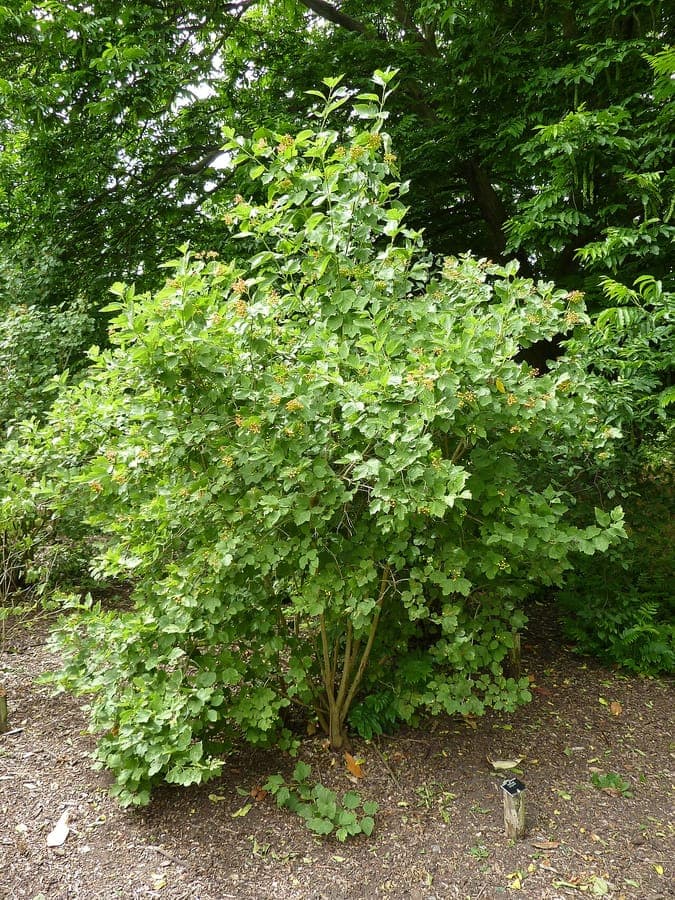
Magnus Manske / CC BY-SA 2.5, via Wikimedia Commons
Viburnum sargentii: complete guide
Viburnum sargentii
Want to see Viburnum sargentii: complete guide in your garden?
Full design in HD: €7.99
Look after your Viburnum sargentii with the GardenWorld app
Identify plants with your camera and get a care calendar with reminders for this plant.


Overview
Viburnum sargentii, known as Sargent's viburnum, is a robust deciduous shrub native to southeastern Siberia, China, and Japan. This reliable shrub is valued for its delicate white spring blooms and its abundant red fall berries. It is a persistently hardy plant that grows in virtually all climates and delivers reliable performance for years.
The shrub belongs to the Viburnaceae family and is very winter hardy. It usually reaches 2-3 meters in height with upright, multi-stemmed growth. This makes it ideal for garden screens and informal hedges.
Appearance and Bloom
Viburnum sargentii reaches 2-3 meters in height with an upright, broad form and multiple stems. The leaves are oval, dark green, and slightly wrinkled. In fall, beautiful red and purple autumn colors appear.
The flowers appear in May-June in flat white panicles of about 5-8 cm diameter. They have a gentle fragrance that attracts bees and other pollinators. The flowers are delicate but not spectacular. After flowering, abundant red berries follow that look wonderful against the green and later against the fall color. The berries attract birds and persist well into fall.
Ideal Location
Sargent's viburnum grows best in full sun to partial shade. At least 4 hours of direct sunlight per day is preferred. The plant can tolerate full shade but will flower and fruit less.
Perfect locations include: in groups of 2-3 plants, as an informal hedge, against properties, and at woodland edges. The plant works well in small to medium-sized gardens.
Soil
Viburnum sargentii grows in virtually all soil types. The plant thrives better in acidic to neutral soil (pH 5.2-7). Heavy clay can lead to root rot, so improve drainage where needed.
At planting, add humus-rich compost. The plant grows in average to rich soil. Add some fertilizer at planting. Ensure good drainage by mulching with organic material.
Free preview
Want to see Viburnum sargentii: complete guide in your garden? Make a free preview of your design.
Watering
After establishment, Viburnum sargentii is moderately drought-tolerant. During the growing season, water when the top layer feels dry. In dry periods, water regularly, especially in the first season.
In containers, water more frequently. The plant flowers and fruits better with regular moisture. In winter, water minimally. Avoid water stagnation.
Pruning
Viburnum sargentii requires minimal pruning. After flowering, dead or damaged branches can be removed. This promotes open growth habits.
Steady pruning of about 1/3 of the older branches after flowering promotes dense young growth. In spring, spent branches can be removed.
Maintenance Calendar
May-June: Blooming, observe for delicate flowers. July-August: Berries ripen, regular water in dry weather. September-October: Fall color and berries, observe for bird visits. November-February: Dormant period, minimal care. March-April: Before season growth, light pruning.
Winter Hardiness
Viburnum sargentii is very persistently winter hardy to about -20 to -25°C (USDA zone 4-5). This makes it one of the hardiest viburnums. In most European regions, it survives winters without problems.
The plant does not die off and regrows each spring. Even in very severe winters, minor branch damage occurs that the plant recovers from. Protect young plants their first winters with some mulch.
Companion Plants
Viburnum sargentii combines well with:
- Leucothoe (Leucothoe fontanesiana) - evergreen contrast
- Dogwood (Cornus sanguinea) - red twigs in winter
- Elderberry (Sambucus canadensis) - larger aromatic foliage
- Grasses (Carex, Panicum) - texture contrast.
Closing
Viburnum sargentii is a reliable, hardy shrub for gardeners seeking year-round beauty. From spring bloom to fall color and red berries, it offers much interest. Once established, it requires minimal maintenance and provides years of joy.
Use gardenworld.app to design your dream garden with this strong viburnum. Plant, visualize, and create your perfect front yard now.
Frequently asked questions about Viburnum sargentii
Is Viburnum sargentii winter hardy?
Viburnum sargentii is very persistently winter hardy to about -20 to -25°C (USDA zone 4-5). This makes it one of the hardiest viburnums.
When and how do you prune Viburnum sargentii?
Viburnum sargentii requires minimal pruning. After flowering, dead or damaged branches can be removed.
How much water does Viburnum sargentii need?
After establishment, Viburnum sargentii is moderately drought-tolerant. During the growing season, water when the top layer feels dry.
Where does Viburnum sargentii grow best?
Sargent's viburnum grows best in full sun to partial shade. At least 4 hours of direct sunlight per day is preferred.
What soil does Viburnum sargentii need?
Viburnum sargentii grows in virtually all soil types. The plant thrives better in acidic to neutral soil (pH 5.2-7).

See it in your garden
See Viburnum sargentii in your garden
One photo of your garden and a few questions. You see the result in about a minute.
Try it with a photoIdentify this plant in your own garden. Identify a plant
Similar plants
Koreanspice viburnum: complete guide
Viburnum carlesii
Everything about Koreanspice viburnum (Viburnum carlesii): spicy April scent, the right spot, soil, pruning and winter hardiness of this compact shrub.
Bodnant viburnum: complete guide
Viburnum × bodnantense
Everything about Bodnant viburnum (Viburnum × bodnantense 'Dawn'): position, soil, pruning after flowering and fragrant winter blooms from November to March.
Burkwood viburnum: complete guide
Viburnum × burkwoodii
Everything about Viburnum × burkwoodii, the fragrant viburnum that flowers in April: position, soil, pruning after flowering, winter hardiness and spring companions.
