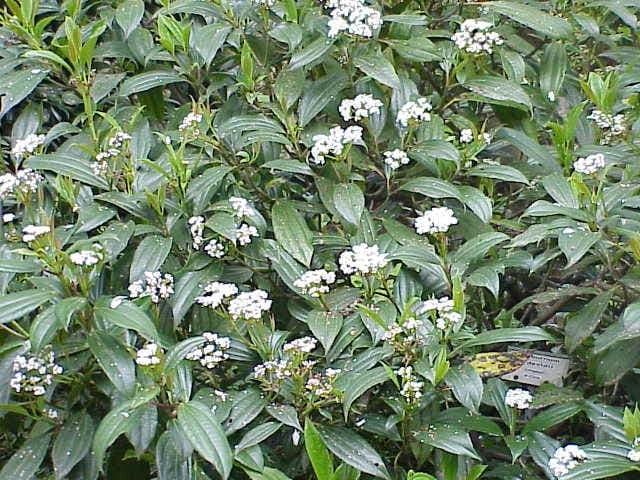
Kurt Stüber [1] / CC BY-SA 3.0, via Wikimedia Commons
Viburnum davidii: complete guide
Viburnum davidii
Want to see Viburnum davidii: complete guide in your garden?
Full design in HD: €7.99
Look after your Viburnum davidii with the GardenWorld app
Identify plants with your camera and get a care calendar with reminders for this plant.


Overview
David's viburnum, botanically Viburnum davidii, is a compact, evergreen shrub from China. This elegant shrub reaches only 1.2 to 1.5 meters height with similar width, making it perfect for smaller gardens. The shrub is known for its glossy, dark green foliage and particularly its striking turquoise to blue berries that stand out beautifully against winter grayness.
The viburnum is a valuable addition to modern gardens due to its compact form, year-round availability and bird-friendly fruits. This is a plant offering long-term interest.
Appearance and bloom
David's viburnum has oblong, ribbed leaves 5-10 centimeters long with deep dark green color. The leaves retain their green color year-round, providing extra winter landscape value.
Blooming occurs May-June with small white-pink flowers arranged in dense, flat clusters. These flowers are subtly beautiful and attract bees. After flowering, fruits develop first red, then becoming dark blue - this only occurs if multiple shrubs are planted for pollination.
The berries are a true highlight and persist into winter, providing bird food.
Ideal location
David's viburnum grows best in partial shade to full sun, depending on climate. In warmer regions (USDA zone 6+), the plant tolerates full shade. In cooler regions, the shrub prefers more sunlight.
The plant should be protected from strong winds, though reasonably wind-resistant. A position at garden edges works well.
The shrub is hardy to about -10 degrees Celsius, so in very cold regions winter protection may help.
Soil
David's viburnum grows in virtually all standard garden soils. The plant prefers slightly acidic, well-draining soil with pH between 5.5 and 6.5. The plant also tolerates neutral soils.
Well-draining soil is essential - heavy clay soils should be improved with sand and compost. Winter moisture can cause problems, so ensure good drainage.
Organic material like leaf mold or garden compost worked in at planting helps water retention and nutrient status.
Free preview
Want to see Viburnum davidii: complete guide in your garden? Make a free preview of your design.
Watering
Young shrubs should be watered regularly, especially the first growing season. Water deeply but allow soil to dry between waterings. This promotes deep root systems.
Once established, the shrub tolerates normal rainfall. In dry periods, water helps, but this plant is not water-demanding. Overwatering is a bigger problem than underwatering.
In winter, minimal water is needed. Check soil moisture by feeling the ground.
Pruning
David's viburnum needs minimal pruning thanks to its naturally compact form. The shrub can tolerate pruning if you wish to apply some shaping.
After flowering (July), light pruning can maintain form. Remove only long shoots or damaged branches. Avoid heavy pruning that can limit growth.
In early spring, pruning can refresh form, but this prevents that year's flowering.
Maintenance calendar
Spring: check for winter damage and feed. Summer: monitor soil moisture, prune after flowering. Fall: enjoy blue berries. Winter: minimal actions, protect against extreme frost.
Winter hardiness
David's viburnum is half-hardy and tolerates temperatures to about -10 degrees Celsius. In regions with more extreme frosts, winter protection with blankets helps.
Leaves may discolor in extreme cold, but the plant usually survives. In very cold regions, container cultivation can be considered.
Companion plants
David's viburnum pairs beautifully with other evergreens. Plant with bamboo, nandina or Japanese maple for texture contrast. Low-growing companions like ivy, euonymus or hellebore fill nicely.
For bloom accent, add flowering plants like heuchera, hellebore or helleborus that bloom in other seasons.
Conclusion
David's viburnum is a refined choice for modern gardens valuing compact height and bird-friendly berries. The dark green evergreen foliage and turquoise berries offer year-round visual interest. With basic care and adequate moisture, this shrub thrives. Plant at least two shrubs for optimal berry production. Visit local garden centers for this special shrub.
On gardenworld.app, you can integrate David's viburnum into your garden design. At gardenworld.app, discover how this elegant shrub delivers subtle sophistication and bird-attracting berries for your front yard.
Frequently asked questions about Viburnum davidii
Is Viburnum davidii winter hardy?
David's viburnum is half-hardy and tolerates temperatures to about -10 degrees Celsius. In regions with more extreme frosts, winter protection with blankets helps.
When and how do you prune Viburnum davidii?
David's viburnum needs minimal pruning thanks to its naturally compact form. The shrub can tolerate pruning if you wish to apply some shaping.
How much water does Viburnum davidii need?
Young shrubs should be watered regularly, especially the first growing season. Water deeply but allow soil to dry between waterings.
Where does Viburnum davidii grow best?
David's viburnum grows best in partial shade to full sun, depending on climate. In warmer regions (USDA zone 6+), the plant tolerates full shade.
What soil does Viburnum davidii need?
David's viburnum grows in virtually all standard garden soils. The plant prefers slightly acidic, well-draining soil with pH between 5.5 and 6.5.

See it in your garden
See Viburnum davidii in your garden
One photo of your garden and a few questions. You see the result in about a minute.
Try it with a photoIdentify this plant in your own garden. Identify a plant
Similar plants
Koreanspice viburnum: complete guide
Viburnum carlesii
Everything about Koreanspice viburnum (Viburnum carlesii): spicy April scent, the right spot, soil, pruning and winter hardiness of this compact shrub.
Bodnant viburnum: complete guide
Viburnum × bodnantense
Everything about Bodnant viburnum (Viburnum × bodnantense 'Dawn'): position, soil, pruning after flowering and fragrant winter blooms from November to March.
Burkwood viburnum: complete guide
Viburnum × burkwoodii
Everything about Viburnum × burkwoodii, the fragrant viburnum that flowers in April: position, soil, pruning after flowering, winter hardiness and spring companions.
