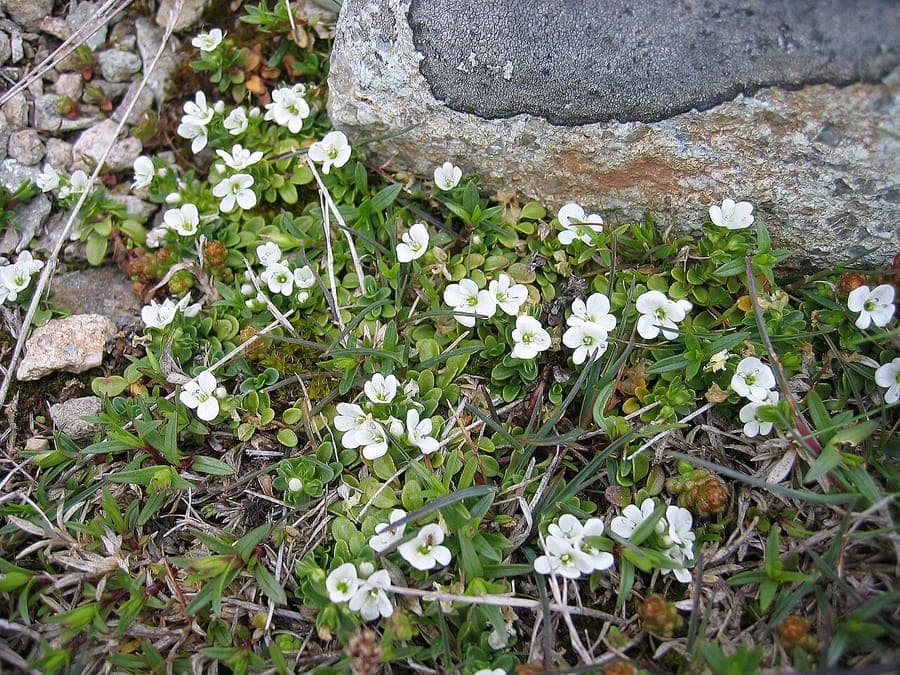
User:Tigerente / CC BY-SA 3.0, via Wikimedia Commons
Corsican speedwell: complete guide
Veronica repens
Want to see Corsican speedwell: complete guide in your garden?
Full design in HD: €7.99
Look after your Corsican speedwell with the GardenWorld app
Identify plants with your camera and get a care calendar with reminders for this plant.


Overview
Veronica repens, known as Corsican speedwell or véronique rampante, is a low-growing plant belonging to the Plantaginaceae family. This Mediterranean species occurs naturally on the island of Corsica and in Morocco. With a growth habit of only 5 to 10 centimeters height, Veronica repens forms a perfect groundcover for specialized gardens.
The plant distinguishes itself through its low-lying, spreading growth habit and tiny blue flowers. This makes it excellent for stone paths, between paving stones, and as edging in borders. Once established, Veronica repens requires very minimal maintenance.
Appearance and Bloom
Veronica repens has very small, oval leaves that are dark green in color. The plant grows as a dense network of thin stems that remain close to or just above the soil. Flowers are tiny, approximately four to five millimeters in diameter, and bright blue in color.
The blooming period typically runs from May through September, with peak bloom in July and August. Flowers appear in small clusters along the stems. After blooming, the plant produces small seed capsules.
Ideal Location
Veronica repens grows best in full sun to partial shade. The plant blooms more abundantly in full sun situations but tolerates partial shade well. Position this groundcover at locations with good drainage, such as slopes or raised beds.
The plant grows better in relatively dry locations. Avoid placement in very wet or muddy areas where water tends to stagnate. Exposure to moderate winds helps prevent fungal issues.
Soil
Veronica repens prefers well-drained, slightly acidic to neutral soils. The plant performs best in lightly fertile soils with pH values from 4.5 to 5.0. Heavy clay or compacted soils must be amended with sand and gravel.
This plant accepts poor soils well and requires minimal feeding. In fertile soils, excessive foliage growth can occur which may limit flowering.
Free preview
Want to see Corsican speedwell: complete guide in your garden? Make a free preview of your design.
Watering
Once established, Veronica repens is extremely drought-tolerant. Young plants require regular water in the first weeks to establish well. Mature plants survive easily with natural rainfall in temperate climates.
Avoid waterlogging which can cause root rot. In very dry periods, supplemental water promotes growth. The plant naturally adapts to seasonal precipitation patterns.
Pruning
Veronica repens requires minimal pruning. Remove dead or damaged foliage in early spring. Moderate cutback after bloom can encourage more compact growth.
The plant maintains its form naturally well without intervention. Light shearing after bloom can promote bushier development.
Maintenance Calendar
May through September: active growth and blooming period. Ensure good drainage and prevent water stagnation. October through April: dormancy. Minimal care required. This extremely frost-resistant plant needs no special winter protection.
Annual inspection in spring for weed growth between plantlets.
Winter Hardiness
Veronica repens is extremely winter-hardy and tolerates temperatures to -20 degrees Celsius. The plant remains evergreen in temperate climates. This makes it excellent for winter garden interest.
The plant tolerates snowfall well and grows normally in spring when snow melts. Many gardeners appreciate its persistent green foliage throughout winter.
Community Support
Seek guidance from Alpine gardeners for specialized site preferences and growing tips. This plant is popular in alpine gardens and rock gardens throughout Europe.
Closing Thoughts
Veronica repens offers the perfect groundcover solution for sunny, dry situations. With minimal care, this plant provides years of beautiful blue flowers and interesting texture. For rock gardens, front borders, and edging, Corsican speedwell represents a low-maintenance choice.
Discover more groundcover plants at gardenworld.app. For additional small plants and alpine options, gardenworld.app helps you find perfect combinations.
Frequently asked questions about Corsican speedwell
Is Corsican speedwell winter hardy?
Veronica repens is extremely winter-hardy and tolerates temperatures to -20 degrees Celsius. The plant remains evergreen in temperate climates.
When and how do you prune Corsican speedwell?
Veronica repens requires minimal pruning. Remove dead or damaged foliage in early spring.
How much water does Corsican speedwell need?
Once established, Veronica repens is extremely drought-tolerant. Young plants require regular water in the first weeks to establish well.
Where does Corsican speedwell grow best?
Veronica repens grows best in full sun to partial shade. The plant blooms more abundantly in full sun situations but tolerates partial shade well.
What soil does Corsican speedwell need?
Veronica repens prefers well-drained, slightly acidic to neutral soils. The plant performs best in lightly fertile soils with pH values from 4.5 to 5.0.

See it in your garden
See Corsican speedwell in your garden
One photo of your garden and a few questions. You see the result in about a minute.
Try it with a photoIdentify this plant in your own garden. Identify a plant
Similar plants
Summer snapdragon (Angelonia angustifolia): complete guide
Angelonia angustifolia
Everything about summer snapdragon (Angelonia angustifolia): position, soil, watering, pruning and overwintering this heat-loving summer flower with upright flower spikes.
Rose turtlehead (Chelone obliqua): complete guide
Chelone obliqua
Rose turtlehead (Chelone obliqua) flowers from late August to October with pink blooms shaped like a turtle's head. How to plant, prune and combine this perennial for damp soil.
Disc-leaved hebe: complete guide
Hebe pinguifolia
Everything about Hebe pinguifolia, the blue-grey disc-leaved hebe: position, soil, pruning, winter hardiness and good companions for borders, rockeries and pots.
