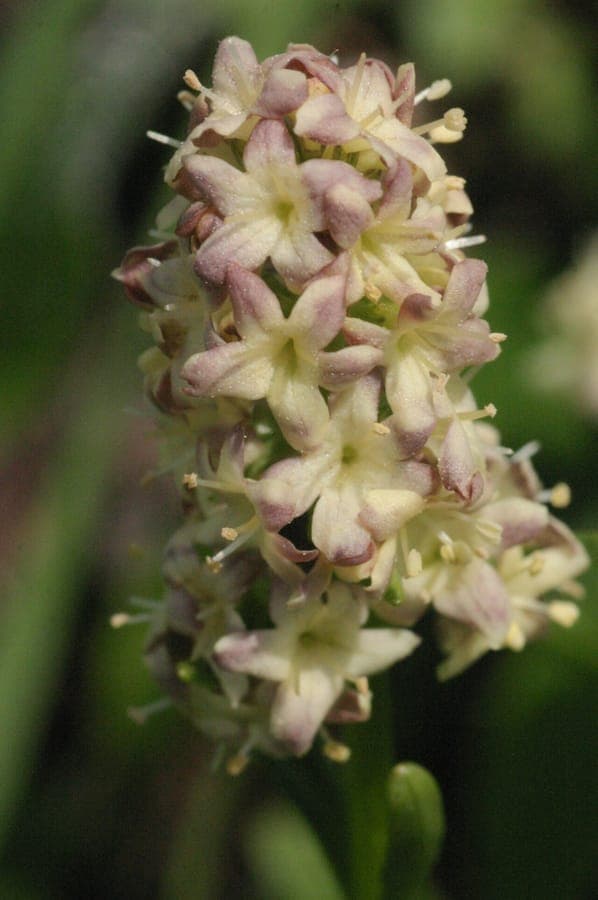
HermannSchachner / CC0, via Wikimedia Commons
Valeriana celtica: complete guide
Valeriana celtica
Want to see Valeriana celtica: complete guide in your garden?
Full design in HD: €7.99
Look after your Valeriana celtica with the GardenWorld app
Identify plants with your camera and get a care calendar with reminders for this plant.


Celtic Valerian: An Alpine Treasure for High-Altitude Gardens
Overview Celtic Valerian (Valeriana celtica), also known as Echter Speik or Nard Celtique, is a charming alpine plant native to Alpine mountain regions (Austria, France, Italy, Switzerland). This compact perennial is celebrated for its fragrant flowers and aromatic foliage, making it perfect for rock gardens and alpine plantings.
Appearance and Bloom Celtic Valerian forms compact rosettes of grayish, slightly hairy leaves. The plant reaches only fifteen to twenty-five centimeters tall, ideal for small spaces. From June through August, delicate clusters of pink to purple flowers emerge above the foliage. The flowers are highly aromatic, attracting bees. The entire plant material, including roots, releases a pleasant herbal fragrance.
Ideal Location Celtic Valerian prefers cool, high-altitude locations with full sun to light shade. It grows best with abundant light. This is not a plant for warm, lowland gardens. In temperate climates it thrives if drainage is excellent. A north or east-facing position is preferable in warmer regions.
Soil Celtic Valerian thrives on very well-draining, stony or gravelly soil. The plant prefers moderately acidic soil with pH 4 to 4.5. Rich feeding is unnecessary; this alpine plant actually prefers nutrient-poor substrates. Use a mix of garden soil, sand, and grit in equal parts. Excellent drainage is essential.
Watering Celtic Valerian is quite drought-tolerant once established. Water only during very dry periods. The plant tolerates somewhat moister conditions in alpine environments but must never become waterlogged. Monitor container-grown plants carefully for dryness.
Pruning Pruning is unnecessary. The plant naturally forms a neat compact shape. Remove only dead or damaged material. After flowering, dried inflorescences can be removed for tidiness.
Maintenance Calendar May: Check for dryness, water carefully if needed. June to August: Regular monitoring, enjoy flowers. September: Reduce watering, prepare for dormancy. October to May: Minimal care, protect in extreme cold.
Winter Hardiness Celtic Valerian is hardy to -15 degrees Celsius and grows across much of Europe. However, it is not suited to hot summers; Southern European heat causes stress.
Support This compact grower needs no support. Plant in groups of three to five for best effect in rock gardens.
Companion Plants Combine with other alpine plants such as edelweiss, alpine anemones, saxifrages, and alpine forget-me-nots. In borders, pink flowers pair beautifully with silver-foliaged plants like senecio or artemisia.
Closing Thoughts Celtic Valerian is an absolute must-have for alpine plant enthusiasts and rock garden lovers. It brings charm and fragrance to small spaces. At gardenworld.app, integrate this plant perfectly into Scandinavian or Alpine garden designs. With well-drained soil and cool conditions, you'll enjoy years of pleasure.
Available at specialized nurseries. Find more design inspiration at gardenworld.app.

See it in your garden
See Valeriana celtica in your garden
One photo of your garden and a few questions. You see the result in about a minute.
Try it with a photoIdentify this plant in your own garden. Identify a plant
Similar plants
Glossy abelia: complete guide
Abelia × grandiflora
Everything about glossy abelia (Abelia × grandiflora): position, soil, pruning and hardiness of a shrub that flowers from July to October with scented white bells.
Seven-son flower (Heptacodium miconioides): complete guide
Heptacodium miconioides
Seven-son flower (Heptacodium miconioides): fragrant white flowers in September, red calyces in October and peeling bark. Site, soil, pruning and hardiness.
Macedonian scabious (Knautia macedonica): growing guide
Knautia macedonica
Grow Macedonian scabious (Knautia macedonica): sunny position, lean soil, deadheading for a long season and self-seeding. Wine-red pincushions for pollinators.
