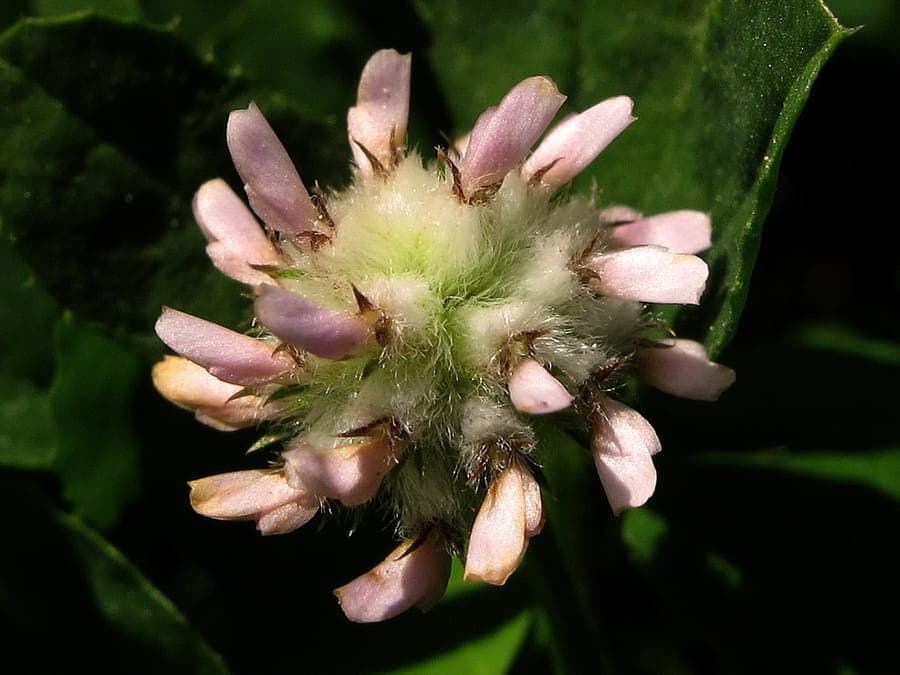
jacinta lluch valero from madrid * barcelona...., (España-Spain) / CC BY-SA 2.0, via Wikimedia Commons
Woolly clover: complete guide
Trifolium tomentosum
Want to see Woolly clover: complete guide in your garden?
Full design in HD: €7.99
Look after your Woolly clover with the GardenWorld app
Identify plants with your camera and get a care calendar with reminders for this plant.


Overview
The woolly clover (Trifolium tomentosum) is a beautiful Mediterranean plant known for its soft, woolly leaves and elegant purple flowers. This elegant groundcover adds texture and colour to dry, sunny gardens where it thrives excellently. With its compact growth habit and easy maintenance, it is a favorite choice for Mediterranean garden designs. The plant grows low and forms natural carpets in gravel and dry soils.
Appearance and bloom
The woolly clover forms dense, green mats fifteen to twenty-five centimetres high. The characteristic feature is the fine, woolly leaves that give a soft, greyish texture to the growing plant. The purple, sometimes pink flowers appear in May to June in compact balls. The entire plant has a lush, natural appearance. The woolly leaves give the plant a special soft appearance that makes it different from others.
Ideal location
Plant the woolly clover in fully sunny locations with at least six to eight hours of direct sunlight daily. The plant grows poorly in shade or semi-shade. A windy, open spot is ideal for ventilation. Avoid damp, enclosed locations where fungi can develop and growth is hindered.
Soil
The woolly clover feels at home on dry to very dry soils. Well-draining, poorer soils are preferred. Calcareous soils are ideal for growth. pH values of six point five to seven point five are optimal. The plant is very frost-tolerant and can grow in stony places without problems.
Free preview
Want to see Woolly clover: complete guide in your garden? Make a free preview of your design.
Watering
Once established, the woolly clover is extremely drought-tolerant and tolerates everything. Watering is only necessary the first year in growing period. Adult plants tolerate long dry periods without problems. Excessive watering can lead to root rot and fungal growth.
Maintenance
The plant requires minimal maintenance and is very low-maintenance. No pruning required. Seed may naturally fall for self-sowing next season. Remove dead leaves in spring. Check for diseases only sporadically.
Maintenance calendar
Spring: plant seedlings or sow directly in dry soils. Summer: no maintenance for adult plants. Autumn: let seed fall for next season. Winter: no maintenance in most areas.
Winter hardiness
The woolly clover is hardy to about minus five degrees Celsius under natural conditions. In very cold areas, protection may be useful. Sowing from the previous season may germinate again next spring without problems.
Companion plants
The purple flowers of woolly clover combine beautifully with white or yellow flowers. Plant together with lavender, rosemary and other Mediterranean herbs. Suitable for dry rock gardens and xeroscapes. Combines well with marigolds and other Mediterranean plants.
Conclusion
The woolly clover is an exceptional choice for dry, sunny gardens. With its characteristic purple flowers and woolly leaves, it adds much character. Find this plant at garden centres such as Gamma or Intratuin. Visit gardenworld.app for inspiration on Mediterranean gardens and frost-hardy plants. At gardenworld.app, learn more about groundcover and drought tolerance.
Frequently asked questions about Woolly clover
Is Woolly clover winter hardy?
The woolly clover is hardy to about minus five degrees Celsius under natural conditions. In very cold areas, protection may be useful.
How much water does Woolly clover need?
Once established, the woolly clover is extremely drought-tolerant and tolerates everything. Watering is only necessary the first year in growing period.
Where does Woolly clover grow best?
Plant the woolly clover in fully sunny locations with at least six to eight hours of direct sunlight daily. The plant grows poorly in shade or semi-shade.
What soil does Woolly clover need?
The woolly clover feels at home on dry to very dry soils. Well-draining, poorer soils are preferred.

See it in your garden
See Woolly clover in your garden
One photo of your garden and a few questions. You see the result in about a minute.
Try it with a photoIdentify this plant in your own garden. Identify a plant
Similar plants
Pineapple broom (Argyrocytisus battandieri): complete guide
Argyrocytisus battandieri
Everything about pineapple broom (Argyrocytisus battandieri), the Moroccan wall shrub with silver leaves and pineapple-scented flowers: site, pruning and hardiness.
Blue false indigo: complete guide
Baptisia australis
Everything about blue false indigo (Baptisia australis): position, soil, watering, cutting back, hardiness and toxicity. A long-lived prairie perennial with indigo flowers.
Warminster broom (Cytisus × praecox): complete guide
Cytisus × praecox
Everything about Warminster broom (Cytisus × praecox): position, poor soil, pruning after flowering, hardiness and what you need to know about its toxicity.
