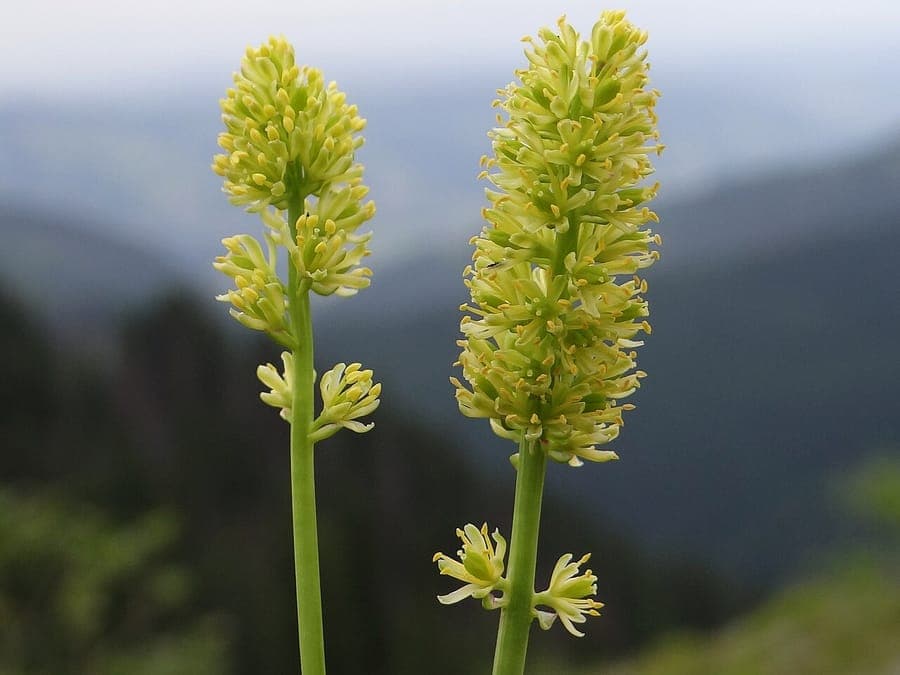
Jerzy Opioła / CC BY-SA 4.0, via Wikimedia Commons
German-asphodel: complete guide
Tofieldia calyculata
Want to see German-asphodel: complete guide in your garden?
Full design in HD: €7.99
Look after your German-asphodel with the GardenWorld app
Identify plants with your camera and get a care calendar with reminders for this plant.


Overview
Tofieldia calyculata, commonly known as German-asphodel or alpine-asphodel, is a unique bog plant from the Tofieldiaceae family. This elegant plant is native to mountain meadows and bogs from Gotland to the Pyrenees. It is a specialized plant for moist habitats and feels at home in bog gardens.
German-asphodel offers gardeners an opportunity to incorporate true bog plants into their gardens. With the right growing conditions, this plant can transform wet zones into attractive viewing points. It is an excellent choice for gardeners with wet soils or bog ponds.
Appearance and bloom
Tofieldia calyculata is a compact plant, usually 10-30 cm tall. The plant grows in densely clustered rosette-like clusters of narrow, green leaves. The foliage has a grass-like appearance.
Flowers appear from June to August in stiff, upright racemes. Flowers are small, yellow or greenish-yellow, with fine stamens. Although individually small, together they create a pleasant effect.
Fruits are small capsules appearing in August-September.
Ideal location
German-asphodel thrives best in locations with consistently moist to wet soils. At least partial shade is preferred, although full sun is tolerated in cooler climates. The plant loves moist soils.
This plant is ideal for bog ponds, edges of water garden elements, and moist groundcover vegetation. It works well in bog or rainwater gardens where moisture management is beneficial.
Soil
German-asphodel requires moist to wet soils. Heavy clay soils are ideal. The plant grows better in organically rich soils.
Improve very poor soils with plenty of peat or compost. The plant tolerates acidic to neutral soils (pH 5.5-7.0).
Free preview
Want to see German-asphodel: complete guide in your garden? Make a free preview of your design.
Watering
German-asphodel requires consistently moist to wet growing conditions. In normal conditions, provide consistent moisture. The plant feels at home along water surface edges or in bog conditions.
During dry periods, provide supplemental water to maintain moisture levels. The plant does not thrive in very dry conditions.
Pruning
German-asphodel requires no formal pruning. Carefully remove dead leaves or flower spikes in early spring. The plant naturally maintains its compact form.
Maintenance calendar
Spring: Check moisture levels. Add compost to poor soils. Summer: Maintain consistent moisture. Flowers appear. Autumn: Leave seed heads for interest. Check water levels. Winter: Minimal maintenance. Protect from extreme ice.
Winter hardiness
Tofieldia calyculata is hardy in USDA zones 3-6. The plant tolerates European mountain winters well. Protection from winter drying can be beneficial in continental climates.
Companion plants
This unique plant combines well with:
- Caltha palustris
- Iris sibirica
- Primula veris
- Carex species
- Osmunda species
- Drosera species
- Sphagnum mosses
For bog plant materials, visit your local garden center. More information is available at gardenworld.app/en.
Closing
Tofieldia calyculata offers gardeners an opportunity to incorporate authentic bog plants into their gardens. With proper moisture management and growing conditions, this plant will thrive and add valuable biodiversity. The delicate flowers and grass-like appearance make it an interesting part of bog or rainwater gardens.
For bog pond and moist garden tips, visit gardenworld.app/en.
Frequently asked questions about German-asphodel
Is German-asphodel winter hardy?
Tofieldia calyculata is hardy in USDA zones 3-6. The plant tolerates European mountain winters well.
When and how do you prune German-asphodel?
German-asphodel requires no formal pruning. Carefully remove dead leaves or flower spikes in early spring.
How much water does German-asphodel need?
German-asphodel requires consistently moist to wet growing conditions. In normal conditions, provide consistent moisture.
Where does German-asphodel grow best?
German-asphodel thrives best in locations with consistently moist to wet soils. At least partial shade is preferred, although full sun is tolerated in cooler climates.
What soil does German-asphodel need?
German-asphodel requires moist to wet soils. Heavy clay soils are ideal.

See it in your garden
See German-asphodel in your garden
One photo of your garden and a few questions. You see the result in about a minute.
Try it with a photoIdentify this plant in your own garden. Identify a plant
Similar plants
Glossy abelia: complete guide
Abelia × grandiflora
Everything about glossy abelia (Abelia × grandiflora): position, soil, pruning and hardiness of a shrub that flowers from July to October with scented white bells.
Trailing abutilon (Abutilon megapotamicum): care guide
Abutilon megapotamicum
Grow trailing abutilon (Abutilon megapotamicum) in a basket or against a wall: watering, feeding, pruning and overwintering for red and yellow lantern flowers.
Flowering maple (Abutilon): container shrub guide
Abutilon × hybridum
How to grow flowering maple (Abutilon × hybridum) in a pot: position, watering, feeding, March pruning and overwintering indoors for flowers from May to October.
