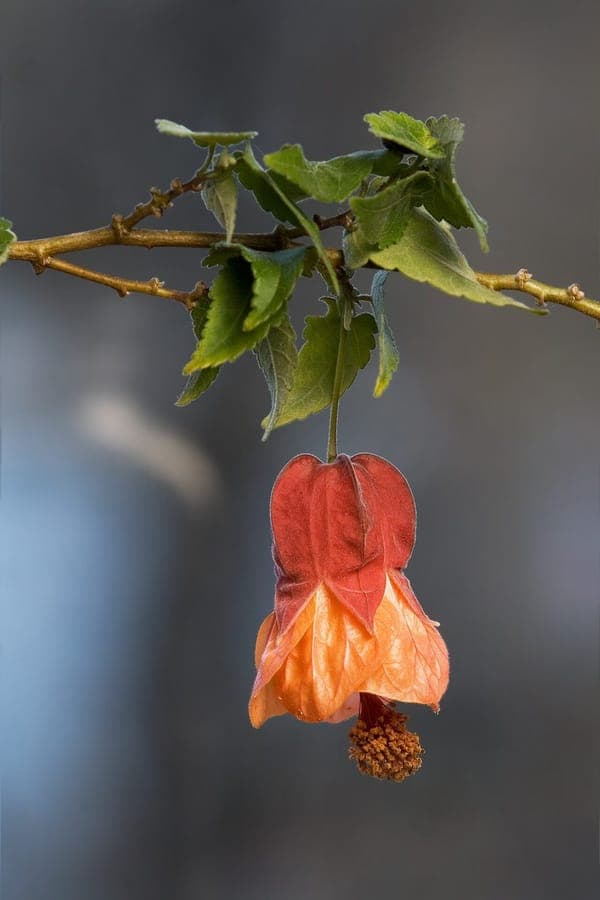
JJ Harrison (https://www.jjharrison.com.au/) / CC BY-SA 3.0, via Wikimedia Commons
Flowering maple (Abutilon): container shrub guide
Abutilon × hybridum
Want to see Flowering maple (Abutilon): container shrub guide in your garden?
Full design in HD: €7.99
Look after your Flowering maple with the GardenWorld app
Identify plants with your camera and get a care calendar with reminders for this plant.


Overview
Flowering maple (Abutilon × hybridum) is one of the most rewarding shrubs you can grow in a container on a patio. The common name comes from the lobed leaves, which look a little like those of a maple, but the plant is actually a member of the mallow family, Malvaceae, alongside hibiscus and hollyhocks. Its parents are South American species, mostly from Brazil, and nineteenth-century European nurseries crossed them to create a fast-growing shrub with nodding, bell-shaped flowers in white, yellow, orange, pink, red and salmon.
In Western Europe this is not a plant for the open border. It tolerates a couple of degrees of frost at most, so it belongs in a pot that spends May to October outdoors and then moves inside for the winter. If you are rethinking your outdoor space, you can have a garden design made at gardenworld.app that gives your patio and container plants a proper place from the start, so you know exactly where your flowering maple will look its best in summer.
In a container it usually reaches 1 to 2 metres tall and 60 to 100 cm across. Compact strains of 40 to 60 cm, such as the Bella series, suit a windowsill or a smaller pot. Well-known cultivars include 'Nabob' (deep wine red), 'Canary Bird' (bright yellow), 'Kentish Belle' (orange petals with a red calyx, in fact a cross with A. megapotamicum) and 'Patrick Synge' (orange-red). Good news for pet owners: the major poison lists record abutilon as non-toxic to dogs, cats and horses, and no cases of poisoning in people are known.
Appearance and bloom cycle
The flowers are the main attraction. They hang on long, slender stalks beneath the branches and measure 4 to 6 cm. Each bloom has a green or reddish calyx and five broad, slightly translucent petals through which you can see the veins. From the centre hangs a column of fused stamens, a hallmark of the mallow family. The photo shows exactly that: an orange bell with a red calyx dangling from a twig with toothed, heart-shaped leaves.
The leaves are three- to five-lobed, 8 to 15 cm long, softly hairy and light to mid green. Young stems are green and gradually become woody. Left unpruned, the plant quickly becomes tall and rather open.
The flowering season is remarkably long. Indoors or in a heated conservatory, abutilon can bloom for most of the year. Outside in a pot it usually flowers from May until the first cold nights in October. During a cool winter rest the flowering largely stops.
Ideal location
In summer, give flowering maple a bright, sheltered spot outdoors. Morning sun and sun until early afternoon are ideal. On a hot, south-facing patio the fierce afternoon sun can scorch the leaf edges and dry out the pot too quickly, so a little shade later in the day is an advantage. Choose a position out of the wind, as the large, thin leaves and long flower stalks tear easily in strong gusts.
Only move the plant outside after mid-May, once night temperatures stay above 8 to 10 °C. Let it acclimatise for a week in a shaded spot first, or leaves that grew indoors will develop scorch marks. In October, or earlier if a frost is forecast, bring it back in.
Indoors, abutilon needs the brightest window you have: an east or west window, or a south-facing one with a sheer curtain. In a dim, warm living room the shoots become soft and leggy and the plant tends to drop its buds.
Soil requirements
Use a good-quality container compost with some structure. A mix of multipurpose or loam-based compost with around 20 per cent fine clay granules or coarse grit holds moisture without leaving the roots waterlogged. A slightly acidic to neutral pH, around 6 to 7, suits it well. Always make sure the pot has a drainage hole and add a layer of clay granules or crocks at the bottom.
Abutilon is a vigorous grower and a hungry one. Feed every week or every other week from April to September with a liquid fertiliser for flowering plants, such as a tomato feed. Stop feeding from late September so the plant can slow down before winter.
Repot young plants every spring into a pot 3 to 5 cm wider.
Free preview
Want to see Flowering maple (Abutilon): container shrub guide in your garden? Make a free preview of your design.
Watering
In summer flowering maple is thirsty. A good-sized shrub in a 30 cm pot may need water every day in warm weather. Water when the top 2 to 3 cm of compost feels dry, and keep going until water runs out of the bottom of the pot. Do not leave it standing in a full saucer.
Drought is punished immediately: the plant drops flowers and buds and the lower leaves turn yellow. Overwatering is just as harmful, especially in cool weather, when the roots can rot. During the winter rest, water far less, just enough to keep the rootball slightly moist, roughly once every one to two weeks depending on the temperature.
Dry indoor air is a problem because it encourages red spider mite and whitefly.
Pruning
Pruning is not optional with abutilon if you want a compact, free-flowering plant. The best time is late winter, at the end of February or in March, just before new growth starts. Cut all stems back by a third to a half, each time just above a leaf or bud, and remove thin, weak and crossing shoots. You can prune quite hard, as abutilon regrows well from older wood.
During summer you can simply shorten overlong shoots to keep the shape. The plant flowers on new growth, so every light trim produces more buds a few weeks later.
Propagation is easy. Take tip cuttings of 8 to 10 cm in spring or summer and root them in moist cutting compost under a plastic cover.
Maintenance calendar
January-February: Cool, bright winter rest at 8 to 15 °C. Little water, no feeding. Check for whitefly, spider mite and scale insects.
March: Prune back by a third to a half. Repot if needed and move to a warmer, brighter spot to encourage new growth. Gradually increase watering.
April: Start feeding. Take cuttings from young shoots if you want extra plants.
May: Move outdoors after mid-May, with a week in the shade to acclimatise.
June-August: Full flowering. Feed weekly and water daily in warm spells. Remove faded flowers and yellow leaves.
September: Reduce feeding and then stop. Inspect the plant for pests before it comes indoors.
October: Bring inside before the first frost. Shorten long stems if necessary.
November-December: Rest in a bright, cool place with sparing watering.
Overwintering
Abutilon × hybridum is not hardy. A sturdy plant may survive a brief light frost of -1 to -2 °C, but anything colder kills it. In the UK, the Low Countries and similar climates, bringing it indoors is the rule.
The ideal winter quarters are bright and cool, between 8 and 15 °C: a cold greenhouse, a porch, a stairwell with a large window or an unheated bedroom. There it can rest with little water and no feed. A dark garage or cellar is a poor choice, as the plant drops all its leaves in the dark and weakens badly.
If you have no cool, bright spot, keep it in the living room by the brightest window. It will continue to grow and often flower a little, but it will be more prone to whitefly and spider mite and grow longer, so prune it harder in spring. The plant calendar at gardenworld.app shows month by month when it is time to bring container plants in, prune them and move them back outside.
Companion plants
On the patio, flowering maple combines well with other container plants on a similar seasonal rhythm. Fuchsias, including the hardier Fuchsia magellanica, share its nodding flowers and preference for light shade. Blue Plumbago auriculata makes a cool contrast with yellow or orange abutilons. Heliotrope (Heliotropium arborescens) adds scent and deep purple, while a pot of Agapanthus africanus brings upright flower heads beside the hanging bells.
For hot colours, place an orange or red abutilon next to Lantana camara, but bear in mind that lantana is toxic to pets, unlike abutilon. Around the base of a large tub, a trailing plant such as Lobelia erinus or Helichrysum petiolare softens the edge, provided the container is big enough to supply both plants with water and nutrients.
Final thoughts
Flowering maple is a container shrub for anyone who wants six months of flowers on the patio and is happy to carry the pot indoors in autumn. Good light, regular watering, a weekly feed and a firm prune in March are all that Abutilon × hybridum asks for. Start with one plant, take a few cuttings in summer, and within a couple of years you will have a collection of bells in different shades.
Frequently asked questions about Flowering maple
When and how do you prune Flowering maple?
Pruning is not optional with abutilon if you want a compact, free-flowering plant. The best time is late winter, at the end of February or in March, just before new growth starts.
How much water does Flowering maple need?
In summer flowering maple is thirsty. A good-sized shrub in a 30 cm pot may need water every day in warm weather.
Where does Flowering maple grow best?
In summer, give flowering maple a bright, sheltered spot outdoors. Morning sun and sun until early afternoon are ideal.
What soil does Flowering maple need?
Use a good-quality container compost with some structure. A mix of multipurpose or loam-based compost with around 20 per cent fine clay granules or coarse grit holds moisture without leaving the roots waterlogged.

See it in your garden
See Flowering maple in your garden
One photo of your garden and a few questions. You see the result in about a minute.
Try it with a photoIdentify this plant in your own garden. Identify a plant
Similar plants
Fuchsia: complete guide
Fuchsia magellanica
Master growing Fuchsia magellanica with its elegant hanging flowers. Care tips, ideal conditions, and winter protection for this South American gem.
Plumbago: complete guide
Plumbago auriculata
Discover everything about Plumbago auriculata: care instructions, growth habits, appearance, and how to successfully grow this stunning climbing plant in your garden.
Heliotropium arborescens: complete guide
Heliotropium arborescens
Heliotropium arborescens, the garden heliotrope, is a fragrant shrub with purple flowers and delightful vanilla scent, perfect for sunny borders.
