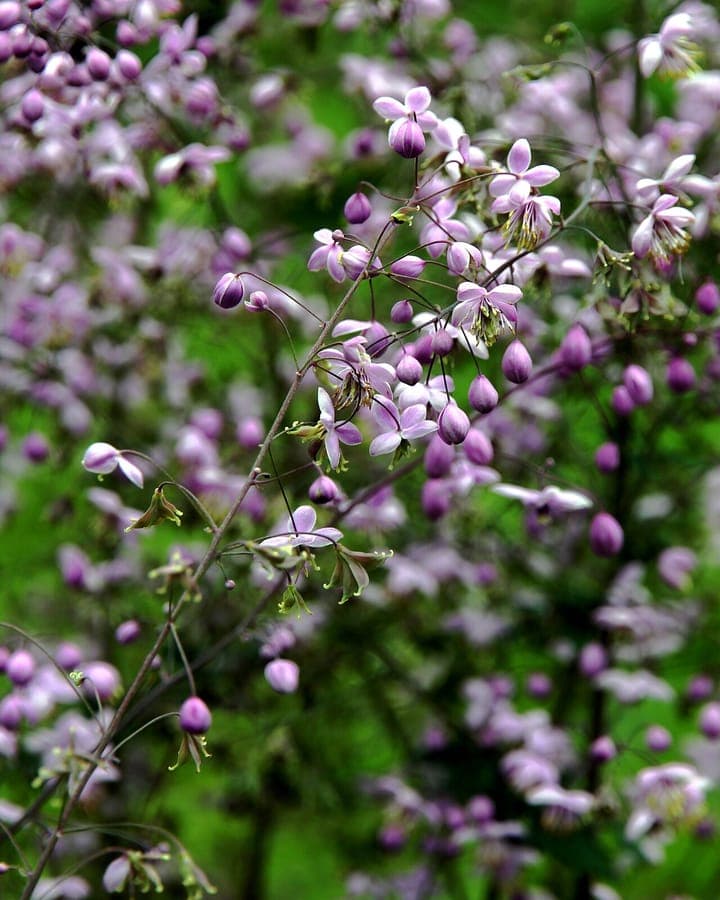
Karelj / Public domain, via Wikimedia Commons
Chinese meadow-rue: complete guide
Thalictrum delavayi
Want to see Chinese meadow-rue: complete guide in your garden?
Full design in HD: €7.99
Look after your Chinese meadow-rue with the GardenWorld app
Identify plants with your camera and get a care calendar with reminders for this plant.


Overview
Chinese meadow-rue (Thalictrum delavayi) is a stately perennial from Tibet, China and Myanmar. This elegant plant from the Ranunculaceae family grows in mountainous woodlands and brings refinement to garden borders. The plant is renowned for its delicate, airy appearance and extended flowering period.
With finely divided foliage and ethereal flower panicles, Chinese meadow-rue makes a perfect addition to perennial borders and woodland gardens. The plant reaches significant height yet remains graceful because flowers and leaves are finely textured.
Appearance and bloom
Chinese meadow-rue reaches heights of 120 to 180 centimetres in rich soil. The plant displays finely divided, triple-compound leaves creating a very delicate impression. Foliage remains attractive throughout the season.
Flowers appear in large, airy panicles atop tall stems. Each tiny flower is lilac to purple with prominent long stamens. Flowering extends from June through September, providing extended garden interest. Interesting seedheads follow blooming.
Ideal location
Chinese meadow-rue performs best in light shade to dappled sunlight. Locations receiving 3 to 4 hours direct daily sun work well. In very hot climates, more shade is beneficial. The plant tolerates full sun if soil remains adequately moist.
Choose wind-sheltered locations as tall stems break in strong winds. Plant where you can enjoy delicate flower panicles against darker backgrounds.
Soil
Chinese meadow-rue grows well in fertile soil rich in organic matter. pH between 6.0 and 7.5 is ideal. The plant prefers fertile, lightly moist soil without waterlogging.
Amend planting holes liberally with compost. Mulching helps retain moisture and maintain soil fertility.
Free preview
Want to see Chinese meadow-rue: complete guide in your garden? Make a free preview of your design.
Watering
Chinese meadow-rue prefers consistent moisture, especially during growing season. Water regularly particularly during dry periods. Plants in shade evaporate less so require less water. Avoid waterlogging in winter.
The plant tolerates dry conditions poorly. Young plants benefit from weekly watering until established.
Pruning
Chinese meadow-rue prefers minimal pruning. Remove spent flower panicles as needed for tidiness. Young plants can be pinched when 30-40 centimetres tall to create bushier growth.
Staking is recommended for formal borders. Use soft twiggy material.
Maintenance calendar
Spring: Growth begins slowly. Add compost mulch. Water regularly. Summer: Enjoy extended blooming June through September. Water carefully. Install stakes. Autumn: Seedheads provide interest. Reduce watering as growth slows. Winter: Plant dies back. Provide protective mulch.
Winter hardiness
Chinese meadow-rue is fully hardy to -20 degrees Celsius. Suitable for all temperate zones. The plant survives harsh winters easily. Roots may freeze in severe winters with minimal snow cover.
Companion plants
Chinese meadow-rue pairs beautifully with:
- Dark green foliage plants for contrast
- Roses and other flowers for warmer colours
- Hostas for textural contrast
- Woodland perennials for shaded border settings
- Ornamental grasses for movement
Closing
Chinese meadow-rue is a valued stately perennial for gardens seeking refinement. With elegant appearance, extended blooming and graceful growth, it adds significant value to borders. Perfect for shaded gardens where stature and elegance are desired.
Find Chinese meadow-rue at local garden centres. For more inspiration with shade plants, visit gardenworld.app for professional garden designs. Gardenworld.app can also help with refined border concepts.
Frequently asked questions about Chinese meadow-rue
Is Chinese meadow-rue winter hardy?
Chinese meadow-rue is fully hardy to -20 degrees Celsius. Suitable for all temperate zones.
When and how do you prune Chinese meadow-rue?
Chinese meadow-rue prefers minimal pruning. Remove spent flower panicles as needed for tidiness.
How much water does Chinese meadow-rue need?
Chinese meadow-rue prefers consistent moisture, especially during growing season. Water regularly particularly during dry periods.
Where does Chinese meadow-rue grow best?
Chinese meadow-rue performs best in light shade to dappled sunlight. Locations receiving 3 to 4 hours direct daily sun work well.
What soil does Chinese meadow-rue need?
Chinese meadow-rue grows well in fertile soil rich in organic matter. pH between 6.0 and 7.5 is ideal. The plant prefers fertile, lightly moist soil without waterlogging.

See it in your garden
See Chinese meadow-rue in your garden
One photo of your garden and a few questions. You see the result in about a minute.
Try it with a photoIdentify this plant in your own garden. Identify a plant
Similar plants
Chinese Aconite (Aconitum carmichaelii): complete guide
Aconitum carmichaelii
Everything about Chinese aconite (Aconitum carmichaelii): position, soil, pruning and care, plus clear advice on its severe toxicity to people and pets.
Bugbane (Actaea simplex): complete guide
Actaea simplex
Everything about bugbane (Actaea simplex): position, soil, pruning and hardiness of this shade-loving perennial with fragrant white spires in September and October.
Grecian windflower: complete guide
Anemone blanda
Everything about Grecian windflower (Anemone blanda): soaking and planting the tubers, position, soil, March to April flowering and naturalising. Tips for a blue carpet.
