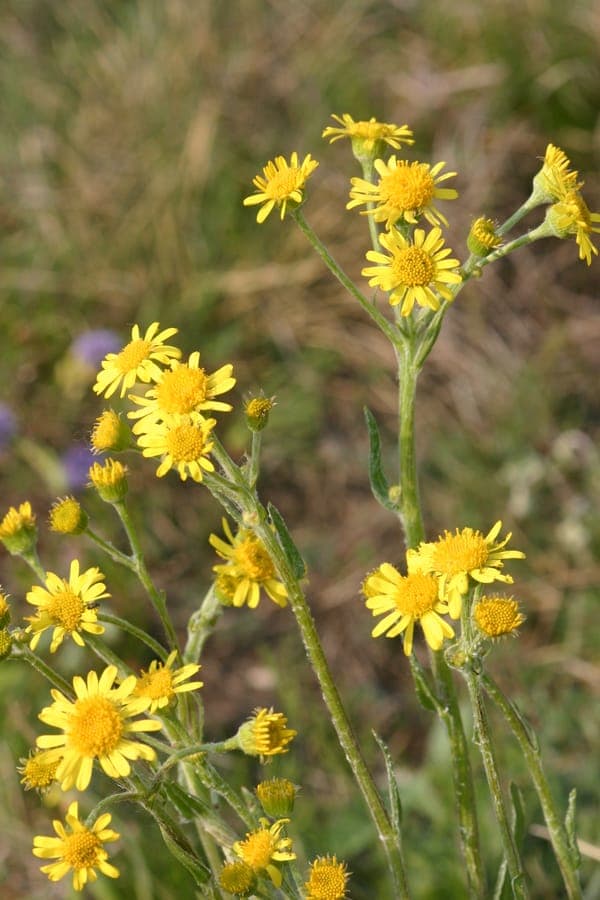
HermannSchachner / CC0, via Wikimedia Commons
Tephroseris integrifolia: complete guide
Tephroseris integrifolia
Want to see Tephroseris integrifolia: complete guide in your garden?
Full design in HD: €7.99
Look after your Tephroseris integrifolia with the GardenWorld app
Identify plants with your camera and get a care calendar with reminders for this plant.


Overview
Tephroseris integrifolia, commonly called field fleawort, is a delicate perennial found naturally from Europe through Japan. This plant is renowned for its fine, linear leaves and early yellow-orange flowers. With its low growth (20-40 cm) and extended blooming period, it is an ideal choice for alpine gardens, rock gardens, and borders.
Field fleawort thrives in temperate climates and is extremely winter-hardy. In the Netherlands and Belgium, you can find seeds and seedlings at specialized garden centers like Intratuin and Gamma. German gardeners can find specimens at OBI and Hornbach. This plant is perfect for those seeking a delicate, mountain-like plant with early blooms.
Appearance and bloom
Tephroseris integrifolia grows as a low, compact plant, typically 20 to 40 centimeters tall. The leaves are notably entire, not lobed, linear to lance-shaped, with a gray-green color due to fine hairiness. The leaves form a dense rosette at the base.
Flowers appear from May to July, in dense clusters at the stem tips. Each flower is 15 to 20 mm across, bright yellow to orange-yellow. They are extremely attractive to bees. After flowering, fluffy, whitish seedheads form and remain decorative through autumn.
Ideal location
Tephroseris integrifolia thrives best in full sun to light partial shade, with at least five hours of direct sunlight daily. The plant also grows in shade but flowers much less abundantly. Choose a calm to moderately windy location.
The plant thrives well on slopes and raised planting areas, as this promotes drainage and ensures coolness. Do not plant in waterlogged, wet conditions.
Soil
Tephroseris integrifolia thrives best in well-drained, lean to average soil. Heavy clay should be amended with sand and gravel. The plant also grows in poor, calcareous soils, though it performs better in neutral to slightly acidic soils.
Drainage is essential; this plant cannot tolerate waterlogging. Nutrition is barely needed; excess fertilization leads to lush foliage and reduced flowering. Plant in garden soil or a mixture of garden soil, sand, and gravel.
Free preview
Want to see Tephroseris integrifolia: complete guide in your garden? Make a free preview of your design.
Watering
Once established, Tephroseris integrifolia is moderately drought-tolerant. During the first growing season, water regularly until the plant is well-established. Water carefully, only until the soil is consistently moist.
Overestimating moisture needs is risky; excess water causes root rot. In normal summers, no extra water is needed. Add water only during very dry periods. In autumn and winter, no extra water is needed.
Pruning
Tephroseris integrifolia requires minimal pruning. You can remove spent flowers to encourage continued flowering. This extends the blooming period.
At season's end (October), you can remove wilted stems and leaves. This provides nutrition for the next season and prevents disease. In early spring, there is no need to cut back; the plant regrows from its rootstock.
Maintenance calendar
January - February: Little maintenance. Plant overwinters in ground. Check for damage.
March - April: Initial growth. No fertilizer needed. Regular watering.
May - June: Full bloom. Deadheading possible. Water only in drought.
July - September: Bloom declines. Self-seeding possible. Minimal care.
October - December: Trim wilted parts. Plant does not die. Roots remain alive.
Winter hardiness
Tephroseris integrifolia is fully hardy in the Netherlands, Belgium, and Germany, tolerating -20 degrees Celsius and below. The plant survives all normal winters without protection. Above-ground growth dies back, but the rootstock survives and regrows each spring.
No protection is needed. Even in severe winters the plant survives. In very wet winters, good drainage is important.
Companion plants
Tephroseris integrifolia pairs beautifully with other alpine perennials. Combine with Pulsatilla, Primula, lavender, and other mountain plants. Also a lovely combination with gray foliage plants like Artemisia and Stachys lanata.
In rock gardens it fits well with alpine phlox, Sedum, and other alpine rock plants. In borders it creates a delicate, natural look.
Closing
Tephroseris integrifolia is ideal for those seeking delicate alpine plants with early blooms. The combination of fine leaves, yellow flowers, mountain-like growth, and extreme winter hardiness makes it valuable. Plant in well-drained, lean soil in full sun and enjoy early spring blooms. Find specimens at Intratuin and Gamma in the Netherlands and Belgium, or OBI and Hornbach in Germany. On gardenworld.app you will find inspiration for integration into rock gardens and alpine borders.
Frequently asked questions about Tephroseris integrifolia
Is Tephroseris integrifolia winter hardy?
Tephroseris integrifolia is fully hardy in the Netherlands, Belgium, and Germany, tolerating -20 degrees Celsius and below. The plant survives all normal winters without protection.
When and how do you prune Tephroseris integrifolia?
Tephroseris integrifolia requires minimal pruning. You can remove spent flowers to encourage continued flowering.
How much water does Tephroseris integrifolia need?
Once established, Tephroseris integrifolia is moderately drought-tolerant. During the first growing season, water regularly until the plant is well-established.
Where does Tephroseris integrifolia grow best?
Tephroseris integrifolia thrives best in full sun to light partial shade, with at least five hours of direct sunlight daily. The plant also grows in shade but flowers much less abundantly.
What soil does Tephroseris integrifolia need?
Tephroseris integrifolia thrives best in well-drained, lean to average soil. Heavy clay should be amended with sand and gravel.

See it in your garden
See Tephroseris integrifolia in your garden
One photo of your garden and a few questions. You see the result in about a minute.
Try it with a photoIdentify this plant in your own garden. Identify a plant
Similar plants
Frikart's aster (Aster × frikartii): complete guide
Aster × frikartii
Everything about Frikart's aster (Aster × frikartii): position, soil, pruning and hardiness of the aster that flowers lavender-blue from July to October.
False aster (Boltonia asteroides): complete guide
Boltonia asteroides
False aster (Boltonia asteroides) covers itself in white daisies from late August to October. How to plant, cut back and combine this tough, tall perennial.
Daisy bush (Brachyglottis greyi): care guide
Brachyglottis greyi
Brachyglottis greyi, formerly Senecio greyi, pairs silver felted leaves with yellow summer daisies. Advice on position, soil, pruning, hardiness and companions.
