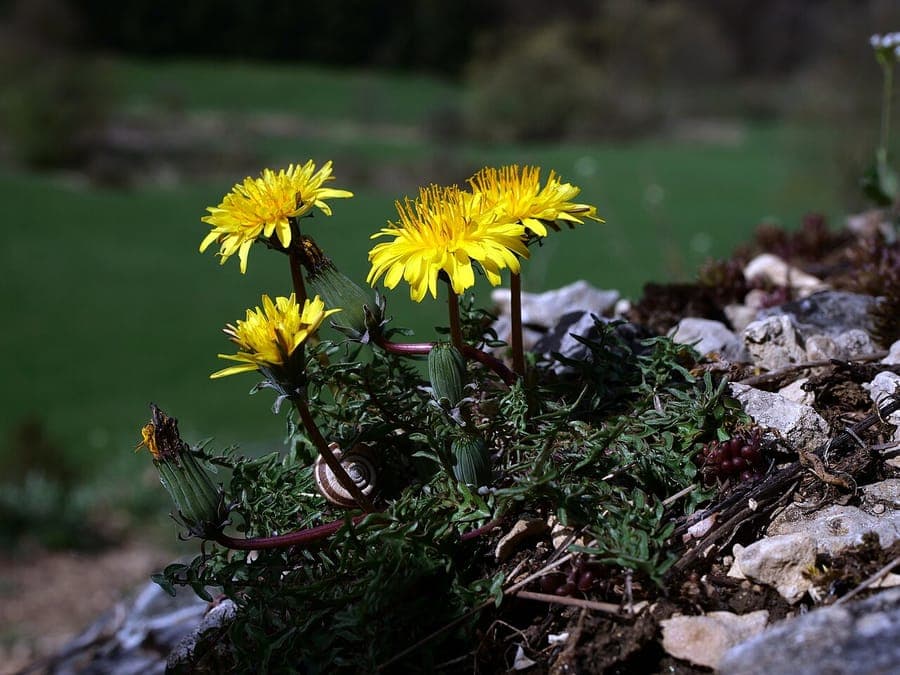
(c) Wolfgang Jauch, some rights reserved (CC BY) / CC BY 4.0, via Wikimedia Commons
Taraxacum rubicundum: complete guide
Taraxacum rubicundum
Want to see Taraxacum rubicundum: complete guide in your garden?
Full design in HD: €7.99
Look after your Taraxacum rubicundum with the GardenWorld app
Identify plants with your camera and get a care calendar with reminders for this plant.


Overview
Taraxacum rubicundum, commonly known as red-veined or ruddy dandelion, is a fascinating variant of the familiar dandelion found naturally throughout Europe. This plant distinguishes itself from its relatives through red tints in its stems and seedheads, giving it unique decorative value. While it may be considered a 'weed,' it is a nutritious plant with significant potential for use in modern garden designs and food production.
Red-veined dandelion is a strong, hardy plant requiring far less maintenance than many ornamental flowers. In the Netherlands and Belgium, you can find seeds and seedlings from specialized herb growers and garden centers like Intratuin. The plant grows easily and can be used in wildflower gardens, borders, and even food gardens for the edible roots and leaves.
Appearance and bloom
Taraxacum rubicundum grows as a low, rosette-like plant, typically 10 to 30 centimeters tall. The leaves resemble common dandelion, deeply lobed, but have a reddish tint especially along the veins. The characteristic red stems give the plant its name.
Flowers appear in spring and summer (April through October, depending on location and weather). Each flower is yellow and typically several bloom per plant. After flowering, impressive ball-shaped seedheads form, changing from white to red as they ripen, creating an additional decorative effect. The seeds disperse by wind.
Ideal location
Taraxacum rubicundum thrives best in full to partial sun, with at least four hours of direct sunlight daily. The plant also grows in shade, though flowering will be less abundant. It is extremely flexible regarding location.
Plant in a windless to moderately windy location, as the fine seedheads can be damaged by storms. The plant is completely indifferent to north/south orientation or special microclimate requirements.
Soil
Taraxacum rubicundum grows in almost all soil types, from heavy clay to light sand, from poor to rich. This makes it exceptionally tolerant. The plant performs better in well-drained soils but can thrive in less ideal conditions.
The plant grows well at pH values from 5.5 to 7.5, essentially everywhere. No soil preparation is needed; simply plant it and the plant will care for itself. Fertilization typically leads to lush foliage without much additional flowering.
Free preview
Want to see Taraxacum rubicundum: complete guide in your garden? Make a free preview of your design.
Watering
Once established, Taraxacum rubicundum is highly drought-tolerant and needs barely any supplemental water. Only in very dry summers can occasional watering be beneficial, especially for young plants in their first year. Once mature, no extra water is needed.
Excessive watering can be harmful, as it increases the risk of fungal diseases. The plant prefers dry feet to wet ones. With normal spring and summer rainfall, the plant grows without additional help.
Pruning
Taraxacum rubicundum requires no real pruning. You can let the plants grow as they wish. If you prefer less self-seeding, remove seedheads before they ripen and disperse. This also extends the flowering period.
At season's end (October to November), you can leave wilted leaves and stems as nutrition for next season. In early spring, there is no need to cut back; the plant regrows completely from the rootstock.
Maintenance calendar
January - February: Plant rests. No maintenance needed. Previous season self-seeding may appear.
March - April: New planting possible. Initial growth begins. No fertilizer needed.
May - June: Full growth and bloom. Remove seedheads if desired. No watering needed.
July - September: Continuous bloom. Watering only in extreme drought. Plant self-seeds.
October - December: Growth declines. Leaves wither. Plant does not die; roots remain alive.
Winter hardiness
Taraxacum rubicundum is fully hardy throughout Europe, tolerating temperatures down to -30 degrees Celsius. The plant survives all typical winters without protection and regrows each spring from its rootstock. The plant also tolerates extreme drought and repeated freezing cycles.
No protection is needed; the plant is self-sufficient. Even in very severe winters, above-ground growth retreats, but the root always survives.
Companion plants
Red-veined dandelion pairs beautifully in wildflower gardens with other native flowers like chicory, button snakeroot, and chamomile. Combinations with dandelion relatives, anemones, and wild tulips look lovely.
In food gardens, it grows well with other insect-pollinated flowers and dandelion varieties. In modern borders, it can be used as a low flower accent, especially for the red seedheads.
Closing
Taraxacum rubicundum is ideal for those seeking interesting, low-maintenance wildflowers with decorative value and food potential. Its extreme hardiness, minimal water and nutrition needs, and long blooming from spring through autumn make it valuable. Plant it anywhere other plants struggle, and enjoy the red tints in flower and seed. This is a self-caring plant. On gardenworld.app you will find inspiration for use in wild-ecological and modern garden designs.
Frequently asked questions about Taraxacum rubicundum
Is Taraxacum rubicundum winter hardy?
Taraxacum rubicundum is fully hardy throughout Europe, tolerating temperatures down to -30 degrees Celsius. The plant survives all typical winters without protection and regrows each spring from its rootstock.
When and how do you prune Taraxacum rubicundum?
Taraxacum rubicundum requires no real pruning. You can let the plants grow as they wish.
How much water does Taraxacum rubicundum need?
Once established, Taraxacum rubicundum is highly drought-tolerant and needs barely any supplemental water. Only in very dry summers can occasional watering be beneficial, especially for young plants in their first year.
Where does Taraxacum rubicundum grow best?
Taraxacum rubicundum thrives best in full to partial sun, with at least four hours of direct sunlight daily. The plant also grows in shade, though flowering will be less abundant.
What soil does Taraxacum rubicundum need?
Taraxacum rubicundum grows in almost all soil types, from heavy clay to light sand, from poor to rich. This makes it exceptionally tolerant.

See it in your garden
See Taraxacum rubicundum in your garden
One photo of your garden and a few questions. You see the result in about a minute.
Try it with a photoIdentify this plant in your own garden. Identify a plant
Similar plants
Frikart's aster (Aster × frikartii): complete guide
Aster × frikartii
Everything about Frikart's aster (Aster × frikartii): position, soil, pruning and hardiness of the aster that flowers lavender-blue from July to October.
False aster (Boltonia asteroides): complete guide
Boltonia asteroides
False aster (Boltonia asteroides) covers itself in white daisies from late August to October. How to plant, cut back and combine this tough, tall perennial.
Daisy bush (Brachyglottis greyi): care guide
Brachyglottis greyi
Brachyglottis greyi, formerly Senecio greyi, pairs silver felted leaves with yellow summer daisies. Advice on position, soil, pruning, hardiness and companions.
