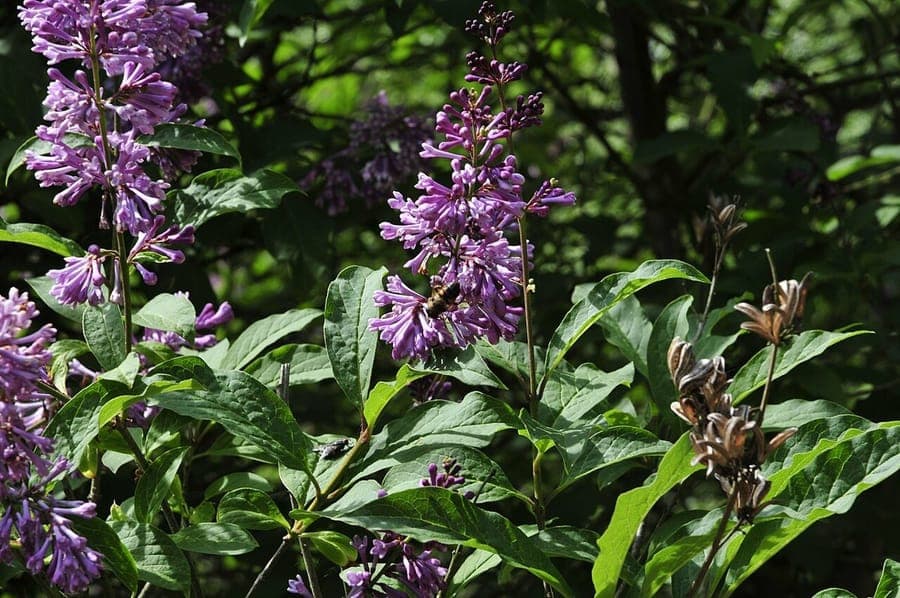
Homoarborea / CC0, via Wikimedia Commons
Preston lilac (Syringa × prestoniae): growing guide
Syringa × prestoniae
Want to see Preston lilac (Syringa × prestoniae): growing guide in your garden?
Full design in HD: €7.99
Look after your Preston lilac with the GardenWorld app
Identify plants with your camera and get a care calendar with reminders for this plant.


Overview
Preston lilac (Syringa × prestoniae) is a group of late-flowering lilacs bred in Canada and famous for their exceptional hardiness. The cross was made from 1920 onwards by Isabella Preston, a plant breeder at the Central Experimental Farm in Ottawa. She combined two Chinese species: Syringa villosa and Syringa komarovii subsp. reflexa, until recently known as Syringa reflexa. Preston named many of her seedlings after heroines from Shakespeare's plays, such as 'Audrey', 'Elinor' and 'Desdemona'. Dozens of further cultivars followed, including the bright pink 'Miss Canada' and the deep purplish-pink 'Donald Wyman'.
These hybrids flower two to three weeks after the common lilac (Syringa vulgaris), stretching the lilac season well into June. They form sturdy, upright shrubs 2.5 to 4 metres tall and 2.5 to 3 metres wide. In Canada and the United States they are also known as Canadian lilacs. On gardenworld.app you can have a garden design created in which a late lilac like this marks the shift from spring to summer, alongside peonies and roses.
Appearance and flowering season
The flowers are carried in large, loose panicles 15 to 25 cm long, which in many cultivars arch or nod slightly, a trait inherited from the reflexa parent. Each flower is a narrow tube about 1 cm long with four spreading lobes. Colours range from soft pink through lilac to deep purplish pink; pure white is rare. The photograph shows 'Audrey', with purple-pink panicles visited by a bee, alongside last year's brown, split seed capsules.
The scent differs from that of the common lilac: lighter, slightly spicy and less sweet. Some people even find it a little reminiscent of privet. If the classic lilac perfume is your main reason for planting, Syringa vulgaris is the better choice; if you want a late, generous display on a tough shrub, Syringa × prestoniae is hard to beat. Flowering runs from late May to mid-June.
The leaves are large, oblong to elliptic, 8 to 15 cm long and dark green with a slightly rough surface. Unlike those of the common lilac, they are not heart-shaped. In autumn they usually drop without notable colour. After flowering, brown seed capsules form and hang on the shrub into winter.
Ideal position
Plant this lilac in full sun or, at most, light partial shade. The more sun it gets, the better it flowers and the lower the risk of powdery mildew. An open spot with good air movement is ideal. As the shrub grows large, plant it at least 2.5 metres from other shrubs or buildings.
Syringa × prestoniae makes an excellent informal flowering hedge, a backdrop for a wide border or a specimen in a lawn. It copes well with wind. In small gardens, choose a more compact cultivar or plant a single shrub as a focal point rather than a row.
In a large container it will do well for a few years, but it eventually outgrows the pot and dries out too quickly, so a spot in open ground is better. To raise extra plants, take softwood cuttings from young shoots in June, or layer a low branch in spring by pegging it into the soil; after a year it will have its own roots.
Soil requirements
Lilacs like fertile, well-drained soil. Loam and clay are excellent as long as water does not stand on them. On sandy soil, work in plenty of compost at planting time. The ideal pH is around neutral to slightly alkaline; on acid soil, a handful of garden lime per square metre can help.
Plant preferably in autumn, while the soil is still warm, or in early spring. Dig a hole twice as wide as the root ball and set the plant at the same depth as it grew in the pot. A mulch of compost keeps the soil moist and full of life.
Free preview
Want to see Preston lilac (Syringa × prestoniae): growing guide in your garden? Make a free preview of your design.
Watering
After planting, water regularly during dry spells for the first two summers, roughly 10 to 15 litres a week. After that, an established shrub is fairly drought tolerant, although a long dry spell in May and June leads to a shorter display with smaller panicles. In such periods, give a thorough soak at the base once a week.
This lilac dislikes wet feet and will sulk where water lies in winter. Overwatering is therefore just as much to be avoided as prolonged drought.
Pruning
Prune Syringa × prestoniae straight after flowering, in June. The shrub forms next year's flower buds over summer, so pruning in autumn or winter removes them. Deadhead the spent panicles back to the first pair of healthy leaves if you want a tidy shrub and prefer the energy not to go into seed.
To keep the shrub young, remove one or two of the oldest stems at ground level each year from the fourth or fifth year onwards. A neglected, leggy shrub can be renovated over three years by taking out a third of the old stems each year.
One advantage over the common lilac: Preston hybrids on their own roots produce few or no suckers. Grafted plants are sometimes on a privet or common lilac rootstock; remove any shoots that appear below the graft as low down as possible.
Maintenance calendar
March: Scatter compost or an organic fertiliser around the shrub. Remove dead wood.
April to May: New shoots develop. Check for aphids and for lilac leaf miner, whose caterpillars tunnel inside the leaves.
Late May to June: Flowering. Prune immediately afterwards and remove the spent panicles.
July to August: Water during long dry spells. Next year's flower buds are forming.
September to November: A good time for planting. Top up the mulch.
December to February: Dormant. Do not prune.
Winter hardiness
The Preston hybrids were bred specifically for Canada's harsh climate, and it shows. In North America they are rated hardy to zone 2 or 3, which means temperatures well below -30 °C. In Britain and north-west Europe, winter damage is never an issue. Late frosts rarely cause problems either, because the shrub flowers so late.
As for disease, the group is fairly robust. Powdery mildew may appear in a warm, dry late summer but is mainly cosmetic. Bacterial blight of lilac (Pseudomonas syringae), which blackens and wilts young shoots, and lilac leaf miner occasionally occur; cut out affected shoots.
Lilacs are regarded as non-toxic to people and are listed by the ASPCA as non-toxic to cats and dogs. That applies to the genus in general; naturally, the plant is not for eating. Syringa × prestoniae does not spread invasively.
Companion plants
Because it flowers late, this lilac pairs beautifully with plants of late May and June. Peonies (Paeonia lactiflora) in white or pink flower at the same time and fill the base of the shrub. The Japanese rose (Rosa rugosa) and mock orange (Philadelphus coronarius) carry the scented season onwards.
To lengthen the lilac season, plant a common lilac (Syringa vulgaris) nearby, which flowers a few weeks earlier. Giant ornamental onion (Allium giganteum), with purple globes on tall stems, matches both the colour and the timing. The planting calendar on gardenworld.app helps you line up the flowering of all these partners.
Final thoughts
Syringa × prestoniae is the lilac for anyone who wants more than a few weeks of flowers in May. The Preston hybrids are tough, extremely hardy and extend the lilac season into June. Give them sun, fertile soil without waterlogging and a prune straight after flowering, and they will flower reliably year after year with large, graceful panicles in pink, lilac and purple.
Frequently asked questions about Preston lilac
Is Preston lilac winter hardy?
The Preston hybrids were bred specifically for Canada's harsh climate, and it shows. In North America they are rated hardy to zone 2 or 3, which means temperatures well below -30 °C.
When and how do you prune Preston lilac?
Prune Syringa × prestoniae straight after flowering, in June. The shrub forms next year's flower buds over summer, so pruning in autumn or winter removes them.
How much water does Preston lilac need?
After planting, water regularly during dry spells for the first two summers, roughly 10 to 15 litres a week. After that, an established shrub is fairly drought tolerant, although a long dry spell in May and June leads to a shorter display with smaller panicles.
What soil does Preston lilac need?
Lilacs like fertile, well-drained soil. Loam and clay are excellent as long as water does not stand on them.

See it in your garden
See Preston lilac in your garden
One photo of your garden and a few questions. You see the result in about a minute.
Try it with a photoIdentify this plant in your own garden. Identify a plant
Similar plants
Common Lilac: complete guide
Syringa vulgaris
Everything about Common Lilac (Syringa vulgaris): planting, pruning, care and propagation. Practical tips for abundant, fragrant May blooms.
Garden peony: complete guide
Paeonia lactiflora
Everything about the garden peony (Paeonia lactiflora): planting depth, fragrant blooms, cultivars and long-term care. Expert tips for flowers that last a lifetime.
Rugosa Rose: complete guide
Rosa rugosa
Everything about the Rugosa Rose (Rosa rugosa): planting, pruning, care and winter hardiness. Practical tips for abundant blooms in your garden.
