
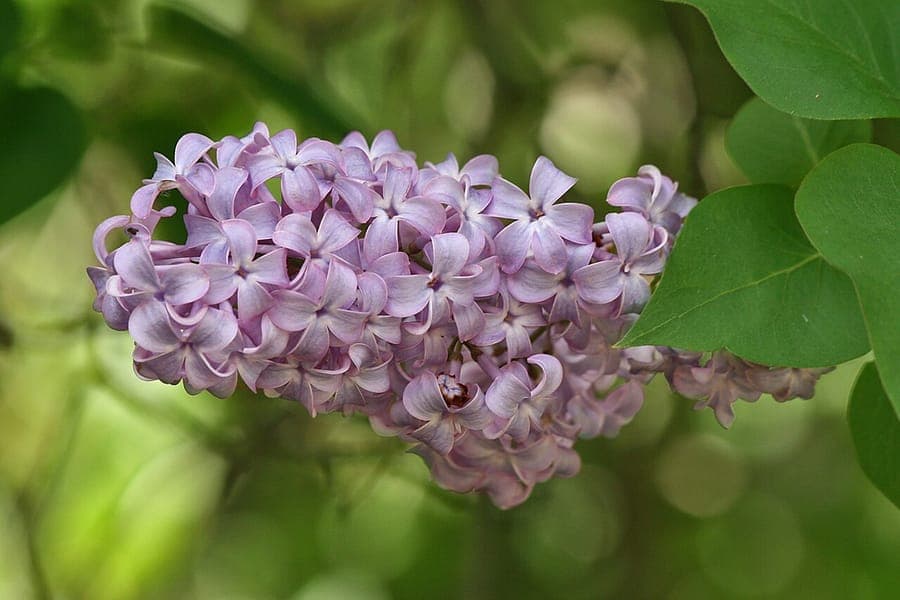
Jjron / CC BY-SA 3.0, via Wikimedia Commons
Common Lilac: complete guide
Syringa vulgaris
Want to see Common Lilac: complete guide in your garden?
1 minute, no credit card
Overview
The Common Lilac (Syringa vulgaris) is one of the most iconic spring-flowering shrubs in gardens across Europe and North America. This deciduous member of the olive family (Oleaceae) has been treasured for centuries for its lavish flower display and intoxicating fragrance that perfumes entire neighbourhoods in May. Originally native to south-eastern Europe - principally the Balkans - the lilac spread across the continent from the sixteenth century onward and secured a permanent place in cottage gardens, estate plantings, and city parks alike.
The common lilac grows as a vigorous multi-stemmed shrub or small tree reaching 3 to 7 metres in height. On gardenworld.app you can create a garden design in which the lilac takes an elegant starring role, whether as a free-standing specimen, an informal hedge, or a backdrop to a perennial border. The heart-shaped leaves are fresh green and form a dense canopy that provides pleasant shade in summer. It is the flowers, however, that make the lilac a star: large, pyramidal panicles 15 to 25 cm long, composed of hundreds of small, four-lobed florets that release an irresistible sweet perfume.
Appearance and bloom period
Lilac blooms in May, sometimes as early as late April in mild years, for a period of two to three weeks. The flower panicles appear at the tips of the previous year's wood and stand upright above the young foliage. The colour of the wild species is lilac-purple, but centuries of breeding have produced hundreds of cultivars in white, pink, magenta, deep purple, and even bicolour.
Three cultivars deserve special mention. 'Mme Lemoine' is the most famous white lilac: large, densely double flowers with an overwhelming fragrance. 'Charles Joly' offers deep purple, double blooms that verge on magenta and are superb as cut flowers. 'Sensation' is unique with its bicolour flowers: each purple floret carries a crisp white margin, creating a striking contrast. All three are widely available as container plants at garden centres.
After flowering, brown seed capsules form and persist on the branches deep into winter. Autumn foliage colour is unremarkable - the leaves drop yellow-green. The bark of mature specimens is grey-brown and lightly furrowed, giving the shrub some winter interest.
Ideal location
Lilacs are confirmed sun-lovers. For the richest flowering, plant them in a position that receives at least six hours of direct sunlight per day. A southern or western exposure is ideal. In partial shade the lilac will grow but flower markedly less. Full shade produces a spindly shrub with scarcely any blooms.
Choose a site with ample room: a mature lilac can spread 3 to 5 metres wide. Maintain at least 2 metres distance from buildings and other shrubs. Lilacs tolerate wind well and can even serve as a windbreak hedge. Avoid, however, low-lying pockets where cold air collects - late spring frosts can damage flower buds.
The lilac is exceptionally winter-hardy (USDA zones 3 to 7) and survives temperatures down to -40 degrees Celsius without difficulty. Paradoxically, lilacs actually need cold winters: without a sufficiently long chilling period (at least six to eight weeks below 7 degrees Celsius), they set fewer flower buds. This makes them less suited to mild coastal climates.
Soil requirements
Lilacs are surprisingly tolerant regarding soil but perform best in fertile, well-drained ground with a neutral to slightly alkaline pH (6.5 to 7.5). Calcareous soil is ideal - on naturally lime-rich ground, lilacs grow most vigorously and flower most profusely. On acid soil, apply garden lime at 200 to 300 grams per square metre.
Avoid waterlogged conditions: lilacs cannot tolerate wet feet, particularly in winter. In heavy clay, work a generous quantity of coarse sand and compost into the top 40 cm to improve drainage. In sandy soil, add compost and well-rotted manure to increase moisture retention. A mulch layer of 5 to 8 cm bark compost keeps the soil evenly moist while slowly feeding the shrub.
Planting
The best planting season for lilacs is autumn (October to November) or early spring (March). Container-grown plants can be planted throughout the growing season, provided you water well during the first weeks. Dig a planting hole twice as wide as the root ball and the same depth. Mix the excavated soil with a spadeful of compost and a handful of bone meal for phosphorus, which promotes flowering.
Set the shrub at the same depth as it stood in the pot - no deeper. Back-fill the hole, firm the soil gently, and water immediately with 10 to 15 litres. Apply a mulch layer but keep it 10 cm from the trunk to prevent collar rot. Staking is only necessary for specimens above 1.5 metres on windy sites.
When planting a lilac hedge, space plants 1.5 to 2 metres apart. Expect it to take four to five years before the hedge forms a closed screen. For a free-standing specimen, allow at least 3 metres clearance from other planting.
Free design
Want to see Common Lilac: complete guide in your garden? Make a free design now.
Watering and feeding
An established lilac (older than two years) seldom needs supplementary water in a temperate maritime climate. During the first and second year after planting, water weekly in dry spells with 10 to 15 litres, applied at the base. Soak the root zone deeply - surface sprinkling encourages shallow rooting.
Feeding is straightforward. In early spring (March), apply an organic fertiliser or a handful of blood meal per shrub. After flowering in June, a light top-dressing of compost is beneficial. Avoid high-nitrogen synthetic fertiliser: it drives leaf growth at the expense of flowers. Over-feeding produces a lush green shrub that barely blooms - a common complaint with lilacs.
Pruning
Correct pruning is the key to abundant annual flowering. Lilacs bloom on the previous year's wood, so pruning timing is crucial. Always prune immediately after flowering, by mid-June at the latest. Pruning later removes the buds destined to produce next year's flowers.
For the annual maintenance prune, remove spent panicles by cutting just above the first pair of healthy buds. Also remove weak, crossing, and dead branches. Keep the centre of the shrub open for light and air circulation - this reduces powdery mildew and encourages flowering throughout the bush.
Every three to five years, a rejuvenation prune is needed. Remove one-third of the oldest, thickest stems to 30 cm above ground level. This stimulates fresh shoots from the base. Spread this heavy pruning over three years (one-third each year) to avoid weakening the shrub unduly. After a rejuvenation prune, expect one to two years before full flowering returns.
Root suckers form regularly around the base. Remove them unless you want the shrub to spread. On grafted lilacs, suckers from the rootstock produce unwanted flowers of a different colour or growth habit.
Pests and diseases
The most common affliction of lilacs is powdery mildew, a white fungal coating on the leaves that appears mainly in warm, humid late summers. Mildew is rarely fatal but is aesthetically displeasing. Improve air circulation through regular pruning and avoid overhead irrigation. For severe infections, use a biological fungicide.
Lilac leaf miner is a relatively recent pest that causes brown blotches and mines in the foliage. Remove affected leaves and clear fallen leaves thoroughly in autumn. Lilac borer, a larva that tunnels into stems, is fortunately uncommon. Check older specimens for sawdust-like frass at the stem base.
Bacterial blight (Pseudomonas syringae) can cause young shoots to die back in wet springs. Prune affected branches well back into healthy wood and disinfect secateurs between cuts with rubbing alcohol.
Propagation
Lilacs are easily propagated by root suckers, cuttings, or layering. Root suckers are the simplest method: in autumn, dig up a sucker with adequate roots and replant it at the new location. Note: on grafted specimens, suckers are from the rootstock and will not reproduce the desired cultivar.
For cuttings, take semi-ripe cuttings 10 to 15 cm long in June. Remove the lower leaves, dip the cut end in rooting hormone, and insert into a mix of peat-free cutting compost and perlite. Under a cloche or in a propagator they root in six to eight weeks.
Companion plants
Lilacs combine beautifully with other spring-flowering plants. Partner them with crab apples (Malus), hawthorns (Crataegus), and dogwoods (Cornus) for a spectacular spring border. Under-plant with bulbs: tulips, narcissi, and alliums bloom simultaneously and fill the lower storey of the lilac border.
Butterfly Bush (Buddleja davidii) picks up the baton once the lilac has finished and provides summer colour in the same area. Hydrangeas (Hydrangea macrophylla) offer colour from June to September in the partial shade that the lilac creates once it leafs out. Rosa rugosa with its continuous flowering and decorative hips makes a fine partner in a mixed hedge.
Final thoughts
The lilac is a plant that lasts generations - specimens a hundred years old are not uncommon. It asks for little maintenance, is iron-hardy, and rewards you every May with an overwhelming display and a fragrance that stirs memories. Choose a cultivar that suits your garden style and plant it this autumn in a sunny spot.
On gardenworld.app you can create a garden design that integrates the lilac seamlessly with your existing planting, with the right companion plants for your soil and light conditions. Give this spring icon a prominent place in your garden and enjoy, year after year, the most fragrant moment of the gardening calendar.
Want to see Common Lilac: complete guide in your garden? Make a free design now.
Upload a photo, pick a style, and get a photorealistic design with plant list in under a minute.
No credit card required


Similar plants
Butterfly Bush: complete guide
Buddleja davidii
Everything about the Butterfly Bush (Buddleja davidii): planting, pruning, care and attracting butterflies. Practical tips for a blooming butterfly garden.
Bigleaf Hydrangea: complete guide
Hydrangea macrophylla
Everything about the Bigleaf Hydrangea (Hydrangea macrophylla): planting, pruning, flower colour control and winter protection. Practical tips for lush blooms.
Rugosa Rose: complete guide
Rosa rugosa
Everything about the Rugosa Rose (Rosa rugosa): planting, pruning, care and winter hardiness. Practical tips for abundant blooms in your garden.