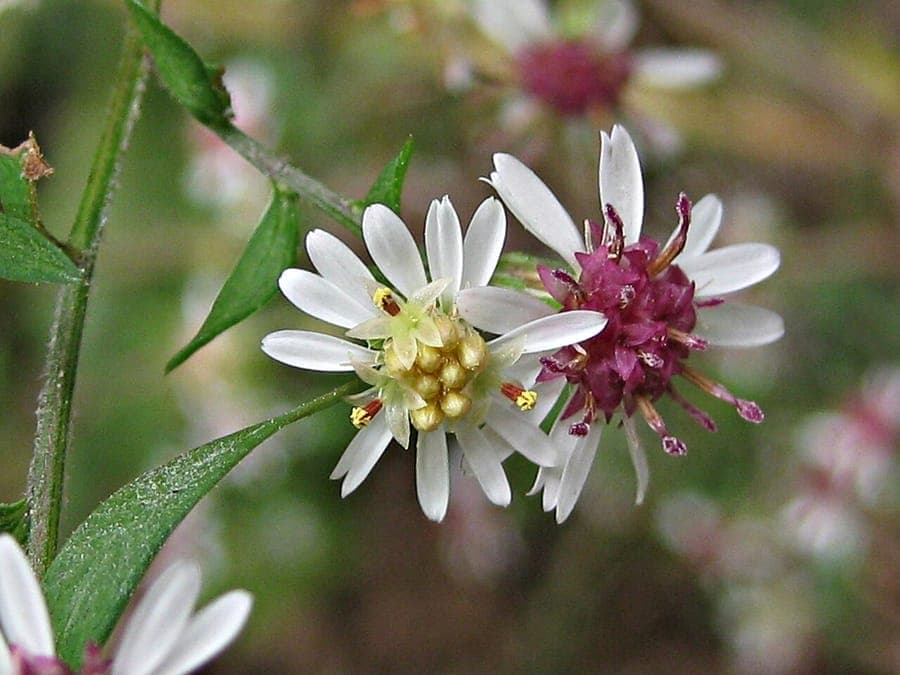
Cathie Bird / CC BY-SA 2.0, via Wikimedia Commons
Calico aster: complete guide
Symphyotrichum lateriflorum
Want to see Calico aster: complete guide in your garden?
Full design in HD: €7.99
Look after your Calico aster with the GardenWorld app
Identify plants with your camera and get a care calendar with reminders for this plant.


Overview
Calico asters (Symphyotrichum lateriflorum) are native North American plants that bring delicate autumn charm to gardens across temperate zones. Members of the Asteraceae family, they are prized for their late-season blooms and airy growth habit. Found naturally in woodlands and forest edges from Canada to Mexico, these plants have become increasingly popular in European gardens.
The distinctive sideways arrangement of flowers along the stem gives the plant its character. With tiny white flower heads and golden centres, combined with an extended bloom period, calico asters make an ideal addition to autumn borders and cutting gardens.
Appearance and bloom
Calico asters reach heights of 60 to 120 centimetres and spread approximately 60 centimetres wide. The plant displays fine, lance-shaped leaves arranged along slender stems in an open, airy manner. Flowers bloom as tiny white flowerheads with yellow centres from September through November.
The plant grows in a loose, elegant form that resists stem breakage from wind. Foliage remains green and healthy throughout the season when properly managed. In autumn, some cultivars develop light reddish tinges, adding extra colour interest.
Ideal location
Calico asters thrive in full sun to light dappled shade. At least 6 hours of direct daily sunlight produces compact growth and abundant flowering. In very hot climates, afternoon shade benefits the plants.
The plants tolerate shadier situations, though flowering may be less abundant. Choose locations with good air circulation to prevent fungal diseases and bacterial issues.
Soil
Calico asters are not particularly fussy about soil composition. They grow well in standard garden soil but prefer moderately fertile, well-drained conditions with a pH between 5.5 and 7.5. Excellent drainage is essential, especially during winter months.
Amend planting holes with compost or peat to improve water retention. A thick mulch layer helps retain moisture while suppressing weeds throughout the growing season.
Free preview
Want to see Calico aster: complete guide in your garden? Make a free preview of your design.
Watering
Established calico asters are relatively drought tolerant after two growing seasons. Water weekly during dry periods, especially for young plants. Avoid waterlogging, as this causes bacterial leaf spot and root rot.
Water in early morning rather than evening to minimize fungal disease risk. Check soil moisture by inserting a finger 3 centimetres deep. If this feels dry, watering is needed.
Pruning
Pinching back in June creates more compact, bushy plants. Remove approximately one-third of the height at this time. This promotes side branching and fuller flower displays in autumn.
Do not deadhead flowers unless the plant looks untidy, as plants self-seed. Leave stems standing through winter for bird food if desired.
Maintenance calendar
Spring: Plant outdoors after frost danger passes. Add compost and water thoroughly. Summer: Water regularly. Pinch back in June for better branching. Autumn: Enjoy abundant blooming from September through November. Cut back to 10 centimetres height in November. Winter: Plants overwinter in-ground. Provide mulch protection in severe winters.
Winter hardiness
Calico asters are fully hardy to -20 degrees Celsius across Europe. They suit all temperate garden zones. In very wet winters, root rot can occur, so ensure good drainage throughout.
In very exposed, windy locations, plants may require protection or staking, especially top-heavy varieties.
Companion plants
Pair calico asters successfully with:
- Chrysanthemums for extended autumn colour
- Ornamental grasses for texture and movement
- Sedum for contrasting forms
- Eupatorium for earlier autumn blooms
- Achillea for yellow accents in fall gardens
Calico asters function excellently as filler plants in large borders, creating transition and linking elements throughout the design.
Closing
Calico asters are valuable autumn bloomers that enrich any garden. Their delicate appearance, extended flowering period and low maintenance needs make them ideal for modern and informal garden designs. Whether you are a cut flower enthusiast or simply want autumn colour, the calico aster deserves a place in your garden.
Find quality calico asters at local garden centres. For more inspiration with autumn bloomers, visit gardenworld.app where you can explore professional garden designs. The team at gardenworld.app can also help with autumn planting concepts.
Frequently asked questions about Calico aster
Is Calico aster winter hardy?
Calico asters are fully hardy to -20 degrees Celsius across Europe. They suit all temperate garden zones.
When and how do you prune Calico aster?
Pinching back in June creates more compact, bushy plants. Remove approximately one-third of the height at this time.
How much water does Calico aster need?
Established calico asters are relatively drought tolerant after two growing seasons. Water weekly during dry periods, especially for young plants.
Where does Calico aster grow best?
Calico asters thrive in full sun to light dappled shade. At least 6 hours of direct daily sunlight produces compact growth and abundant flowering.
What soil does Calico aster need?
Calico asters are not particularly fussy about soil composition. They grow well in standard garden soil but prefer moderately fertile, well-drained conditions with a pH between 5.5 and 7.5.

See it in your garden
See Calico aster in your garden
One photo of your garden and a few questions. You see the result in about a minute.
Try it with a photoIdentify this plant in your own garden. Identify a plant
Similar plants
Frikart's aster (Aster × frikartii): complete guide
Aster × frikartii
Everything about Frikart's aster (Aster × frikartii): position, soil, pruning and hardiness of the aster that flowers lavender-blue from July to October.
False aster (Boltonia asteroides): complete guide
Boltonia asteroides
False aster (Boltonia asteroides) covers itself in white daisies from late August to October. How to plant, cut back and combine this tough, tall perennial.
Daisy bush (Brachyglottis greyi): care guide
Brachyglottis greyi
Brachyglottis greyi, formerly Senecio greyi, pairs silver felted leaves with yellow summer daisies. Advice on position, soil, pruning, hardiness and companions.
