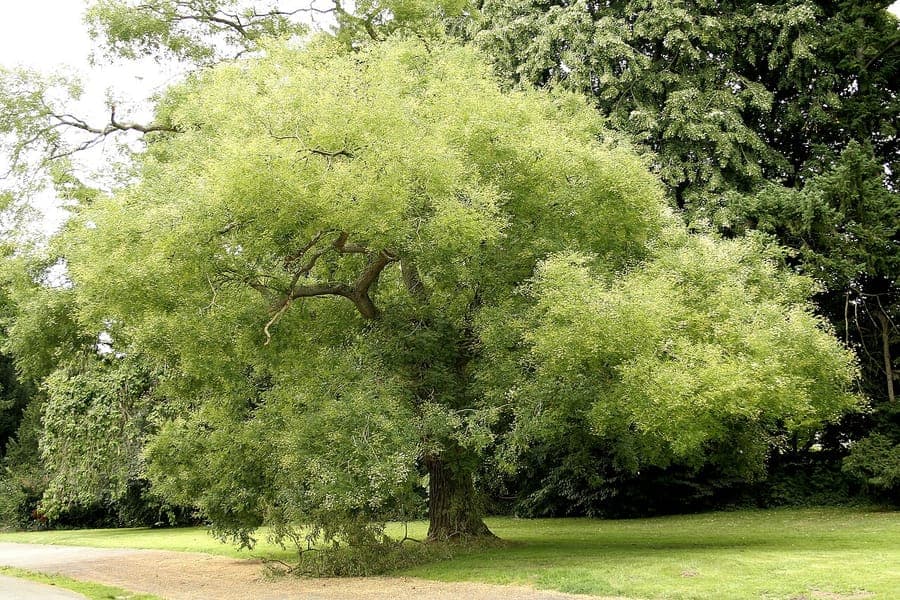
Jean-Pol GRANDMONT / CC BY 3.0, via Wikimedia Commons
Japanese pagoda-tree: complete guide
Styphnolobium japonicum
Want to see Japanese pagoda-tree: complete guide in your garden?
Full design in HD: €7.99
Look after your Japanese pagoda-tree with the GardenWorld app
Identify plants with your camera and get a care calendar with reminders for this plant.


Japanese Pagoda-Tree: Complete Guide
The Japanese pagoda-tree (Styphnolobium japonicum), also called Pagoda-tree, is a beautiful deciduous tree from Central and South China. This member of the legume family (Fabaceae) is known for its elegant growth, impressive white flowers, and fine ornamental value. In this complete guide, we present this magnificent garden tree.
Overview
Styphnolobium japonicum is a medium-sized tree naturally found in mixed forests. The tree reaches normal heights of 15 to 25 meters. In gardens, the tree grows more compactly and is usually 10 to 15 meters tall. The tree is known for rapid growth in favorable conditions.
Appearance and Bloom
The tree has an elegant, open crown with fine, compound leaves that fall in July. The leaves are 15-25 cm long and consist of 13-17 small leaflets. Very striking white flowers appear in July-August in large, hanging panicles 20-30 cm long. The flowers smell lightly sweet and attract bees. After flowering, long, swollen pods of 5-10 cm form.
Ideal Location
The Japanese pagoda-tree thrives in full sun (minimum 6 hours of daily sunlight). The tree can also grow in semi-shade, but will flower less abundantly. Choose a sheltered, but not too warm location for optimal growth.
Soil
The tree is not very particular about soil. Good drainage is, however, essential; avoid wet or poorly draining soils. The tree grows better in nutrient-rich, neutral to slightly alkaline soil. Heavy clay soils can be amended with sand and compost.
Free preview
Want to see Japanese pagoda-tree: complete guide in your garden? Make a free preview of your design.
Watering
Young trees need regular watering until well-established (2-3 years). After that, the tree is relatively drought-tolerant. In very dry summers, supplementary watering can be beneficial. In winter, minimal watering.
Pruning
The Japanese pagoda-tree usually requires little pruning. Remove damaged or overlapping branches in spring. Prevent dense growth by avoiding excessive pruning, as this worsens flowering.
Maintenance Calendar
In spring: prune damaged branches, replenish mulch layer. Summer: water regularly during dry periods. After flowering: remove withered panicles. Fall: clean up fallen leaves. Winter: no maintenance needed.
Winter Hardiness
The Japanese pagoda-tree is hardy in zones 5-10 (down to approximately -25 degrees Celsius). In very cold regions, young trees can be protected with a bag or stake against wind.
Health and Pests
The tree is relatively pest-resistant. Occasionally insects may occur, but usually cause no serious damage. Fungi can occur in very moist situations; ensure good ventilation.
Companion Plants
The Japanese pagoda-tree combines well with other trees such as Cherry, Magnolia, and Hawthorn. Shade-loving ground covers under the tree also work well.
Conclusion
The Japanese pagoda-tree is a beautiful choice for gardens seeking elegance, flowering abundance, and ornamental value. With its rapid growth and low-maintenance character, it is a perfect addition to any garden. For more garden inspiration, visit gardenworld.app/en.
Frequently asked questions about Japanese pagoda-tree
Is Japanese pagoda-tree winter hardy?
The Japanese pagoda-tree is hardy in zones 5-10 (down to approximately -25 degrees Celsius). In very cold regions, young trees can be protected with a bag or stake against wind.
When and how do you prune Japanese pagoda-tree?
The Japanese pagoda-tree usually requires little pruning. Remove damaged or overlapping branches in spring.
How much water does Japanese pagoda-tree need?
Young trees need regular watering until well-established (2-3 years). After that, the tree is relatively drought-tolerant.
Where does Japanese pagoda-tree grow best?
The Japanese pagoda-tree thrives in full sun (minimum 6 hours of daily sunlight). The tree can also grow in semi-shade, but will flower less abundantly.
What soil does Japanese pagoda-tree need?
The tree is not very particular about soil. Good drainage is, however, essential; avoid wet or poorly draining soils.

See it in your garden
See Japanese pagoda-tree in your garden
One photo of your garden and a few questions. You see the result in about a minute.
Try it with a photoIdentify this plant in your own garden. Identify a plant
Similar plants
Pineapple broom (Argyrocytisus battandieri): complete guide
Argyrocytisus battandieri
Everything about pineapple broom (Argyrocytisus battandieri), the Moroccan wall shrub with silver leaves and pineapple-scented flowers: site, pruning and hardiness.
Blue false indigo: complete guide
Baptisia australis
Everything about blue false indigo (Baptisia australis): position, soil, watering, cutting back, hardiness and toxicity. A long-lived prairie perennial with indigo flowers.
Warminster broom (Cytisus × praecox): complete guide
Cytisus × praecox
Everything about Warminster broom (Cytisus × praecox): position, poor soil, pruning after flowering, hardiness and what you need to know about its toxicity.
