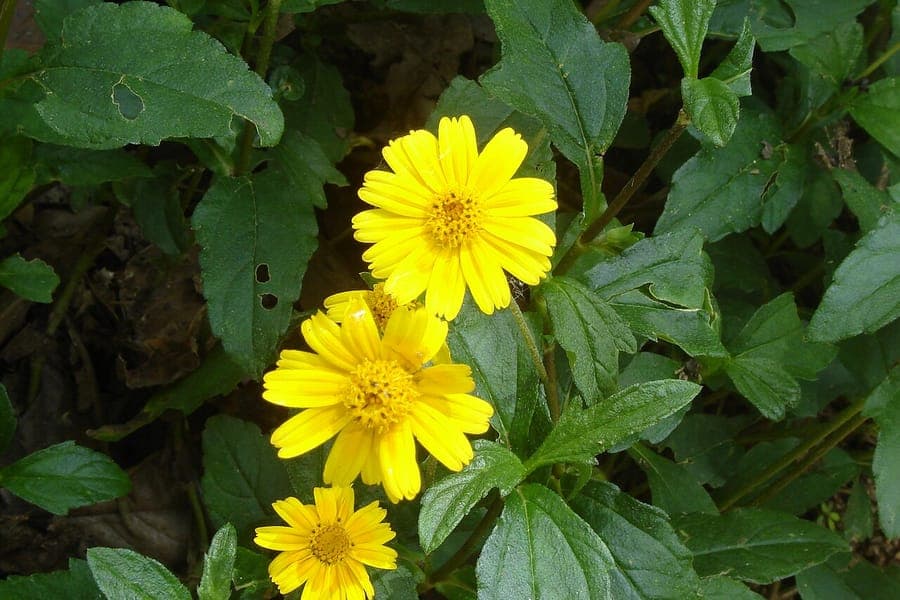
Wikimedia Commons / CC BY-SA 2.5, via Wikimedia Commons
Creeping oxeye: complete guide
Sphagneticola trilobata
Want to see Creeping oxeye: complete guide in your garden?
Full design in HD: €7.99
Look after your Creeping oxeye with the GardenWorld app
Identify plants with your camera and get a care calendar with reminders for this plant.


Overview
The creeping oxeye or wedelia (Sphagneticola trilobata) is a versatile, creeping plant belonging to the Asteraceae family. This plant naturally occurs from Mexico through South America, where it thrives as a groundcover in tropical and subtropical regions.
The plant is celebrated for its cheerful yellow flowers and vigorous growth. It grows rapidly and forms dense carpets of small blooms. This makes it ideal for hanging baskets, borders, and as a quick-growing groundcover. The plant is also wonderfully low-maintenance - even beginners manage it successfully.
In warm climates, wedelia is frequently used in garden design because of its floriferous habit and drought tolerance once established.
Appearance and Bloom
The creeping oxeye grows as a low, trailing plant that spreads generously. The leaves are small, soft, and distinctly three-lobed, hence the botanical name 'trilobata'.
The flowers are small, bright yellow, and appear in profusion. They bloom throughout the growing season, from spring through autumn. Even a few flowers simultaneously give the plant a cheerful appearance. In full bloom, the plant becomes a golden carpet of tiny yellow flowers.
After blooming, seeds develop. The plant also self-seeds readily in suitable conditions.
Ideal Location
The creeping oxeye loves full sun. With a minimum of 6 hours of direct sunlight daily, it flourishes. In shade, growth slows and flowering becomes sparse.
The plant is tropical to subtropical in nature. It cannot tolerate frost, so in temperate climates it grows best in warm locations, against sunny walls, or in containers that move indoors for winter.
Once established, the plant is remarkably drought-tolerant.
Soil Requirements
The creeping oxeye grows in virtually any soil type, provided drainage is good. It even thrives in poor soils. Add compost when planting, but special preparation isn't necessary.
The plant tolerates sandy, clayey, and loamy soils equally. Appreciate its flexibility!
Free preview
Want to see Creeping oxeye: complete guide in your garden? Make a free preview of your design.
Watering
Once established, the creeping oxeye is very drought-tolerant. After the first season, water only during extended dry periods.
In the first weeks after planting, water regularly to establish the root system. After that, reduce watering significantly.
Excessive water is not beneficial - well-drained soil is preferred. In containers, ensure drainage holes.
Pruning
Pruning keeps the plant compact and floriferous. Cut back lightly at the start of the growing season to encourage branching.
If the plant becomes leggy and sprawling, prune cautiously. This stimulates fresh growth.
Remove any dead or damaged material.
Maintenance Calendar
Late spring: Plant out or bring indoors if growing as a houseplant. Start regular watering.
Summer: Flowering at peak. Minimal care needed. Water only during dry spells.
Autumn: Blooming continues. Start reducing feeding. Check for pests.
Winter: In temperate climates, bring indoors. Minimal watering. In warm zones, growth can continue.
Winter Hardiness
The creeping oxeye is not hardy. Temperatures below 5-10 degrees Celsius will damage it.
In temperate climates, grow it as a summer plant. Place outdoors in May-June and bring in before October.
If you collect seeds, you can start fresh from seed the following year.
Companion Plants
The creeping oxeye pairs well with other sun-lovers and drought-tolerant plants. Other groundcovers and low-growing shrubs combine nicely.
In hanging baskets, combine it with other trailing plants with contrasting textures and flower colors.
Conclusion
The creeping oxeye is a cheerful, low-maintenance plant that repays attention with abundant blooms. Its yellow flowers and trailing habit make it suitable for many situations. Try this rewarding plant in your warm, sunny spot!
For sourcing: Many garden centers stock wedelia. Online plant suppliers also offer it. Visit gardenworld.app for plant sourcing information.
Frequently asked questions about Creeping oxeye
Is Creeping oxeye winter hardy?
The creeping oxeye is not hardy. Temperatures below 5-10 degrees Celsius will damage it.
When and how do you prune Creeping oxeye?
Pruning keeps the plant compact and floriferous. Cut back lightly at the start of the growing season to encourage branching.
How much water does Creeping oxeye need?
Once established, the creeping oxeye is very drought-tolerant. After the first season, water only during extended dry periods.
Where does Creeping oxeye grow best?
The creeping oxeye loves full sun. With a minimum of 6 hours of direct sunlight daily, it flourishes.
What soil does Creeping oxeye need?
The creeping oxeye grows in virtually any soil type, provided drainage is good. It even thrives in poor soils.

See it in your garden
See Creeping oxeye in your garden
One photo of your garden and a few questions. You see the result in about a minute.
Try it with a photoIdentify this plant in your own garden. Identify a plant
Similar plants
Frikart's aster (Aster × frikartii): complete guide
Aster × frikartii
Everything about Frikart's aster (Aster × frikartii): position, soil, pruning and hardiness of the aster that flowers lavender-blue from July to October.
False aster (Boltonia asteroides): complete guide
Boltonia asteroides
False aster (Boltonia asteroides) covers itself in white daisies from late August to October. How to plant, cut back and combine this tough, tall perennial.
Daisy bush (Brachyglottis greyi): care guide
Brachyglottis greyi
Brachyglottis greyi, formerly Senecio greyi, pairs silver felted leaves with yellow summer daisies. Advice on position, soil, pruning, hardiness and companions.
