Kurt Stüber [1] / CC BY-SA 3.0, via Wikimedia Commons
Skimmia japonica: complete guide
Skimmia japonica
Want to see Skimmia japonica: complete guide in your garden?
Full design in HD: €7.99
Look after your Skimmia japonica with the GardenWorld app
Identify plants with your camera and get a care calendar with reminders for this plant.


Overview
Skimmia japonica is an evergreen shrub in the Rutaceae family, native to Japan and surrounding regions. This attractive specimen is celebrated for its hardiness, fragrant foliage, and especially its highly decorative red berries that persist long on the plant. With its compact growth habit and minimal maintenance requirements, it is an ideal choice for shaded corners and modern gardens.
Appearance and Bloom
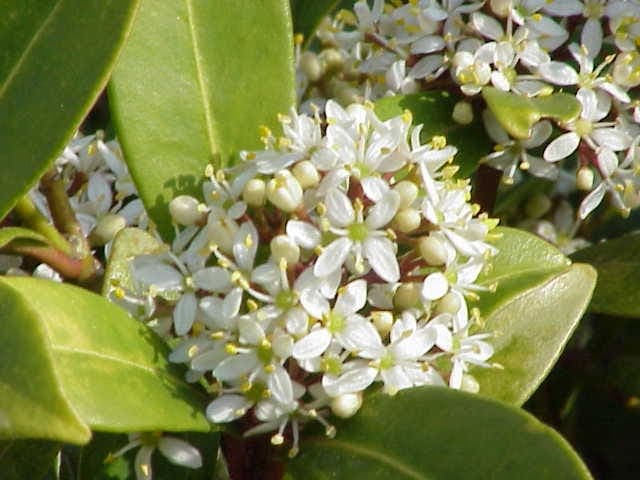
Skimmia japonica grows as a compact, densely branched shrub reaching 1 to 1.5 meters in height. The leaves are narrow-lanceolate, dark green, smooth, and glossy. In spring, small white or pink flowers appear in panicle-like clusters. The true attraction comes from the highly decorative red fruits that remain on the plant from October through March.
Ideal Location
Skimmia japonica is excellent for partial shade to full shade. While it has some sun tolerance, it grows better in shaded locations where it is protected from midday sun. This makes it ideal for shaded corners and spots under trees.
Soil
This plant is not demanding regarding soil composition but grows best in well-draining, humus-rich soil. Skimmia japonica thrives best in acidic to slightly acidic soil (pH 5-6.5). Heavy clay soils should be amended with organic material.
Watering
Water regularly, especially during dry periods and for young plants. Ensure well-draining soil to prevent stagnation. During active growth, water needs can decrease, but ensure the plant does not dry out completely. Mulch helps retain moisture.
Free preview
Want to see Skimmia japonica: complete guide in your garden? Make a free preview of your design.
Pruning
Skimmia japonica requires minimal pruning. Remove only dead or damaged branches in spring. Light trimming can be done to maintain compact form, but this may result in fewer fruits.
Maintenance Calendar
February-March: Check for winter damage, light pruning if needed. April-June: Growth period with regular watering. July-September: Reduced watering, preparation for flower formation. October-January: Enjoy the red berries with minimal maintenance.
Winter Hardiness
Skimmia japonica is very winter hardy, tolerating temperatures down to -10 to -15 degrees Celsius. This makes it an excellent choice for colder gardens. The red berries remain beautifully visible throughout winter.
Companion Plants
Combine Skimmia japonica with other shade-lovers such as Aucuba japonica, Mahonia, and Fatsia japonica. The red berries provide winter color when little else is growing. Pair it with ferns and heart-leaved plants for interesting leaf contrasts.
Closing Thoughts
Skimmia japonica is a perfect choice for those seeking winter color and structure without excessive maintenance. With fragrant foliage, decorative flowers, and especially beautiful red berries, it offers year-round interest. It is highly suitable for shaded gardens and performs well in modern, minimalist garden designs. For more inspiration, visit gardenworld.app or consult local garden centers.
Frequently asked questions about Skimmia japonica
Is Skimmia japonica winter hardy?
Skimmia japonica is very winter hardy, tolerating temperatures down to -10 to -15 degrees Celsius. This makes it an excellent choice for colder gardens.
When and how do you prune Skimmia japonica?
Skimmia japonica requires minimal pruning. Remove only dead or damaged branches in spring.
How much water does Skimmia japonica need?
Water regularly, especially during dry periods and for young plants. Ensure well-draining soil to prevent stagnation.
Where does Skimmia japonica grow best?
Skimmia japonica is excellent for partial shade to full shade. While it has some sun tolerance, it grows better in shaded locations where it is protected from midday sun.
What soil does Skimmia japonica need?
This plant is not demanding regarding soil composition but grows best in well-draining, humus-rich soil. Skimmia japonica thrives best in acidic to slightly acidic soil (pH 5-6.5).

See it in your garden
See Skimmia japonica in your garden
One photo of your garden and a few questions. You see the result in about a minute.
Try it with a photoIdentify this plant in your own garden. Identify a plant
Similar plants
Mandarin: complete guide to growing it in a pot
Citrus reticulata
Everything about the mandarin (Citrus reticulata) as a container plant: position, compost, watering, pruning, overwintering indoors and harvesting your own fruit.
Calamondin: complete guide to the indoor citrus
Citrus × microcarpa
Everything about the calamondin (Citrus × microcarpa): position indoors and out, compost, watering, pruning, overwintering and what to do with the sour little fruit.
Skimmia × confusa 'Kew Green': complete guide
Skimmia × confusa
Everything about Skimmia × confusa and 'Kew Green': partial shade, acid soil, watering, pruning and hardiness for this compact, fragrant evergreen shrub.
