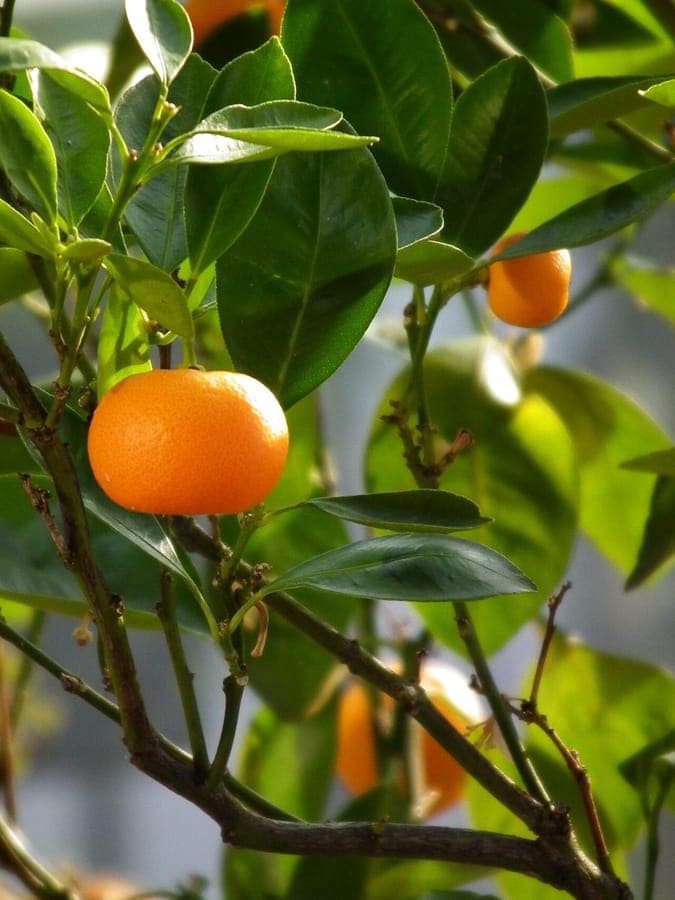
4028mdk09 / CC BY-SA 3.0, via Wikimedia Commons
Mandarin: complete guide to growing it in a pot
Citrus reticulata
Want to see Mandarin: complete guide to growing it in a pot in your garden?
Full design in HD: €7.99
Look after your Mandarin with the GardenWorld app
Identify plants with your camera and get a care calendar with reminders for this plant.


Overview
The mandarin (Citrus reticulata) is one of the oldest cultivated citrus species and the ancestor of many familiar fruits, from the clementine to the satsuma. It originates in southern China and Vietnam, where it has been grown for thousands of years. In north-western Europe it is not a garden plant but a container plant: from May to October it lives outside on a sunny patio, and for the rest of the year it overwinters indoors somewhere cool and bright.
That may sound like a lot of shuffling, yet once you know the rhythm a mandarin tree is a rewarding companion. The leaves stay green all year, the flowers fill the spring air with the sweet scent of orange blossom, and in winter the fruit turns orange. In a pot the plant usually stays between 1 and 2 metres tall, depending on the size of the container and how firmly you prune.
Several forms are sold under the name mandarin. The satsuma (often listed as Citrus unshiu) copes best with cold and bears seedless fruit. Clementines grow vigorously and crop well, and need no partner for seedless fruit. For pots, compact grafted trees are the most practical choice.
Appearance, flowers and fruit
The mandarin is a small evergreen tree with a rounded, fairly dense crown. Its branches are slender and often droop a little under the weight of the fruit, and some forms carry small thorns. The leaves are lance-shaped, 4 to 8 cm long, glossy dark green above and paler beneath.
Flowering mainly takes place in spring, from March to May, though in a warm spot odd flowers appear later in the year too. The flowers are white, star-shaped, about 2 to 3 cm across and strongly fragrant. Small green fruitlets follow and take many months to ripen.
The fruit is flattened and round, 4 to 7 cm wide, with a thin peel that comes away easily. It colours between November and February. Home-grown mandarins are often a little sharper than shop-bought ones, as they receive less sun and warmth than in Spain or Morocco. Leave the fruit on the tree for as long as you can, because it sweetens the longer it hangs.
Ideal location
From mid-May, after the last frost, until mid-October the mandarin prefers to be outdoors. Choose the sunniest, warmest spot you have, sheltered from strong wind: a south-facing patio in front of a wall that radiates heat is ideal. After winter, let the plant acclimatise in light shade for a week or two first, or the leaves may scorch in the bright spring sunshine.
In winter the mandarin needs a cool, bright position. An unheated conservatory, a light porch, a cold hallway with large windows or a frost-free garage with a grow light all work well. The ideal winter temperature lies between 5 and 12 °C. In a heated living room at 20 °C things usually go wrong: the plant wants to grow but gets too little light and drops its leaves. If it really has to stay in the warmth, place it right in front of a south-facing window, well away from radiators.
Compost and feeding
Citrus wants an open, free-draining compost that is slightly acidic, with a pH of around 6 to 6.5. Ready-made citrus compost is the easiest option. If you mix your own, use good peat-free potting compost with a third of coarse material such as pumice, perlite or fine clay granules. Put a layer of gravel or clay pebbles at the bottom of the pot and make sure there are generous drainage holes.
Repot young plants every other spring into a container a few centimetres larger. Older trees in big tubs need repotting every three or four years; in between, simply replace the top 5 cm of compost.
From March to September, give a citrus feed in the watering can once a week. Citrus needs iron, magnesium and manganese as well as nitrogen. Yellow leaves with green veins point to iron deficiency, often caused by hard tap water. Stop feeding from October onwards.
Watering
Watering is the trickiest part of growing citrus. The plant dislikes drying out, but wet roots are even more dangerous. Water only when the top 2 to 3 cm of compost feels dry, then give enough for water to run from the drainage holes. Empty the saucer after a quarter of an hour.
In summer this may mean daily watering on hot days, while in the cool winter spot once a fortnight can be plenty. Rainwater is best, or tap water left to stand overnight. Hard water gradually leaves lime in the pot, which makes it harder for the roots to take up iron. Indoors, an occasional misting of the leaves helps keep red spider mite at bay, as it thrives in warm, dry air.
Free preview
Want to see Mandarin: complete guide to growing it in a pot in your garden? Make a free preview of your design.
Pruning
A mandarin needs little pruning. The best time is late February or March, before the plant goes back outside and before new growth starts. Remove dead, diseased and crossing branches and open up the crown so light reaches the centre. Over-long shoots can be shortened by a third to keep the shape compact.
Keep an eye out for suckers below the graft union. Many trees are grafted onto a rootstock such as Citrus trifoliata, which sometimes produces shoots of its own with three-part leaves. Remove them as low down as possible, or they will take over. Never prune hard in one go: citrus flowers on the previous year's wood, and a severe cut will cost you a season's crop.
Pollination and harvest
Most mandarins are self-fertile. For indoor plants without insects, a soft paintbrush helps to carry pollen from flower to flower; outdoors, bees and bumblebees do the job. Clementines are the exception: without another pollinator they produce seedless fruit, though sometimes a lighter crop.
Pick a mandarin once the peel is fully orange and the fruit gives slightly under your thumb. Snip it off with a short piece of stalk rather than pulling, so the peel does not tear.
Maintenance calendar
February to March: Prune lightly and remove suckers. Start feeding again as soon as new growth appears.
April to May: Flowers and fragrance. Help pollination indoors with a brush if needed. Move the plant outside gradually after mid-May.
June to August: Outdoors in full sun. Water regularly and feed weekly with citrus fertiliser. Check for scale insects and red spider mite.
September: Last feed of the year. The fruit swells and begins to colour.
October: Bring the plant in before the first frost, ideally when night temperatures drop to around 5 °C.
November to January: Overwinter cool and bright. Water sparingly. Harvest the ripe fruit.
For an overview of when to do what with your container plants, tailored to your own garden, have a look at the planting calendar on gardenworld.app.
Winter hardiness
Citrus reticulata is not hardy in Britain, Ireland or the Low Countries. Mature plants tolerate a brief night frost of a few degrees below zero, satsumas slightly more, but prolonged frost or cold, wet conditions will kill them. Bring your mandarin indoors before the first frost, usually some time in October.
Leaf drop in winter is generally a sign of too much warmth combined with too little light, or of waterlogged roots. A plant kept in a cool, bright room with little water normally comes through winter without trouble. Note that the peel and leaves contain essential oils that can cause vomiting and stomach upsets in cats and dogs, so keep the plant out of reach of pets that like to chew. For people, the fruit is of course perfectly edible.
Companion plants
On the patio the mandarin looks lovely among other Mediterranean container plants. A lemon (Citrus limon) or a kumquat (Citrus japonica) alongside it makes a small citrus collection with fruit in different colours. An olive (Olea europaea) adds silvery foliage as a contrast, and bay (Laurus nobilis) brings a crisp, dark green shape.
At the foot of the tubs, or in lower pots in front, lavender (Lavandula angustifolia), rosemary and thyme fit in well. They love the same sun and dry conditions, attract bees that also visit the citrus blossom, and complete the Mediterranean picture.
Final thoughts
A mandarin tree asks a little more attention than an ordinary garden plant, but it pays you back with fragrant blossom in spring, glossy leaves all year and home-grown fruit in the darkest months. Remember three things: summer outside in full sun, winter cool and bright indoors, and never wet feet.
Want to see how citrus, olive and herbs can work together on a warm patio? Have a garden design made on gardenworld.app and find out which part of your garden catches the most sun.
Pruning
Frequently asked questions about Mandarin
Is Mandarin winter hardy?
Citrus reticulata is not hardy in Britain, Ireland or the Low Countries. Mature plants tolerate a brief night frost of a few degrees below zero, satsumas slightly more, but prolonged frost or cold, wet conditions will kill them.
When and how do you prune Mandarin?
A mandarin needs little pruning. The best time is late February or March, before the plant goes back outside and before new growth starts.
How much water does Mandarin need?
Watering is the trickiest part of growing citrus. The plant dislikes drying out, but wet roots are even more dangerous.
Where does Mandarin grow best?
From mid-May, after the last frost, until mid-October the mandarin prefers to be outdoors. Choose the sunniest, warmest spot you have, sheltered from strong wind: a south-facing patio in front of a wall that radiates heat is ideal.

See it in your garden
See Mandarin in your garden
One photo of your garden and a few questions. You see the result in about a minute.
Try it with a photoIdentify this plant in your own garden. Identify a plant
Similar plants
Citrus limon: complete guide
Citrus limon
Lemon tree offers year-round fresh fruit for kitchen and garden. Discover how to grow this iconic Mediterranean tree successfully.
Citrus japonica: complete guide
Citrus japonica
Kumquat is a compact citrus fruit perfect for container growing. Discover how to care for and harvest this Asian fruiting tree.
Olive tree: complete guide
Olea europaea
Everything about the olive tree (Olea europaea): planting, care, overwintering and cultivar selection. Practical tips for bringing Mediterranean character to your garden.
