
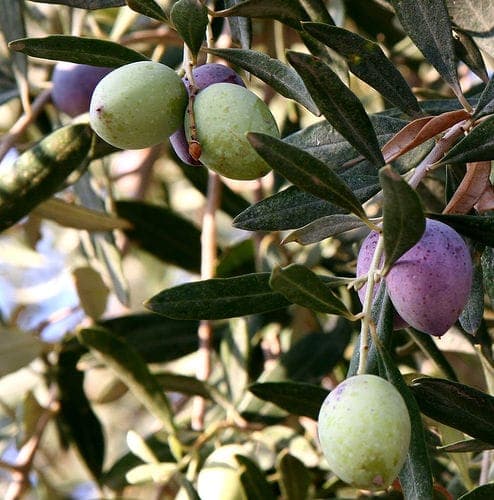
en:User:Nickfraser / CC BY-SA 3.0, via Wikimedia Commons
Olive tree: complete guide
Olea europaea
Want to see Olive tree: complete guide in your garden?
1 minute, no credit card
Overview
The olive tree (Olea europaea) is the living symbol of the Mediterranean basin. For thousands of years, this graceful, silver-green tree has shaped the landscapes of southern Europe, from the Greek islands to the hills of Tuscany and the coastline of southern Spain. The olive tree stands for peace, wisdom, and abundance, so it is no surprise that gardeners across northern Europe are increasingly eager to welcome this iconic tree into their own gardens. With its striking silver-grey foliage, beautifully gnarled trunk, and unmistakable Mediterranean aura, the olive tree instantly brings a holiday atmosphere to any terrace or front garden.
On gardenworld.app you can create a garden design with the olive tree as a focal point - as a specimen on a terrace, in a large container by the front door, or at the centre of a Mediterranean border alongside lavender, rosemary, and ornamental grasses. In its native Mediterranean habitat, Olea europaea can reach 8 to 12 metres, but in the cooler climates of northern Europe it typically stays between 3 and 5 metres, especially when grown in a container. Popular cultivars for temperate gardens include 'Arbequina' (compact, self-pollinating, reliable fruit set), 'Leccino' (relatively cold-hardy, elegant foliage), and 'Frantoio' (vigorous growth, prized for olive oil production).
Appearance and characteristics
The olive tree is an evergreen with a broad, irregular crown that becomes increasingly characterful with age. The leaves are lance-shaped, 4 to 8 cm long, dark green on the upper surface and conspicuously silver-grey underneath thanks to a layer of fine hairs. This gives the tree its signature two-toned shimmer that sparkles in the light with every passing breeze. The trunk and branches grow ever more twisted and gnarled over the years, lending the tree an almost sculptural quality that few other garden trees can match.
Flowering occurs from May to July with small, creamy-white blossoms in short clusters emerging from the leaf axils. The flowers are modest in size but fragrant, attracting bees and other pollinators. After pollination, the familiar olives develop - stone fruits that start green and ripen to dark purple or black in autumn. In northern European climates, olives only reach full ripeness after a particularly warm summer preceded by a cold dormancy period. The tree grows slowly, adding roughly 15 to 30 cm per year in cooler regions, and can live for hundreds, even thousands of years in the right conditions.
Ideal location
The olive tree is a dedicated sun-lover and demands the warmest, most sheltered spot in your garden. Choose a south-facing wall or fence that captures and radiates heat, or a wind-protected corner of your terrace. The tree needs a minimum of 6 to 8 hours of direct sunlight per day for healthy growth and the formation of flowers and fruit. In northern Europe, creating a favourable microclimate is essential - think of urban heat islands, sheltered courtyards, or the sunny side of a building.
Avoid north-facing positions, shady corners, and locations exposed to cold, drying winds. East and northeast winds in winter are the olive tree's greatest enemy in temperate climates. In a container on a sunny terrace or balcony, the olive tree performs well provided it can be brought indoors or properly protected in winter. Many gardeners opt for a pot on wheels so the tree can be moved easily to a frost-free position in autumn.
Soil requirements
The olive tree shares its soil preferences with most Mediterranean plants: outstanding drainage is absolutely essential. In waterlogged, poorly drained ground that retains moisture through winter, the olive tree will almost certainly perish. The ideal soil is light, mineral-rich, and free-draining - think of a blend of garden soil, coarse sand, and lava grit or expanded clay granules. When planting in the ground, work a generous layer of drainage material (broken crocks, gravel) into the bottom of the planting hole and mix the topsoil with 30 to 40 per cent coarse sand.
The olive tree thrives in slightly alkaline to neutral soil with a pH of 6.5 to 8.5. On acidic soil, add garden lime to raise the pH. In a container, use a mix of general-purpose potting compost, perlite, and lava granules. Ensure the pot always has generous drainage holes and place a layer of clay pebbles or shards at the bottom. Never leave a saucer of standing water beneath the pot - that is a certain death sentence for the roots.
Watering
In their natural habitat, olive trees survive months of drought, but in a container in northern Europe the situation is different. Potted olive trees dry out faster and need regular watering during summer: water thoroughly every 3 to 5 days so the entire root ball is soaked, then allow the soil to dry out well before the next watering. Always check with your finger that the top 5 cm is dry before watering again. Waterlogged roots are just as damaging as dehydration.
An olive tree in the ground needs less water after its first growing season. During the planting year, give 10 to 15 litres per week to help the root system establish. From the second year, supplementary watering is only needed during prolonged drought. In winter, reduce watering drastically: an olive tree in dormancy needs almost no water. Give just a small amount every 3 to 4 weeks, enough to prevent the root ball from drying out completely. Always water at the base of the trunk, never over the foliage.
Feeding
The olive tree is not a heavy feeder but benefits from regular, light fertilisation during the growing season. From April through August, apply a liquid fertiliser formulated for Mediterranean or citrus plants every two weeks at half strength. Excessive nitrogen leads to lush but soft foliage that is more vulnerable to frost damage - so exercise restraint.
From September onward, stop feeding entirely so that new growth can harden off before winter. In early spring (March), scatter a handful of slow-release organic granules around the base of the trunk. Olive trees sometimes display chlorosis - yellow leaves with green veins - indicating iron deficiency. This occurs mainly in overly wet or acidic soil. Address it by improving drainage and, if necessary, applying iron chelate. Specialist Mediterranean fertilisers with the correct nutrient ratios are available at most garden centres.
Pruning
Pruning is important for maintaining a compact, healthy olive tree, but it need not be complicated. The best time to prune is early spring, in March or April, before new growth begins. Remove dead wood, crossing branches, and water sprouts growing straight up from the trunk. Aim for an open, airy crown so that light and air can reach all parts of the tree - this limits fungal disease and promotes even growth.
A container-grown olive tree should be pruned a little more firmly to keep the tree manageable. Cut over-long shoots back to an outward-facing bud. Also remove suckers growing from the base of the trunk, unless you want to develop a multi-stemmed form. Olive trees tolerate pruning extremely well and will resprout even from old wood after a hard cut. Never prune after August, as new growth will not have time to harden off before winter.
Free design
Want to see Olive tree: complete guide in your garden? Make a free design now.
Overwintering
This is the most critical chapter for any olive tree owner in northern Europe. The olive tree is hardy to approximately -8 to -12 degrees Celsius, depending on the cultivar, the age of the tree, and the duration of the frost. 'Leccino' and 'Arbequina' are among the hardiest cultivars, tolerating brief spells down to -12 degrees. However, prolonged frost, wet winter cold, and biting wind are lethal.
For a container-grown olive tree, the safest strategy is to move it indoors from mid-November to a cool, bright space - an unheated conservatory, a garage with a window, or a light shed where the temperature stays between 2 and 10 degrees. The tree needs this cold dormancy period to flower well and potentially set fruit the following year. Avoid an overwintering space that is too warm; above 15 degrees the tree misses its rest period and becomes susceptible to disease and pests.
For an olive tree planted in the ground, wrap the crown in multiple layers of horticultural fleece from the moment night frosts are forecast. Also wrap the trunk with hessian or bubble wrap. Spread a thick layer of straw or leaf mulch around the base to insulate the roots. In severe frost (below -10 degrees), add an extra layer of bubble wrap beneath the fleece. Remove all protection as soon as the frost has passed to prevent mould. Let the spring sunshine warm the tree and coax it back to life.
Fruit set and harvest
Harvesting olives in northern Europe sounds like a dream, but it is not impossible. The olive tree requires a cold dormancy period of 200 to 300 hours below 10 degrees Celsius to initiate flower buds - a condition easily met in an average northern European winter. The challenge lies in summer: for good fruit set, the tree needs a long, warm summer with temperatures above 25 degrees during the flowering period in June and July.
In a sheltered, south-facing garden or on a sunny terrace against a warm wall, it is possible in favourable years to harvest small olives, especially with the cultivar 'Arbequina', which bears fruit at a young age. The olives ripen from October to November. Raw, they are bitter and inedible; they must first be brined or salt-cured. Do not expect a bumper crop - the satisfaction lies in the experience and the Mediterranean atmosphere rather than in sacks of olives. Even without fruit, the olive tree is a magnificent ornamental tree that enriches any garden.
Pests and diseases
The olive tree is naturally robust, but the damper climate of northern Europe can create problems. The most common ailment is fungal infection of the foliage, caused by excess moisture and poor air circulation. Symptoms include brown spots on leaves or a grey mould coating. Ensure an airy position and prune the crown to remain open. Remove affected leaves and dispose of them away from the garden.
Mealybugs and scale insects sometimes appear, particularly on over-fed or weakened trees. Check the undersides of leaves regularly and treat infestations early with a biological insecticide or a solution of soft soap. In the overwintering space, spider mites may surface when the air is too dry - mist the tree regularly with water to counter them. Olive fly (Bactrocera oleae) is extremely rare in northern Europe and poses no realistic threat.
Growing in a container
The vast majority of olive trees in northern Europe are grown in containers, and for good reason: it allows the tree to be moved indoors for winter. Choose a pot at least 20 per cent larger than the root ball, with generous drainage holes in the base. Terracotta pots are ideal thanks to their breathability, but they are heavy - consider a pot on casters for easy manoeuvring.
Repot your olive tree every 3 to 4 years in early spring. Move up to a pot one size larger and replace most of the old growing medium with fresh substrate. Gently shake old compost from the roots and prune away dead or rotting roots. After repotting, water thoroughly and keep the tree in partial shade for a week to recover before returning it to full sun.
Maintenance calendar
March-April: Prune and inspect after winter. Remove dead wood and any frost damage. Resume watering and feeding cautiously. Repot if needed.
May-June: Growth accelerates. Move the pot outdoors permanently once the risk of frost has passed. Water regularly and apply liquid feed fortnightly.
July-August: Full growth and possible flowering. Ensure adequate water during hot spells. Remove water sprouts. Stop feeding by the end of August.
September-October: Growth slows. Reduce watering gradually. Check for pests before the overwintering period. Any olives ripen now.
November-February: Overwintering period. Move container plants to a cool, bright room. Wrap in-ground trees with horticultural fleece. Water minimally - just enough to prevent the root ball from drying out entirely.
Companion plants
The olive tree calls for a Mediterranean entourage. The classic pairing is an olive tree underplanted with lavender (Lavandula angustifolia) - the silver-grey tones of both plants harmonise beautifully. Rosemary (Rosmarinus officinalis) makes an excellent fragrant ground cover or low shrub alongside. Star jasmine (Trachelospermum jasminoides) can climb a wall beside the olive tree, adding sweet evening scent to the scene.
For a complete Mediterranean border, combine the olive tree with ornamental grasses (Stipa tenuissima), catmint (Nepeta), sage (Salvia officinalis), thyme (Thymus vulgaris), and a grapevine (Vitis vinifera) along the fence. Agapanthus in large pots flanks the olive tree elegantly. Avoid pairing with shade-loving or moisture-hungry plants such as hydrangea or hosta - their needs are entirely at odds with those of the olive tree.
Final thoughts
The olive tree is more than a plant: it is a statement. It tells the world you love sunshine, good taste, and the relaxed art of living that defines the Mediterranean. With the right position, excellent drainage, and a well-considered winter strategy, the olive tree can be the centrepiece of your garden for years to come - even in the cooler climates of northern Europe.
Choose your olive tree from a reputable nursery, selecting a cold-hardy cultivar such as 'Leccino' or 'Arbequina'. Look for a healthy, full crown and a sturdy trunk without wounds. On gardenworld.app you can create a garden design that pairs the olive tree with the right Mediterranean companions, tailored to your specific garden, terrace, or balcony. Plant your own olive tree this spring and bring the Mediterranean home.
Want to see Olive tree: complete guide in your garden? Make a free design now.
Upload a photo, pick a style, and get a photorealistic design with plant list in under a minute.
No credit card required


Similar plants
Star jasmine: complete guide
Trachelospermum jasminoides
Everything about Star Jasmine (Trachelospermum jasminoides): planting, care, pruning and winter protection. Expert tips for a fragrant evergreen climber.
English Lavender: complete guide
Lavandula angustifolia
Everything about English Lavender (Lavandula angustifolia): planting, pruning, care and overwintering. Practical tips for lush purple blooms.
Rosemary: complete guide
Rosmarinus officinalis
Everything about Rosemary (Rosmarinus officinalis): planting, care, overwintering and culinary use. Practical tips for a healthy, aromatic shrub.