
Margalob / CC BY-SA 4.0, via Wikimedia Commons
Rosemary: complete guide
Rosmarinus officinalis
Want to see Rosemary: complete guide in your garden?
1 minute, no credit card
Overview
Rosemary (Rosmarinus officinalis, now also classified as Salvia rosmarinus) is one of the most iconic Mediterranean herbs and an indispensable plant for any herb enthusiast. This evergreen shrub from the mint family (Lamiaceae) uniquely combines culinary value, medicinal properties, ornamental beauty, and ecological benefit. The needle-like, deep green leaves release an intense, resinous-camphoraceous fragrance at the slightest touch, instantly evoking the sun-drenched slopes of Provence, Tuscany, and the Greek islands.
Rosemary grows as a sturdy, well-branched shrub reaching 60 to 150 cm in height, depending on cultivar and location. On gardenworld.app you can create a garden design where rosemary plays a central role - as a specimen shrub on a sunny corner, as a low hedge along a path, or as part of a complete herb garden. The plant is evergreen and retains its decorative character throughout the year, making it especially valuable in the winter garden. Popular cultivars include 'Miss Jessopp's Upright' (firmly upright to 150 cm), 'Prostratus' (trailing, ideal as ground cover or for cascading over walls), and 'Tuscan Blue' (vigorous grower with broad leaves and intense flavour).
Appearance and bloom cycle
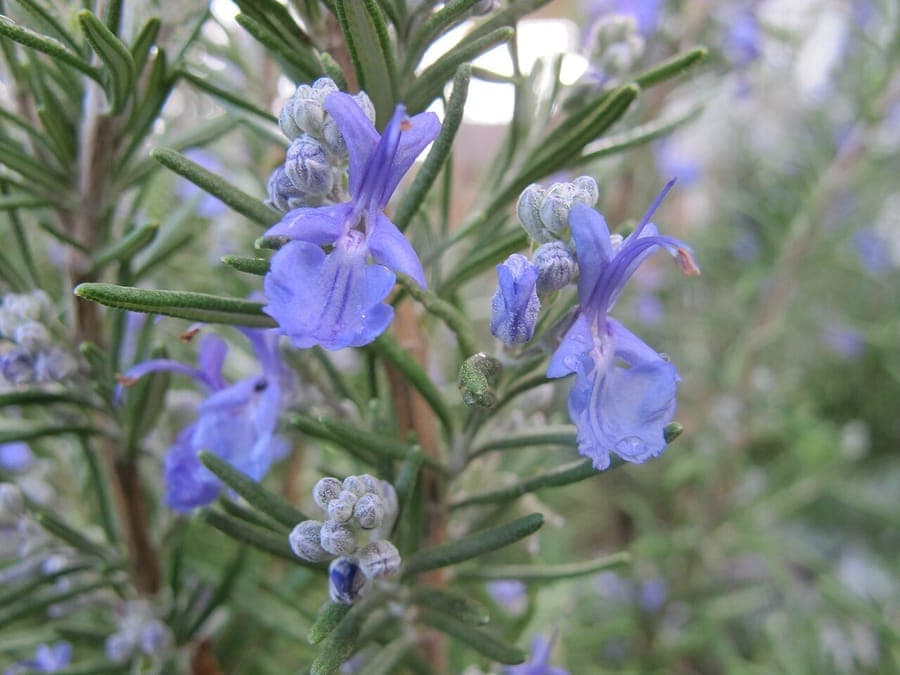
Rosemary flowers from March to May, producing small but abundant blooms of 1-2 cm that appear in clusters along the stems. The flowers are predominantly pale blue to lavender, though cultivars exist with white, pink, or deep blue flowers. Each bloom has the typical lip-flower shape with a two-lobed upper lip and three-lobed lower lip. The flowering attracts bees, bumblebees, and butterflies in large numbers - rosemary is one of the first significant nectar sources in spring.
The foliage is needle-shaped, 2-4 cm long and 2-4 mm wide, with a glossy dark green upper surface and a silvery-white underside covered in fine hairs. The leaves are leathery and contain essential oils responsible for the characteristic fragrance. The plant forms a densely branched shrub with a woody base and green, square young stems. Older specimens develop a characterful, twisted trunk that is highly decorative. In winter the plant retains its leaves completely, making it a valuable evergreen structural plant in the garden.
Ideal location
Rosemary demands the warmest, sunniest spot in your garden - this is a non-negotiable requirement. A minimum of six to eight hours of direct sun per day is necessary for healthy growth, good flowering, and the development of the essential oils that determine flavour and fragrance. A south-facing wall that stores heat during the day and releases it at night is the absolute dream position. A sheltered, sunny patio or raised bed are also excellent locations.
Avoid cold, windswept positions and spots where the soil remains wet in winter. In the British Isles and north-western Europe, rosemary is moderately hardy (USDA zones 8-10) and survives mild winters down to about -10 degrees C, provided the roots stay dry. In colder regions or severe winters, protection is essential. Never plant rosemary in a frost pocket where cold air collects, and never on a north-facing site. The ideal position is against a south-facing wall on gently sloping ground where rainwater drains away rapidly.
Soil requirements
Rosemary demands well-drained, lean to moderately fertile soil. The plant originates from dry, chalky slopes around the Mediterranean and needs comparable conditions in your garden. Heavy clay that retains moisture is rosemary's greatest enemy - wet roots combined with cold lead inevitably to root rot and plant death.
Improve clay soil before planting by working 30-40 per cent coarse grit or gravel into the top 40 cm. Add rubble or expanded clay granules for extra drainage if needed. The ideal soil pH ranges from 6.0 to 8.0 - rosemary thrives on chalky ground. On sandy soil, rosemary feels immediately at home. Do not add compost or manure: overly rich soil produces soft, watery foliage with little flavour and a plant that is more susceptible to frost. Most garden centres stock Mediterranean-style compost that works well as a planting medium for rosemary.
Watering
Rosemary is exceptionally drought-tolerant and rarely needs supplementary water after its first growing season when planted in the ground. During the first year after planting, water weekly to establish the root system - approximately three to five litres per plant. Water only when the top 5-7 cm of soil feels dry. Overwatering, together with poor drainage, is the most common cause of death in rosemary plants.
From the second year onward, supplementary watering in open ground is virtually never necessary, except during extreme drought exceeding four weeks. In winter, rosemary must absolutely not sit in wet soil. Container-grown rosemary requires more attention: check weekly and water only when the growing medium has largely dried out. Always use pots with generous drainage holes and place a layer of gravel or expanded clay granules at the bottom. In winter, halve the watering frequency for container plants and water only on frost-free days.
Pruning and harvesting
Rosemary needs little formal pruning but benefits from regular harvesting, which is effectively a form of pruning. By regularly snipping sprigs for the kitchen, you encourage the plant to remain compact and well-branched. Harvest throughout the year, but the aroma is strongest just before flowering. Always cut above a leaf pair and never remove more than one-third of any branch.
For a more substantial shaping, the best moment is immediately after flowering in May-June. Trim the plant lightly into shape - remove at most one-third of the current season's growth. Never cut into old, bare wood: rosemary does not regenerate well from it and may die back. Old, leggy plants that have become bare at the base are best replaced with a young specimen. A well-maintained rosemary bush will thrive for 10-15 years.
Free design
Want to see Rosemary: complete guide in your garden? Make a free design now.
Overwintering
Winter hardiness is the primary concern for rosemary growers in northern Europe. The plant is hardy to approximately -10 to -12 degrees C (USDA zone 8), but this applies only to well-established plants in perfectly drained soil. Wet cold is far more dangerous than dry cold - a plant entering winter with soggy roots rarely survives a frost period.
Protect your rosemary in winter by applying a thick layer of straw or dry leaves around the base (15-20 cm). When severe frost is forecast (below -8 degrees C), wrap the plant in one or two layers of horticultural fleece, leaving the top open for air circulation. Container plants are best moved to a cool, frost-free location - an unheated greenhouse, a garage with a window, or a sheltered spot against a south-facing wall. Never bring container rosemary into a warm room: the dry air and lack of light lead to leaf drop and spider mite infestations.
Culinary uses
Rosemary is a pillar of Mediterranean cuisine and an essential herb for countless dishes. Its intense, resinous-camphoraceous flavour pairs superbly with lamb, chicken, pork, potatoes, bread, olive oil, and tomato-based dishes. Use the needles fresh from the plant, dried, or as whole sprigs cooked with the dish and removed before serving.
For drying, harvest whole branches in the morning after the dew has dried. Tie them in bundles and hang upside down in a dry, airy spot. After one to two weeks the needles will be dry and can be stripped from the stems. Store dried rosemary in an airtight jar in a dark, cool place - it retains its flavour for up to a year. Fresh rosemary is always more intense than dried, so if you have a plant in the garden, use fresh whenever possible.
Maintenance calendar
March-April: Remove any frost damage by trimming dead twigs. Do not feed - rosemary performs best in lean soil. Check drainage around the plant.
May-June: Flowering season. Enjoy the blooms and the bees. After flowering, give a light shaping trim: cut spent flower stems back into green wood.
July-August: Peak harvest period. Snip sprigs regularly for the kitchen. The plant grows most vigorously now.
September-October: Final harvest before winter. Stop pruning after mid-October so new wood can ripen before winter. Do not plant new rosemary now - spring planting is safer.
November-December: Apply winter protection: mulch around the base, fleece when severe frost is forecast. Reduce watering for container plants drastically.
January-February: Check the plant for frost damage. Water container plants sparingly on frost-free days. Begin planning new spring plantings.
Pests and diseases
Rosemary is remarkably healthy and suffers few pest or disease problems, provided the growing conditions are right. The most common issues relate to excess moisture: root rot (Phytophthora) manifests as brown, limp branches dying back from the base. The only remedy is better drainage and less water - severely affected plants cannot be saved.
In hot, dry periods, spider mite may appear, recognisable by fine webs and yellowing foliage. Mist the plant regularly with water to discourage spider mite. Mealybug can appear as white, woolly patches on stems and leaf axils - remove by hand with a cotton bud dipped in rubbing alcohol. Powdery mildew is rare in rosemary but may occur in humid weather with poor air circulation.
Companion plants
Rosemary is the ultimate partner for a Mediterranean garden and combines perfectly with other sun-loving, drought-tolerant plants. The classic pairing is rosemary with lavender (Lavandula angustifolia) - together they form the heart of any Provence-inspired garden. Blue rosemary flowers in spring and purple lavender in summer provide months of continuous bloom.
Other excellent partners include sage (Salvia nemorosa) for vertical flower spikes, catmint (Nepeta faassenii) for a sea of blue, thyme (Thymus vulgaris) as a low foreground plant, santolina for silver-grey foliage, and cistus for Mediterranean atmosphere. Ornamental grasses such as Stipa tenuissima add movement and lightness. In a herb garden, combine rosemary with oregano, marjoram, chives, and parsley. Avoid combining with moisture-loving plants - rosemary and hydrangeas do not make good neighbours.
Final thoughts
Rosemary is a plant that gives back endlessly: fragrance, flavour, pollinators, flowers, and evergreen foliage for a minimum of care. The secret to success in cooler climates is straightforward: the warmest spot, dry feet, lean soil, and winter protection in severe frost. Follow these rules and you will enjoy a magnificent, aromatic shrub straight from the Mediterranean for years to come.
Purchase your rosemary from a reputable garden centre - choose a sturdy plant with healthy, dark green foliage and plant preferably in April-May so the roots can establish before winter. On gardenworld.app you can create a garden design that combines rosemary with lavender, thyme, and other Mediterranean plants tailored to your specific garden. Plant a rosemary bush against your warmest wall this spring and enjoy fresh herbs from your own garden all year round.
Want to see Rosemary: complete guide in your garden? Make a free design now.
Upload a photo, pick a style, and get a photorealistic design with plant list in under a minute.
No credit card required


Similar plants
English Lavender: complete guide
Lavandula angustifolia
Everything about English Lavender (Lavandula angustifolia): planting, pruning, care and overwintering. Practical tips for lush purple blooms.
Woodland sage: complete guide
Salvia nemorosa
Everything about Woodland Sage (Salvia nemorosa): planting, care, pruning and combinations. Expert tips for months of blue-violet flower spikes.
Catmint: complete guide
Nepeta faassenii
Everything about catmint (Nepeta faassenii): long-blooming blue flowers, drought-proof, ideal rose companion. Expert tips for a carefree, pollinator-rich border.