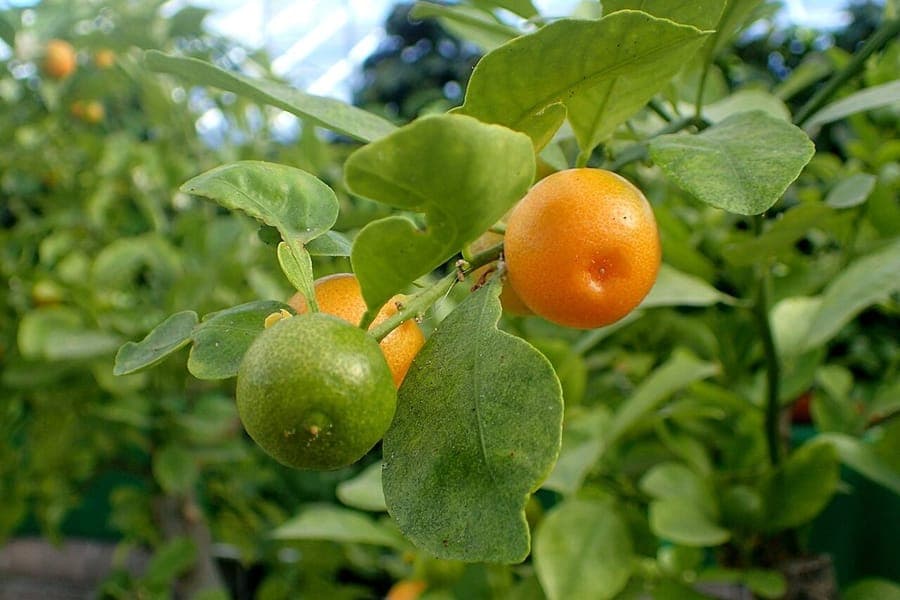
Krzysztof Ziarnek, Kenraiz / CC BY-SA 4.0, via Wikimedia Commons
Calamondin: complete guide to the indoor citrus
Citrus × microcarpa
Want to see Calamondin: complete guide to the indoor citrus in your garden?
Full design in HD: €7.99
Look after your Calamondin with the GardenWorld app
Identify plants with your camera and get a care calendar with reminders for this plant.


Overview
The calamondin (Citrus × microcarpa) is the citrus you are most likely to spot in garden centres and florists: a compact little tree covered in small orange fruit, often alongside white flowers. It is a natural hybrid, most likely between a mandarin and a kumquat, grown for centuries in southern China and above all in the Philippines. There the fruit is called calamansi and turns up in almost every kitchen as a sour seasoning, much as a lemon does here.
It used to be known as × Citrofortunella microcarpa, a name still printed on many labels. What makes the calamondin so popular is its tolerance. It stays small, grows happily in a pot, fruits at a young age and puts up with life indoors better than most other citrus. Even so, it does best when it can spend summer outdoors and winter somewhere cool and bright. In a pot it usually reaches 60 cm to 1.5 m.
Appearance, flowers and fruit
The calamondin forms a dense, upright little tree with lots of fine twigs. The leaves are broadly oval, 4 to 8 cm long, glossy dark green and scented of citrus when bruised. There is also a variegated form, 'Variegata', with creamy white leaf margins and striped fruit.
The flowers are white, small and strongly fragrant. The main flush comes in spring and summer, but in a bright, warm spot the calamondin flowers on and off all year. As a result, flowers, green fruit and ripe fruit often hang on the plant at the same time, which is a large part of its charm.
The fruit is round, just 2 to 4 cm across, with a thin, sweet peel and very sour, pippy flesh. It turns from green to orange and stays on the plant for months. It is edible, though not something to eat out of hand: use it like a lime in drinks, dressings and marinades, or make marmalade. The peel can go in too.
Ideal location
From mid-May to early October the calamondin is happiest outdoors in a sunny, sheltered spot. After winter, let it acclimatise in light shade for a week so the leaves do not scorch. Outdoors it flowers more freely, grows sturdier and sets more fruit, because bees visit the flowers.
Indoors it wants as much light as possible: a south- or west-facing windowsill, or a conservatory. In winter a cool room at 10 to 15 °C is ideal. It will usually survive a warm living room, but often drops leaves and fruit there, especially above a radiator. Avoid draughts and sudden moves: the calamondin reacts to every change by shedding leaves.
Compost and feeding
Use citrus compost or an open mix of peat-free potting compost with a third of perlite or pumice. A slightly acidic pH around 6 suits it. Choose a pot with drainage holes and add a drainage layer at the bottom. Repot in spring every two to three years into a pot only a few centimetres larger: in an oversized pot the compost stays wet for too long.
From March to September, feed with a citrus fertiliser every week or two. Yellow leaves with green veins point to iron deficiency, often caused by hard water. In winter, do not feed, or at most once a month if the plant is kept warm and keeps growing.
Watering
Let the top few centimetres of compost dry out before watering again, then water thoroughly until it runs from the bottom. Never leave water standing in the saucer. Outdoors in summer that may mean every other day; in a cool winter spot, once a week or less.
Rainwater is best. If your tap water is hard, let it stand overnight. In dry indoor air it helps to mist the plant now and then or stand it on a tray of damp clay pebbles, as red spider mite and scale insects love dry warmth.
Free preview
Want to see Calamondin: complete guide to the indoor citrus in your garden? Make a free preview of your design.
Pruning
The calamondin naturally grows fairly compact and needs little pruning. In early spring, cut back over-long or lopsided shoots and remove dead twigs. For a rounded shape, pinch out the tips of young shoots. If the plant is grafted, remove any suckers below the graft straight away. Prune with restraint: every branch you cut off could have carried flowers and fruit.
Pollination and harvest
The calamondin is self-fertile, so a single plant is enough. Indoors you can move the pollen around with a small brush; outdoors, insects take care of it. After flowering it takes six to nine months for a fruit to turn fully orange.
Pick the fruit once it has the colour you want. Picked green it is at its sharpest, as is usual in the Philippines; orange fruit is slightly milder. Snip them off with small scissors. One word of caution about newly bought plants: they are raised as ornamentals and may have been treated with products not intended for food crops. Only eat fruit that has developed after the plant came home with you.
Maintenance calendar
March: Light pruning, repot if needed and start feeding again.
April to May: Main flowering. Acclimatise the plant to the outdoors gradually after mid-May.
June to August: Outside in the sun. Water regularly and feed with citrus fertiliser. Check for scale insects.
September: Last feed. The fruit begins to colour.
October: Bring indoors before the first frost, to a bright, cool spot.
November to February: Water sparingly, little or no feed. Harvest ripe fruit for marmalade.
To see which jobs fall in which month for all your plants together, take a look at the planting calendar on gardenworld.app.
Winter hardiness
Citrus × microcarpa is one of the more cold-tolerant citrus, but it is by no means hardy in Britain or north-western Europe. A mature plant sometimes survives a brief, light frost of a couple of degrees below zero; a pot plant with frozen roots rarely does. Bring it indoors before frost threatens. If it drops leaves in winter, check that the compost is not too wet and that it gets enough light.
On toxicity: the fruit is edible for people. The essential oils in the peel and leaves, however, can cause vomiting, drooling and stomach upsets in cats and dogs. Keep the plant out of reach of pets that like to nibble greenery.
Companion plants
Indoors the calamondin sits well beside other fragrant plants. Arabian jasmine (Jasminum sambac) enjoys a similar spot and adds its scent to that of the citrus blossom. A kumquat (Citrus japonica) and a lemon (Citrus limon) together with the calamondin make a small citrus corner. Out on the patio, rosemary (Rosmarinus officinalis) and a Seville orange (Citrus × aurantium) are good companions, needing the same sun and well-drained roots.
Final thoughts
The calamondin is the ideal first citrus: small, forgiving and almost always in flower or fruit. Give it sun in summer, light and coolness in winter and water in moderation, and you will enjoy fragrant blossom and your own supply of tangy fruit for years. Wondering where a row of citrus pots would look best on your patio? Have a garden design made on gardenworld.app for your whole outdoor space.
Frequently asked questions about Calamondin
Is Calamondin winter hardy?
Citrus × microcarpa is one of the more cold-tolerant citrus, but it is by no means hardy in Britain or north-western Europe. A mature plant sometimes survives a brief, light frost of a couple of degrees below zero; a pot plant with frozen roots rarely does.
When and how do you prune Calamondin?
The calamondin naturally grows fairly compact and needs little pruning. In early spring, cut back over-long or lopsided shoots and remove dead twigs.
How much water does Calamondin need?
Let the top few centimetres of compost dry out before watering again, then water thoroughly until it runs from the bottom. Never leave water standing in the saucer.
Where does Calamondin grow best?
From mid-May to early October the calamondin is happiest outdoors in a sunny, sheltered spot. After winter, let it acclimatise in light shade for a week so the leaves do not scorch.

See it in your garden
See Calamondin in your garden
One photo of your garden and a few questions. You see the result in about a minute.
Try it with a photoIdentify this plant in your own garden. Identify a plant
Similar plants
Citrus japonica: complete guide
Citrus japonica
Kumquat is a compact citrus fruit perfect for container growing. Discover how to care for and harvest this Asian fruiting tree.
Citrus limon: complete guide
Citrus limon
Lemon tree offers year-round fresh fruit for kitchen and garden. Discover how to grow this iconic Mediterranean tree successfully.
Citrus x aurantium: complete guide
Citrus × aurantium L.
The sour orange - a classic fruit tree with fragrant flowers and bitter oranges. Perfect for temperate gardens, container growing, and ornamental displays.
