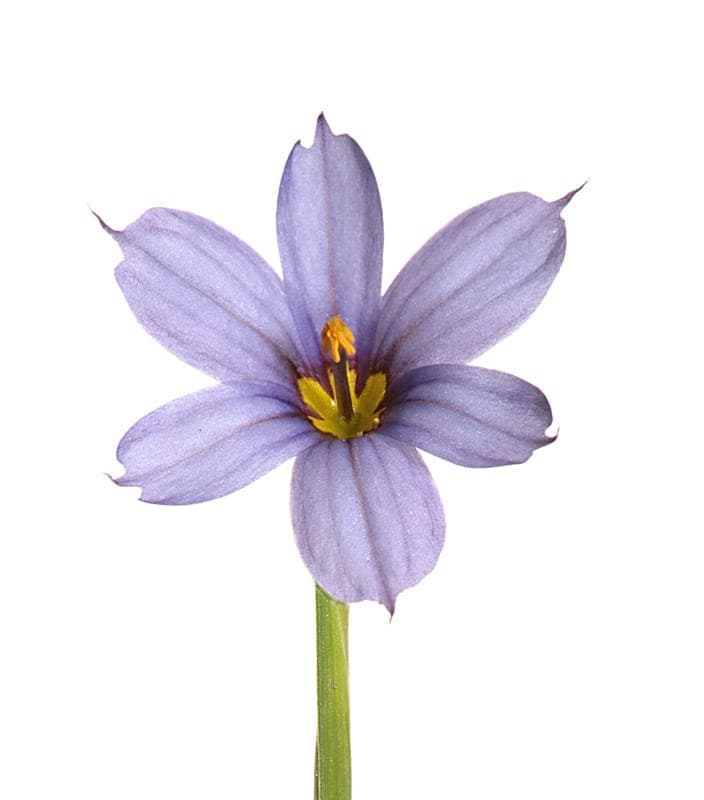
Hugowolf / CC BY 3.0, via Wikimedia Commons
Narrow-leaf blue-eyed grass: complete guide
Sisyrinchium angustifolium
Want to see Narrow-leaf blue-eyed grass: complete guide in your garden?
Full design in HD: €7.99
Look after your Narrow-leaf blue-eyed grass with the GardenWorld app
Identify plants with your camera and get a care calendar with reminders for this plant.


Overview
Narrow-leaf blue-eyed grass (Sisyrinchium angustifolium) is a charming grasslike perennial from the Iridaceae family native to northeastern North America and Canada. This striking plant with delicate grass-like foliage and brilliant blue flowers brings unforgettable charm to gardens. Known for its exceptional pollinator-friendly blooms and exceptional moisture tolerance, this ornamental grass offers unique garden appeal.
Appearance and bloom
The plant grows in dense clumps, reaching approximately 25 to 45 centimetres in height. Very narrow, thread-like leaves create a grassy appearance reminiscent of ornamental grasses. From May to June, plants produce numerous small sky to cobalt-blue flowers with yellow centers, arranged along thin stems. Flowers open each morning and close by midday, creating a daily spectacle. Each bloom is merely millimetres across, but collectively they produce a spectacular display.
Ideal location
The plant thrives in sunny locations receiving at least 6 hours of daily direct sunlight, ensuring optimal flowering and compact growth. Partial shade is tolerated, though flower production diminishes. Avoid extremely hot, dry microclimates. The plant grows well in open gardens, borders, and container gardens.
Soil
The plant exhibits remarkable soil flexibility, growing in nearly all soils from poor sand to quite rich grounds. Unlike many grasses, it tolerates wetter soils. Ideal pH ranges around 5.5 to 6.5. Well-draining soil remains advisable. In very wet sites, moisture tolerance shows, though flowering may reduce slightly.
Watering
Once established, the plant demonstrates reasonable drought tolerance, though regular watering yields better results. Water regularly during the growing season without waterlogging. In dry periods, water when the surface layer feels dry. The plant tolerates wet terrain reasonably well, making it ideal for moist garden corners.
Free preview
Want to see Narrow-leaf blue-eyed grass: complete guide in your garden? Make a free preview of your design.
Pruning
Plants need no pruning, though faded leaves can be removed anytime. Best practice involves gently removing old foliage and flower stems in early spring, promoting neater appearance and new growth. After blooming, spent flowers can be removed, though this is unnecessary.
Maintenance calendar
April: Gently remove old foliage from last season. May: Monitor for spider mites in dry conditions. June-July: Water regularly during dry periods, remove faded flowers. August-September: Plant reaches peak growth. October-November: Gradually move toward dormancy. December-March: Winter rest, minimal care required.
Winter hardiness
The plant is extremely hardy, tolerating temperatures to -15 to -20 degrees Celsius without special protection. In Northern European climates, the plant survives winters without difficulty. The plant fully recovers in spring.
Companion plants
Narrow-leaf blue-eyed grass combines beautifully with other grasses such as Festuca glauca and Carex species. For color contrast, pair with yellow-flowering plants like Coreopsis or Achillea. In borders with other blue bloomers such as Delphiniums and Veronica species, it creates harmonious presentations. Also stunning combined with Allium species.
Closing thoughts
Narrow-leaf blue-eyed grass is an essential addition for gardens seeking elegant, low-growing ground covers with long-lasting blue flowers. These make ideal grasses for wetter terrain where many grasses fail. For more guidance and support, order today from quality retailers. For inspiration and design ideas, visit gardenworld.app, your comprehensive guide to modern garden design. gardenworld.app offers numerous plant guides and design tools to help you create your dream garden. Visit gardenworld.app today for more information and expert advice.
Frequently asked questions about Narrow-leaf blue-eyed grass
Is Narrow-leaf blue-eyed grass winter hardy?
The plant is extremely hardy, tolerating temperatures to -15 to -20 degrees Celsius without special protection. In Northern European climates, the plant survives winters without difficulty.
When and how do you prune Narrow-leaf blue-eyed grass?
Plants need no pruning, though faded leaves can be removed anytime. Best practice involves gently removing old foliage and flower stems in early spring, promoting neater appearance and new growth.
How much water does Narrow-leaf blue-eyed grass need?
Once established, the plant demonstrates reasonable drought tolerance, though regular watering yields better results. Water regularly during the growing season without waterlogging.
Where does Narrow-leaf blue-eyed grass grow best?
The plant thrives in sunny locations receiving at least 6 hours of daily direct sunlight, ensuring optimal flowering and compact growth. Partial shade is tolerated, though flower production diminishes.
What soil does Narrow-leaf blue-eyed grass need?
The plant exhibits remarkable soil flexibility, growing in nearly all soils from poor sand to quite rich grounds. Unlike many grasses, it tolerates wetter soils.

See it in your garden
See Narrow-leaf blue-eyed grass in your garden
One photo of your garden and a few questions. You see the result in about a minute.
Try it with a photoIdentify this plant in your own garden. Identify a plant
Similar plants
Giant montbretia (Crocosmia masoniorum): growing guide
Crocosmia masoniorum
Everything about giant montbretia (Crocosmia masoniorum): position, soil, planting, winter protection and companions for its fiery orange summer flowers.
Dierama pulcherrimum: growing angel's fishing rod
Dierama pulcherrimum
Everything about angel's fishing rod (Dierama pulcherrimum): full sun, moist but free-draining soil, spring planting and winter care for this graceful summer perennial.
Hesperantha coccinea (Schizostylis): autumn stars for your border
Hesperantha coccinea
A complete guide to Hesperantha coccinea, formerly Schizostylis coccinea: site, moist soil, dividing and overwintering this late-flowering crimson flag lily.
