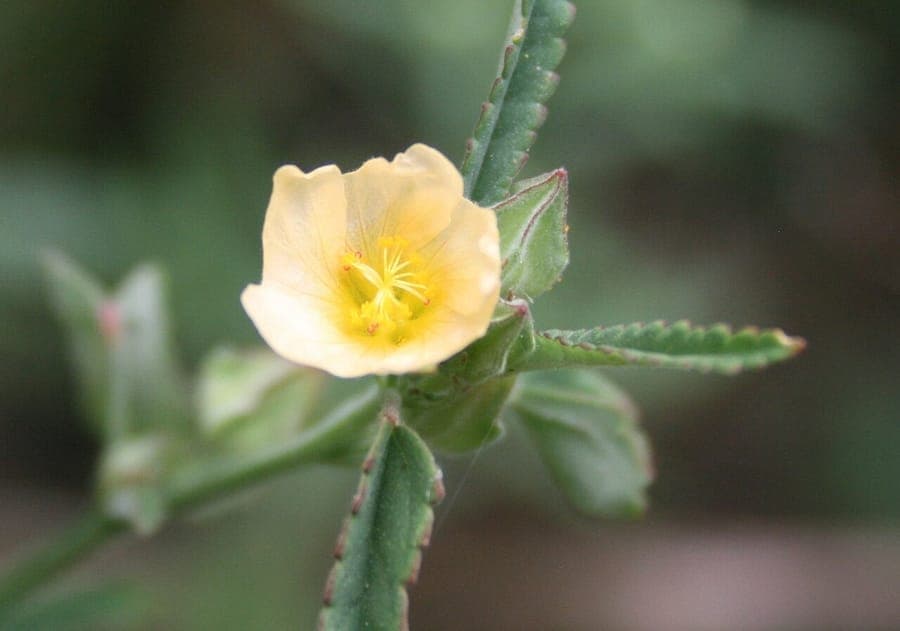
JMK / CC BY-SA 4.0, via Wikimedia Commons
Spiny Sida (Sida spinosa): complete guide
Sida spinosa
Want to see Spiny Sida (Sida spinosa): complete guide in your garden?
Full design in HD: €7.99
Look after your Spiny Sida with the GardenWorld app
Identify plants with your camera and get a care calendar with reminders for this plant.


Overview
Spiny Sida (Sida spinosa) is a fascinating tropical shrub native to the tropics and subtropics of the Americas, Africa, and Asia. This plant is distinguished by small thorns on its leaf stems and a profusion of yellow flowers. Though frost-tender, it thrives in warm climates and can be grown as a container plant in cooler regions.
Appearance & blooming
Spiny Sida is a compact, shrubby plant reaching about 1 to 1.5 meters tall. The leaves are small, oval to heart-shaped. Characteristic are the small thorns at the leaf base, giving the plant its name. These spines are small but noticeable.
From June to October, numerous small yellow flowers appear along the stems. Though small, the sheer abundance ensures continuous yellow display. These are followed by small seed pods.
Ideal location
Spiny Sida thrives in warm, sunny locations. At least 6 hours of direct sunlight daily is essential. In extremely hot climates, some afternoon shade is beneficial. The plant tolerates wind but may experience leaf drop in very strong winds. Plant in a warm, well-ventilated spot.
Soil
The soil must be well-draining. Heavy clay should be avoided; add sand and organic matter. A pH between 5.5 and 7 is suitable. The plant grows in relatively poor soil but benefits from better fertility for improved flowering. Good drainage is essential; avoid waterlogging.
Watering
During the growing season (summer), water regularly, though this plant tolerates some drought. Water from below to prevent leaf diseases. In winter, when growth slows significantly, water much less. Excess water can lead to root rot.
Free preview
Want to see Spiny Sida (Sida spinosa): complete guide in your garden? Make a free preview of your design.
Pruning
Spiny Sida responds well to pruning. In spring, remove dead branches. Moderate pruning stimulates compact, flower-rich growth. Avoid severe cutting as this can harm flowering. After blooming, faded flowers can be carefully removed.
Maintenance calendar
Spring (April to May): Inspect for winter damage. Remove dead branches. Light pruning for shape.
Summer (June to August): Water regularly. Inspect for pests and diseases. Enjoy the flowers.
Fall (September to October): Continue watering as temperatures decline. Plant strengthens for winter.
Winter (November to March): Move potted plants to warm indoor location. Minimal water. No fertilization.
Winter hardiness
Spiny Sida cannot tolerate frost and dies at temperatures below 5 degrees Celsius. In northern Europe, this plant can only survive outdoors in highly protected microclimates or must be brought inside as a container plant. In warm parts of southern Europe, it may overwinter outdoors. Consider it a summer bedding plant or year-round indoor specimen in cooler climates.
Companion plants
Spiny Sida combines nicely with other heat-loving plants: Hibiscus, Mandevilla, and Bougainvillea form attractive combinations in warm zones. In containers, it works well with other tropical foliage plants.
Conclusion
Spiny Sida is a fascinating, exotic choice for warm gardens and as a container plant. The thorns give it character, and the continuous yellow flowers provide summer joy. Plant in well-draining soil. Water regularly during the growing season. For cooler climates: enjoy it in containers on the patio in summer, bring it inside for winter. A unique, distinctive addition to warm gardens or greenhouses.
Frequently asked questions about Spiny Sida
Is Spiny Sida winter hardy?
Spiny Sida cannot tolerate frost and dies at temperatures below 5 degrees Celsius. In northern Europe, this plant can only survive outdoors in highly protected microclimates or must be brought inside as a container plant.
When and how do you prune Spiny Sida?
Spiny Sida responds well to pruning. In spring, remove dead branches.
How much water does Spiny Sida need?
During the growing season (summer), water regularly, though this plant tolerates some drought. Water from below to prevent leaf diseases.
Where does Spiny Sida grow best?
Spiny Sida thrives in warm, sunny locations. At least 6 hours of direct sunlight daily is essential.
What soil does Spiny Sida need?
The soil must be well-draining. Heavy clay should be avoided; add sand and organic matter.

See it in your garden
See Spiny Sida in your garden
One photo of your garden and a few questions. You see the result in about a minute.
Try it with a photoIdentify this plant in your own garden. Identify a plant
Similar plants
Trailing abutilon (Abutilon megapotamicum): care guide
Abutilon megapotamicum
Grow trailing abutilon (Abutilon megapotamicum) in a basket or against a wall: watering, feeding, pruning and overwintering for red and yellow lantern flowers.
Flowering maple (Abutilon): container shrub guide
Abutilon × hybridum
How to grow flowering maple (Abutilon × hybridum) in a pot: position, watering, feeding, March pruning and overwintering indoors for flowers from May to October.
Checkerbloom (Sidalcea malviflora): complete guide
Sidalcea malviflora
Everything about checkerbloom or prairie mallow (Sidalcea malviflora): satin-pink summer spires, position, soil, cutting back for a second flush and hardiness.
