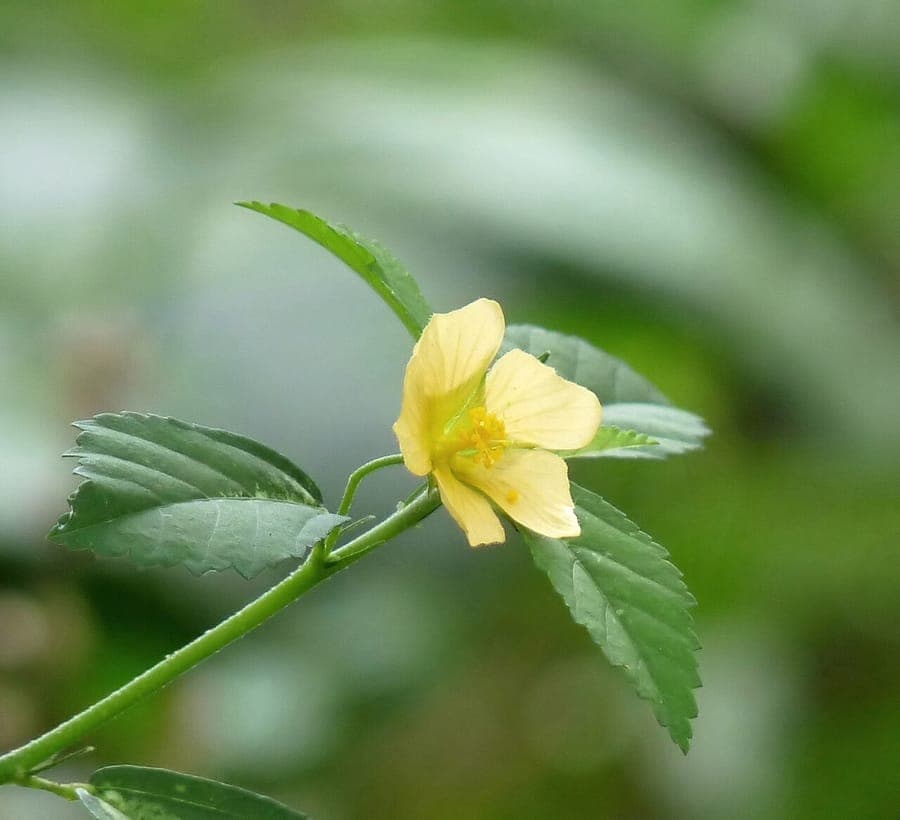
Jeevan Jose, Kerala, India / CC BY-SA 4.0, via Wikimedia Commons
Cuban-jute (Sida rhombifolia): complete guide
Sida rhombifolia
Want to see Cuban-jute (Sida rhombifolia): complete guide in your garden?
Full design in HD: €7.99
Look after your Cuban-jute with the GardenWorld app
Identify plants with your camera and get a care calendar with reminders for this plant.


Overview
Cuban-jute (Sida rhombifolia), also known as Fanpetals or Flapjacks, is a shrubby plant native to tropical and subtropical regions of Africa and Asia. This vigorous grower is valued for its yellow flowers and dense foliage of paired leaves. Though frost-tender in nature, in warm climates and protected locations this plant thrives.
Appearance & blooming
Cuban-jute is a compact shrub reaching 1 to 2 meters tall. The leaves are small, oblong to diamond-shaped (hence the species name rhombifolia) and arranged in opposite pairs. The plant develops dense, attractive foliage.
From May to October, numerous small, bright yellow flowers appear at the shoot tips. Each flower lasts only one day, but the abundance of blooms ensures continuous display. Flowers are followed by small seed pods.
Ideal location
Cuban-jute thrives in warm, sunny locations. At least 6 to 8 hours of direct sunlight daily is ideal. In warm Mediterranean climates, partial shade is acceptable. The plant tolerates wind well but may experience leaf drop in strong wind. Plant in a sheltered, warm spot.
Soil
The soil must be well-draining. Heavy clay is undesirable; add sand and compost for better structure. A pH between 6 and 7.5 suits it well. The plant tolerates moderate fertility, though rich soil promotes better growth. Ensure good drainage to prevent waterlogging.
Watering
During the growing season (May to October), water regularly. The plant tolerates some drought but blooms better with consistent moisture. Water from below to prevent leaf diseases. In winter, when growth slows, water much less frequently.
Free preview
Want to see Cuban-jute (Sida rhombifolia): complete guide in your garden? Make a free preview of your design.
Pruning
Cuban-jute responds well to pruning. In spring (April/May), remove dead branches and shape the plant. The plant can be cut back moderately, stimulating more compact, flower-rich growth. After blooming, faded flower clusters can be carefully removed.
Maintenance calendar
Spring (April to May): Remove dead branches from winter. Prune for shape. Apply first slow-release fertilizer.
Summer (June to August): Water regularly. Inspect for pests. Remove dead material.
Fall (September to October): Continue enjoying flowers. Reduce watering as temperatures fall.
Winter (November to March): Bring indoors in cold climates. Minimal water. No fertilization.
Winter hardiness
Cuban-jute is frost-tender and cannot tolerate temperatures below 0 degrees Celsius. In northern Europe, this plant can only survive outdoors in protected microclimates or must be brought inside for winter. In warmer parts of southern France or Spain, it may overwinter outdoors. Consider it a container plant requiring winter protection.
Companion plants
Cuban-jute combines nicely with other tropical plants in containers: Nerium oleander (Oleander), Plumbago auriculata (Leadwort), and Lantana camara (Lantana) form attractive groupings. In warm zones, it works well in mixed borders with other frost-tender material.
Conclusion
Cuban-jute is an attractive choice for warm, protected locations or as a container plant brought inside for winter. The yellow flowers and vigorous growth make it appealing. Plant in fertile, well-draining soil. Water regularly during the growing season. Enjoy this plant on the patio in summer, moving it indoors for winter in cooler climates. A tropical accent for Mediterranean and warm gardens.
Frequently asked questions about Cuban-jute
Is Cuban-jute winter hardy?
Cuban-jute is frost-tender and cannot tolerate temperatures below 0 degrees Celsius. In northern Europe, this plant can only survive outdoors in protected microclimates or must be brought inside for winter.
When and how do you prune Cuban-jute?
Cuban-jute responds well to pruning. In spring (April/May), remove dead branches and shape the plant.
How much water does Cuban-jute need?
During the growing season (May to October), water regularly. The plant tolerates some drought but blooms better with consistent moisture.
Where does Cuban-jute grow best?
Cuban-jute thrives in warm, sunny locations. At least 6 to 8 hours of direct sunlight daily is ideal.
What soil does Cuban-jute need?
The soil must be well-draining. Heavy clay is undesirable; add sand and compost for better structure.

See it in your garden
See Cuban-jute in your garden
One photo of your garden and a few questions. You see the result in about a minute.
Try it with a photoIdentify this plant in your own garden. Identify a plant
Similar plants
Trailing abutilon (Abutilon megapotamicum): care guide
Abutilon megapotamicum
Grow trailing abutilon (Abutilon megapotamicum) in a basket or against a wall: watering, feeding, pruning and overwintering for red and yellow lantern flowers.
Flowering maple (Abutilon): container shrub guide
Abutilon × hybridum
How to grow flowering maple (Abutilon × hybridum) in a pot: position, watering, feeding, March pruning and overwintering indoors for flowers from May to October.
Checkerbloom (Sidalcea malviflora): complete guide
Sidalcea malviflora
Everything about checkerbloom or prairie mallow (Sidalcea malviflora): satin-pink summer spires, position, soil, cutting back for a second flush and hardiness.
