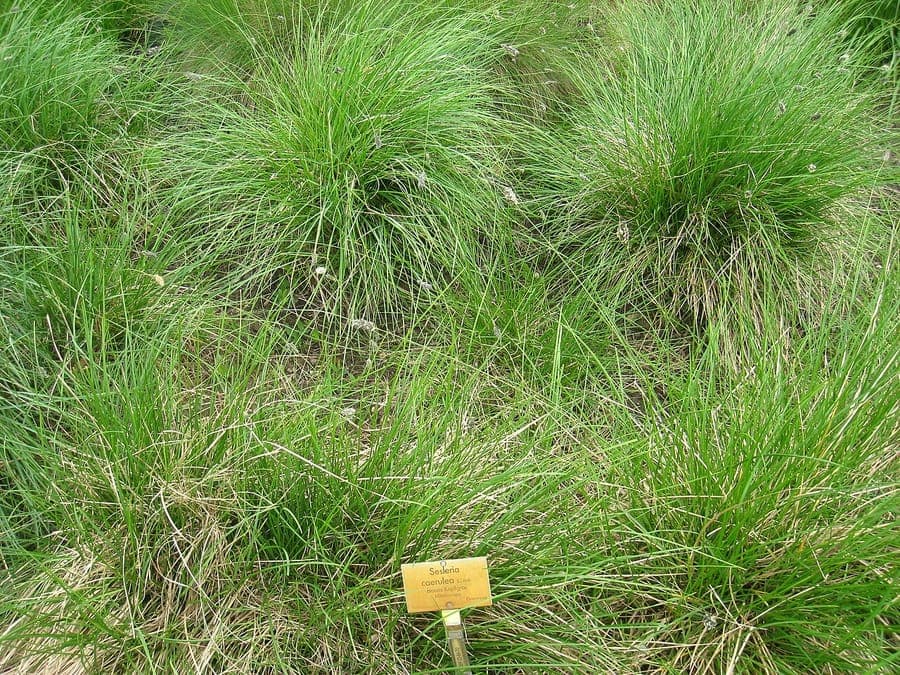
Daderot / Public domain, via Wikimedia Commons
Blue Moor Grass: complete guide
Sesleria caerulea
Want to see Blue Moor Grass: complete guide in your garden?
Full design in HD: €7.99
Look after your Blue Moor Grass with the GardenWorld app
Identify plants with your camera and get a care calendar with reminders for this plant.


Blue Moor Grass (Sesleria caerulea): Complete Guide
Overview
Blue Moor Grass, scientifically known as Sesleria caerulea, is an elegant ornamental grass originating from the Alpine regions of Europe. This compact grass is renowned for its distinctive blue tones and makes an excellent choice for contemporary garden designs. It is particularly valuable in small gardens and hardscapes due to its modest size and year-round ornamental value.
Appearance & Bloom
Blue Moor Grass forms compact, neat mounds reaching approximately 30-45 cm tall. The narrow foliage displays a striking blue-grey color, especially during cooler months. Flowering spikes emerge in late spring and are elegantly arching, initially white-blue then gradually turning golden. This color transition provides additional visual interest throughout the season.
Ideal Location
This grass thrives in locations with full sun to light shade. It is remarkably tolerant and can flourish in harder-to-reach garden spots. Blue Moor Grass is ideal for rock gardens, alpine troughs, borders, and even container planting. Its compact growth habit means it can be used in tight spaces without becoming invasive.
Soil
Blue Moor Grass prefers well-drained soil and performs best on alkaline or neutral soils, which is a defining characteristic of this species. Avoid waterlogged clay soils. Adding sand or planting in raised beds improves drainage on problematic sites. The plant is not particularly nutrient-demanding and grows well in poor soils.
Free preview
Want to see Blue Moor Grass: complete guide in your garden? Make a free preview of your design.
Watering
Once established, Blue Moor Grass is exceptionally drought-tolerant. Water regularly during the first growing season until well-established. In typical growing conditions, supplemental watering is usually unnecessary. Prevent waterlogging, which can lead to rotting.
Pruning
Blue Moor Grass is evergreen and requires minimal pruning. In spring, gently remove withered or damaged foliage by hand. Light pruning after flowering helps maintain a neat appearance. Avoid heavy pruning, which can be detrimental.
Maintenance Calendar
- March: Remove withered winter foliage
- May: Observe flowering display
- July: Remove seed heads if desired
- September: Check moisture balance
- October: Winter preparation
Winter Hardiness
Blue Moor Grass is very hardy, suitable for hardiness zones 4-9. It naturally occurs in Alpine regions and easily withstands extreme cold periods. No winter protection is required in typical European climates.
Companion Plants
Blue Moor Grass pairs excellently with other Alpine plants including sedum, Saxifraga, and dwarf bergenia. Combine with dwarf coneflowers and bronze-leaved heuchera for color contrast. In borders, it grows well with lavender and other drought-tolerant species.
Final Thoughts
Blue Moor Grass is a reliable, low-maintenance ornamental grass for gardens where elegance and practicality are equally important. Its blue color, compact form, and resilience make it perfect for gardeners seeking low-maintenance alternatives. Available at major garden centers. Discover more planting inspiration at gardenworld.app/en for personalized garden designs.
Explore Further
Want to learn how to integrate Blue Moor Grass into your garden design? Discover gardenworld.app/en for more plant combinations and design suggestions.
Frequently asked questions about Blue Moor Grass
Is Blue Moor Grass winter hardy?
Blue Moor Grass is very hardy, suitable for hardiness zones 4-9. It naturally occurs in Alpine regions and easily withstands extreme cold periods.
When and how do you prune Blue Moor Grass?
Blue Moor Grass is evergreen and requires minimal pruning. In spring, gently remove withered or damaged foliage by hand.
How much water does Blue Moor Grass need?
Once established, Blue Moor Grass is exceptionally drought-tolerant. Water regularly during the first growing season until well-established.
Where does Blue Moor Grass grow best?
This grass thrives in locations with full sun to light shade. It is remarkably tolerant and can flourish in harder-to-reach garden spots.
What soil does Blue Moor Grass need?
Blue Moor Grass prefers well-drained soil and performs best on alkaline or neutral soils, which is a defining characteristic of this species. Avoid waterlogged clay soils.

See it in your garden
See Blue Moor Grass in your garden
One photo of your garden and a few questions. You see the result in about a minute.
Try it with a photoIdentify this plant in your own garden. Identify a plant
Similar plants
Pheasant's tail grass (Anemanthele lessoniana): a guide
Anemanthele lessoniana
Pheasant's tail grass (Anemanthele lessoniana) is an evergreen New Zealand grass with orange-streaked leaves and airy summer flower heads. Siting, soil, care and hardiness.
Korean feather reed grass (Calamagrostis brachytricha): guide
Calamagrostis brachytricha
Everything about Korean feather reed grass (Calamagrostis brachytricha): position, soil, cutting back and planting partners for its glistening autumn plumes.
Northern sea oats (Chasmanthium latifolium): growing guide
Chasmanthium latifolium
Northern sea oats (Chasmanthium latifolium) carries flat, dangling spikelets and thrives in part shade. Learn how to site, water, cut back and partner it.
