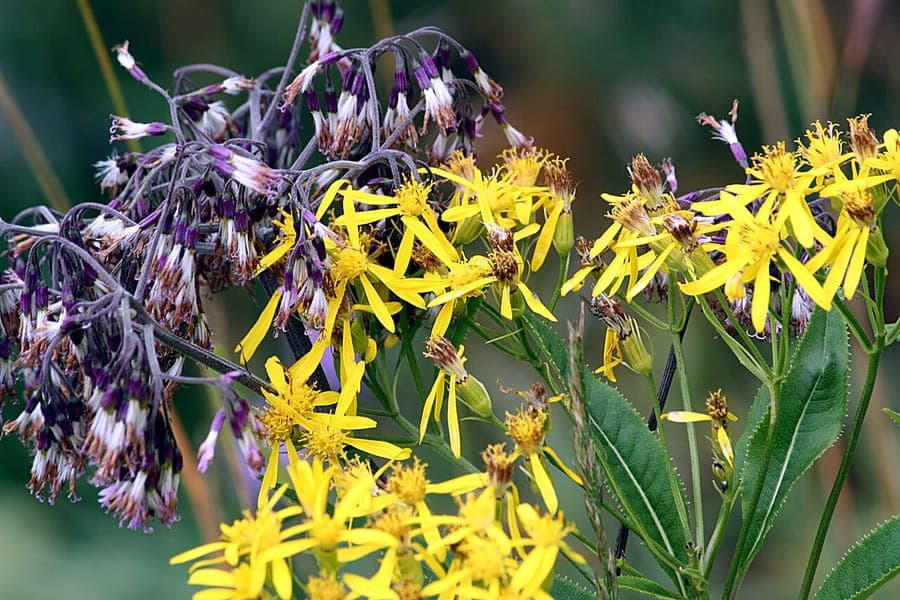
Hedwig Storch / CC BY-SA 3.0, via Wikimedia Commons
Alpine ragwort: complete guide
Senecio nemorensis
Want to see Alpine ragwort: complete guide in your garden?
Full design in HD: €7.99
Look after your Alpine ragwort with the GardenWorld app
Identify plants with your camera and get a care calendar with reminders for this plant.


Overview
Alpine ragwort (Senecio nemorensis) is an elegant and gracefully growing perennial that originated from the mountainous regions stretching from Central Europe through to Japan and Vietnam. This plant is particularly valuable for gardeners seeking reliable and attractive flowering plants for shaded locations. With its fine foliage and charming yellow flowers, Alpine ragwort adds a subtle charm to any front garden or perennial border.
Appearance and Bloom
This graceful plant reaches heights of approximately 50 to 80 centimeters and features soft, finely-cut dark green leaves. The plant is renowned for its numerous small yellow flowers that appear from June through August. The blooms grow in small, open clusters and attract bees and butterflies. The delicate leafy structure gives an airy appearance that perfectly suits modern garden designs with other shade-loving greenery.
Ideal Location
Alpine ragwort thrives excellently in partial shade to full shade. The plant feels most at home in woodland-like environments and shaded corners of your garden. This makes it ideal for planting under the canopy of large trees or along the shaded sides of buildings. Avoid direct hot afternoon sun, especially in warmer climates.
Soil
This plant is not demanding regarding soil quality, but performs best in well-draining, moist soils. Added compost or garden soil helps improve water retention. The plant tolerates acidic to neutral pH levels. For optimal growth, gardeners regularly add organic material to the base of the plant.
Watering
During the growing season, Alpine ragwort should be watered regularly, especially during dry periods. The soil should remain moist but not waterlogged. Once established, the plant is fairly drought-tolerant, though occasional watering during dry summers is beneficial. In winter months, watering can be reduced.
Free preview
Want to see Alpine ragwort: complete guide in your garden? Make a free preview of your design.
Pruning
This plant requires minimal maintenance. Remove spent leaves and flowers to encourage more blooms. A light pruning in early spring helps keep the plant compact and full. After flowering, spent flower stems can be cut at ground level. Many gardeners leave seed heads standing in winter for bird food.
Maintenance Calendar
In spring (March-April), the plant can receive feeding with slow-release fertilizer. Regularly check for pests like aphids, though Alpine ragwort is generally very resistant. An annual renewal of mulch around the plant helps retain moisture. In October or November, dead stems can be cut back to ground level.
Winter Hardiness
Alpine ragwort is very hardy and can withstand temperatures down to -20 degrees Celsius. This makes it suitable for temperate climates throughout Europe. The plant disappears underground in winter and reappears in spring. In frosty winters, mulching around the base of the plant provides extra protection.
Companion Plants
Alpine ragwort combines well with other shade-loving perennials such as Baneberry (Actaea alba), Astilbe varieties, and various ferns. Foliage plants like Hosta varieties create beautiful contrasts with the delicate yellow flowers. Winter-green sedums and Epimedium species also work well as underplanting.
Conclusion
Alpine ragwort is a reliable and charming addition to shaded gardens. With its graceful appearance, long flowering period, and minimal maintenance requirements, it is an ideal choice for gardeners seeking elegance and ease. Grow this beautiful plant in your garden and enjoy years of yellow blooms in the shade. Available at major garden centers and online retailers worldwide.
Frequently asked questions about Alpine ragwort
Is Alpine ragwort winter hardy?
Alpine ragwort is very hardy and can withstand temperatures down to -20 degrees Celsius. This makes it suitable for temperate climates throughout Europe.
When and how do you prune Alpine ragwort?
This plant requires minimal maintenance. Remove spent leaves and flowers to encourage more blooms.
How much water does Alpine ragwort need?
During the growing season, Alpine ragwort should be watered regularly, especially during dry periods. The soil should remain moist but not waterlogged.
Where does Alpine ragwort grow best?
Alpine ragwort thrives excellently in partial shade to full shade. The plant feels most at home in woodland-like environments and shaded corners of your garden.
What soil does Alpine ragwort need?
This plant is not demanding regarding soil quality, but performs best in well-draining, moist soils. Added compost or garden soil helps improve water retention.

See it in your garden
See Alpine ragwort in your garden
One photo of your garden and a few questions. You see the result in about a minute.
Try it with a photoIdentify this plant in your own garden. Identify a plant
Similar plants
Frikart's aster (Aster × frikartii): complete guide
Aster × frikartii
Everything about Frikart's aster (Aster × frikartii): position, soil, pruning and hardiness of the aster that flowers lavender-blue from July to October.
False aster (Boltonia asteroides): complete guide
Boltonia asteroides
False aster (Boltonia asteroides) covers itself in white daisies from late August to October. How to plant, cut back and combine this tough, tall perennial.
Daisy bush (Brachyglottis greyi): care guide
Brachyglottis greyi
Brachyglottis greyi, formerly Senecio greyi, pairs silver felted leaves with yellow summer daisies. Advice on position, soil, pruning, hardiness and companions.
