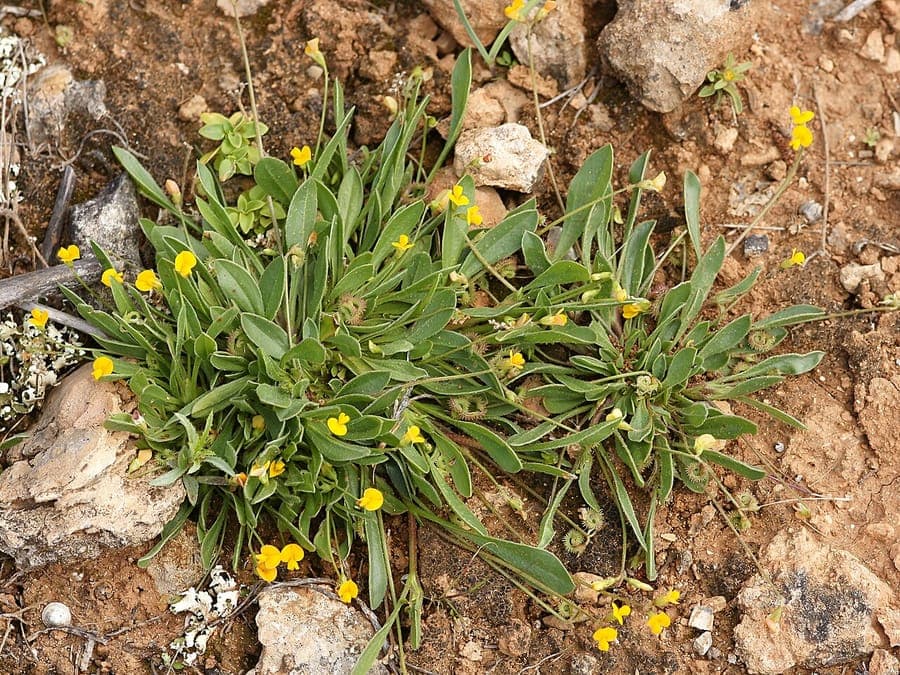
Hans Hillewaert / CC BY-SA 3.0, via Wikimedia Commons
Caterpillar-plant: complete guide
Scorpiurus muricatus
Want to see Caterpillar-plant: complete guide in your garden?
Full design in HD: €7.99
Look after your Caterpillar-plant with the GardenWorld app
Identify plants with your camera and get a care calendar with reminders for this plant.


Overview
The Caterpillar-plant (Scorpiurus muricatus) is a fascinating small legume with yellow flowers and exceptionally beautiful spiral fruits. This Mediterranean annual provides pleasant yellow flowers from April to July and a most remarkable fruiting structure that curls like a caterpillar shape.
This plant is ideal for small gardens, borders and container planting as an interesting accent plant. It requires minimal maintenance and provides a source of fascination for curious gardeners seeking something different from ordinary flowering bulbs.
Appearance and bloom
Scorpiurus muricatus is a small herb reaching approximately 30-40 centimetres in height with finely branched stems. The leaves are small, alternating compound leaves made up of 7-9 small leaflets. The plant grows compactly without requiring much support.
The flowers are yellow and approximately 6-8 millimetres across, appearing in small flower clusters from April to July. After flowering, the characteristic fruits develop: these are spirally coiled, approximately 8-12 millimetres long, covered with fine spines or ridges resembling a small caterpillar.
The fruits ripen brown and retain their remarkable shape. This natural sculpture makes the plant a true showstopper in full growth.
Ideal location
Full sun is preferred. Plant in locations receiving at least 5-6 hours direct sunlight daily. The plant tolerates light partial shade, but flowers less freely. Avoid windless corners without good ventilation.
This small plant fits excellently in flower borders, stone edges and small beds. Plant close to walkways where visitors can observe the fascinating fruits.
Free preview
Want to see Caterpillar-plant: complete guide in your garden? Make a free preview of your design.
Soil
No exceptional soil requirements, but preference for well-drained soils. Legumes can thrive on moderately nutrient-rich to poor soils. A neutral to slightly acidic pH is ideal.
Adaptation to dry or sandy soils makes this plant very adaptable. Add only some compost at planting time in very poor soils.
Watering
Moderate moisture requirement after establishment. During growing period water regularly, especially in very dry periods. Once rooted, this herb tolerates moderate drought quite well.
Watering must be done carefully: excessive moisture can lead to root rot. Allow soil surface to dry between waterings.
Pruning
No pruning required for this small plant. Remove only weak or damaged stems. After flowering, plant can be removed or allow self-seeding for next generation.
Maintenance calendar
Feb to March: Sow seeds directly in garden soil or pots.
April to May: Growth accelerates, flowering begins.
June to July: Flowering is in full swing, fruits develop.
August: Fruits ripen, leaf drop begins.
September to October: Plant withers, collect seeds if desired.
Winter hardiness
This is an annual plant, so winter hardiness does not apply. In Mediterranean and warm temperate climates, plant survives mild winters outdoors as self-seeding. In cold areas the plant dies and seed can be collected for next season.
USDA zone 7 and above suitable for overwintering in ground.
Companion plants
These small flowers attract small bees and insects. The plant provides food source in a group, especially in nutrient-poor gardens.
Final thoughts
Scorpiurus muricatus offers interesting surprise in garden borders. The remarkable fruit structure is a topic of conversation and admiration. Perfect for gardeners seeking something unique and amusing! Start with sowing and enjoy these little wonders.
Find seeds at specialized seed merchants or online suppliers of Mediterranean plant material.
Frequently asked questions about Caterpillar-plant
Is Caterpillar-plant winter hardy?
This is an annual plant, so winter hardiness does not apply. In Mediterranean and warm temperate climates, plant survives mild winters outdoors as self-seeding.
When and how do you prune Caterpillar-plant?
No pruning required for this small plant. Remove only weak or damaged stems.
How much water does Caterpillar-plant need?
Moderate moisture requirement after establishment. During growing period water regularly, especially in very dry periods.
Where does Caterpillar-plant grow best?
Full sun is preferred. Plant in locations receiving at least 5-6 hours direct sunlight daily.
What soil does Caterpillar-plant need?
No exceptional soil requirements, but preference for well-drained soils. Legumes can thrive on moderately nutrient-rich to poor soils.

See it in your garden
See Caterpillar-plant in your garden
One photo of your garden and a few questions. You see the result in about a minute.
Try it with a photoIdentify this plant in your own garden. Identify a plant
Similar plants
Pineapple broom (Argyrocytisus battandieri): complete guide
Argyrocytisus battandieri
Everything about pineapple broom (Argyrocytisus battandieri), the Moroccan wall shrub with silver leaves and pineapple-scented flowers: site, pruning and hardiness.
Blue false indigo: complete guide
Baptisia australis
Everything about blue false indigo (Baptisia australis): position, soil, watering, cutting back, hardiness and toxicity. A long-lived prairie perennial with indigo flowers.
Warminster broom (Cytisus × praecox): complete guide
Cytisus × praecox
Everything about Warminster broom (Cytisus × praecox): position, poor soil, pruning after flowering, hardiness and what you need to know about its toxicity.
