
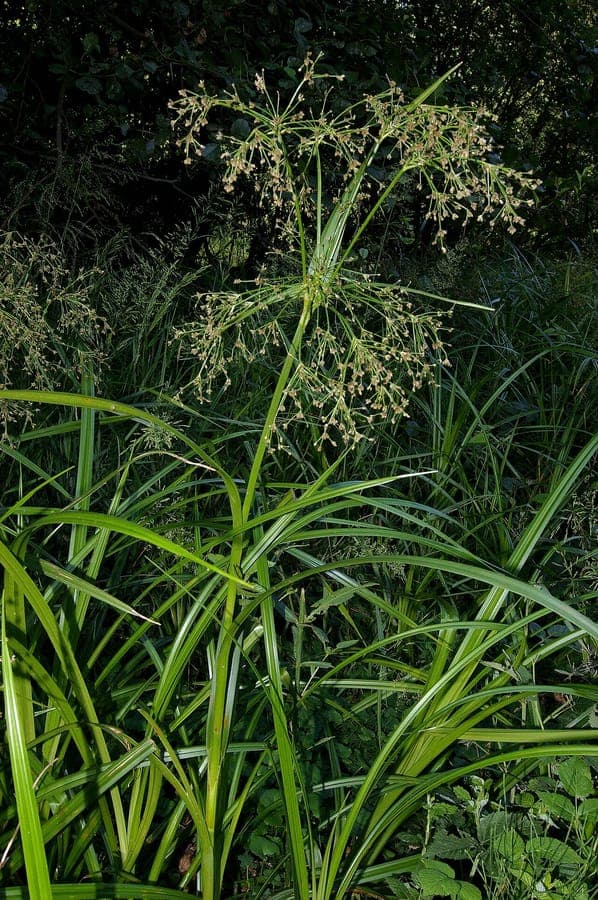
Christian Fischer / CC BY-SA 3.0, via Wikimedia Commons
Wood club-rush: complete guide
Scirpus sylvaticus
Want to see Wood club-rush: complete guide in your garden?
1 minute, no credit card
Wood Club-rush: Complete Guide to This Wetland Sedge
Wood club-rush (Scirpus sylvaticus) belongs to the fascinating family of sedges and club-rushes known as Cyperaceae. This native European wetland plant occurs naturally along stream banks and marshy habitats from the Netherlands to Central Asia and the Caucasus. In the British garden, this plant is becoming increasingly popular as gardeners discover its value for wet and boggy areas.
Overview
Scirpus sylvaticus is an elegant, graceful sedge that naturally inhabits wet and marshy habitats. The plant is recognized for its delicate structure and graceful growth habit, making it a wonderful addition to water gardens and wet corners of the landscape. Due to its preference for damp ground and periodic water saturation, wood club-rush is ideal for bog and streamside situations where many other garden plants struggle.
The plant typically reaches a modest height and forms an attractive, loosely grouped display of slender stems with fine, linear foliage. This gives wood club-rush an airy, elegant appearance that can bring movement and depth to the water garden. The plant flowers during summer with small, inconspicuous flower clusters typical of sedges.
Appearance and Bloom
Wood club-rush is a herbaceous sedge with the grasslike appearance characteristic of the sedge family. The leaves are long, narrow, and linear, typically between 3 and 6 millimeters wide. They arise primarily from the base of the plant and display a fresh green color present throughout the year. The stems are three-angled to rounded and contribute to the delicate, graceful appearance of the plant.
Flowering occurs in June and July. The flowers are small and inconspicuous, arranged in compound spikelets or panicles atop the stems. They lack true petals but consist of small, brownish scales. Although not showy, these flowers possess a subtle charm well-suited to the plant's natural character.
Following flowering, wood club-rush produces small seeds dispersed primarily by water and wind, facilitating natural spread in wetland environments.
Ideal Location
Wood club-rush thrives in situations where water and moisture are abundant. The ideal location is at the margin of water bodies, in shallow ponds, or in wet boggy areas of the garden. The plant grows in both full sun and partial shade, though full sun promotes the densest growth and finest appearance.
The water table is not critical for wood club-rush as long as the soil remains consistently moist. This makes the plant exceptionally suitable for gardens with poor drainage or low spots where water collects. While the plant can survive in drier conditions, it will not achieve optimal growth.
Being native to Europe, wood club-rush is well-adapted to European climates, including those of Britain, continental Europe, and Scandinavia. This makes it a reliable choice for gardeners wishing to incorporate native plant species.
Free design
Want to see Wood club-rush: complete guide in your garden? Make a free design now.
Soil
Soil requirements for wood club-rush are not strict provided moisture conditions are correct. The plant grows naturally in predominantly acidic to neutral peat and wetland soils. In the garden, wood club-rush performs well in heavy clay soils that retain moisture effectively.
For garden cultivation, amending the soil with organic matter such as peat or composted plant material is recommended to improve water retention. Drainage is not necessary and indeed, wood club-rush performs better as soil moisture increases.
Soil pH may range from slightly acidic to neutral (pH 5.5-7.0). Nutrient levels are low to moderate; the plant naturally grows in nutrient-poor wetland soils. This makes wood club-rush economically attractive as it requires minimal fertilizer.
Watering
Wood club-rush is a moisture-loving plant requiring water year-round. In natural habitats, it grows in situations with permanently elevated water tables. For optimal garden growth, soil should remain consistently moist throughout the growing season from April to October.
During winter, soil may be slightly drier but should never completely dry out. If wood club-rush is grown in a pond, water can remain constant year-round. Regular misting or watering of potted specimens is essential.
During dry summer periods, supplemental watering or irrigation may be necessary. Although wood club-rush thrives in wet conditions, it cannot tolerate stagnant, oxygen-depleted water where growth stagnates or plant death occurs.
Pruning
Wood club-rush requires minimal pruning. The plant grows well without intervention, though dead stems may be removed in spring (March) to stimulate fresh growth from underground portions.
If growing wood club-rush in a pond, old stems may accumulate. In such cases, dead material can be removed. For optimal shape and dense growth, the plant may be cut back to 5-10 centimeters above ground in spring.
Maintenance Calendar
Here is a typical maintenance calendar for wood club-rush in temperate regions:
March: Inspect the plant for dead material. Carefully remove dead stems. Begin regular watering if soil needs to become moist.
April to October: Maintain consistently moist soil. Monitor for unwanted vegetation.
November to February: Reduce watering slightly. The plant enters dormancy. Check drainage in continuously wet areas.
Winter Hardiness
Wood club-rush is highly winter hardy in Europe, including Britain and continental regions. The plant occurs naturally from Britain to Scandinavia, proving its tolerance of frost. In severe winters, aerial parts may die back, but underground rootstocks survive readily and produce new shoots in spring.
For extra protection in very harsh winters, the plant may be earthed up or covered with leaf litter. This is rarely necessary in most temperate regions.
Companion Plants
Wood club-rush creates attractive combinations with other wetland plants:
- Bog Asphodel (Narthecium ossifragum): A delicate plant with yellow flowers
- Marsh Marigold (Caltha palustris): With golden yellow spring blooms
- Brooklime (Veronica beccabunga): A small water plant with blue flowers
- Broad-leaved Sundew (Drosera rotundifolia): For additional interest
- Bottle Sedge (Carex rostrata): For structural contrast
In less waterlogged areas, wood club-rush combines well with:
Want to see Wood club-rush: complete guide in your garden? Make a free design now.
Upload a photo, pick a style, and get a photorealistic design with plant list in under a minute.
No credit card required


Similar plants
Flat-stemmed club-rush: complete guide
Bolboschoenus planiculmis
Everything about Bolboschoenus planiculmis: growing conditions, watering, care, and use as a pond margin or wetland plant in garden design.
Great Plains flatsedge: complete guide
Cyperus lupulinus
Everything about Great Plains flatsedge (Cyperus lupulinus): growing conditions, care, garden uses, and ecological value. Tips for pond margins and dry sandy soils.
Golden beak sedge: complete guide
Rhynchospora corymbosa
Everything about golden beak sedge (Rhynchospora corymbosa): a dramatic tropical marginal for pond edges, bog gardens, and wet habitats.