
Honmingjun / CC BY-SA 4.0, via Wikimedia Commons
Golden beak sedge: complete guide
Rhynchospora corymbosa
Want to see Golden beak sedge: complete guide in your garden?
1 minute, no credit card
Overview
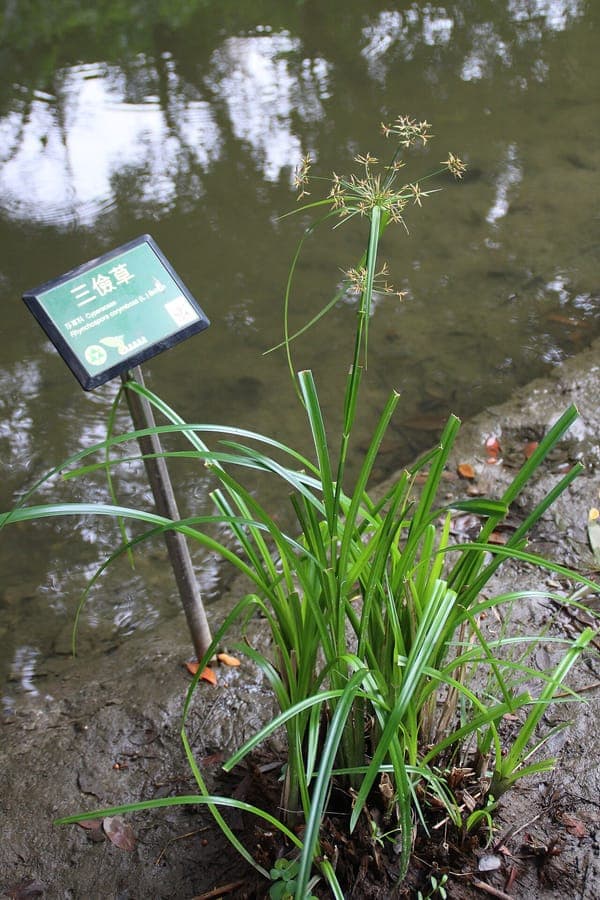
The golden beak sedge (Rhynchospora corymbosa) is one of the most visually striking members of the Cyperaceae family - the sedge family - a group that also includes the familiar bulrushes, spike-rushes, and true sedges. The genus Rhynchospora comprises more than 350 species worldwide and takes its name from the Greek words for beak (rhynchos) and seed (spora), referring to the distinctive beaked achenes that characterise the genus. Golden beak sedge has a vast natural distribution spanning virtually all tropical and subtropical regions: West and central Africa, India, Southeast Asia, tropical Australia, the Pacific islands, the Caribbean, and tropical South America. In these areas it colonises the margins of rivers, lakes, and swamps, flooded grasslands, and wet sunny banks - always in permanently moist to wet ground. In the garden it brings genuine exotic drama to pond margins, bog gardens, and water features, reaching 1 to 2 metres in height and producing spectacular golden flower-like displays in summer. For ideas on incorporating bold marginal plants into pond and water garden designs, visit gardenworld.app.
Appearance and bloom cycle
Golden beak sedge grows as a dense, clump-forming plant with long, arching to erect leaves 60 to 150 cm long and 1 to 2 cm wide, glossy dark green with a prominent midrib. The leaf margins are sharply toothed - handle with care. The flowering display is the plant's outstanding feature: large, broadly spreading corymbs (reflected in the species name) measuring 20 to 40 cm across, composed of dozens of star-shaped structures in brilliant gold to creamy white. These star shapes are actually modified leaves (bracts) surrounding the true small flowers beneath, and they persist on the plant for many weeks, extending the season of interest well beyond the initial blooming period. Flowering occurs in summer, primarily July through September in temperate cultivation. The true fruits are small achenes, each tipped with the characteristic beak-shaped style remnant. After flowering, the dried brown flower heads provide ornamental structure into autumn.
Ideal location
Golden beak sedge demands a warm, sunny to lightly shaded position with permanently moist to wet ground. In its natural habitat it grows with its roots continuously in shallow water or waterlogged soil. In the garden it is best sited at a pond margin where it can stand in up to 10 to 15 cm of water, or in a bog garden where the soil never dries out. In cool-temperate climates, shelter from cold winds is important since the plant is of tropical origin and sensitive to temperature extremes. In the UK, the Netherlands, and Belgium it is most reliably grown as a container plant that is overwintered in a frost-free space; in milder coastal urban areas it may persist outdoors with protection. Container growing gives you full control over its position in summer and its overwintering conditions.
Soil
Golden beak sedge thrives in heavy, wet, nutrient-rich soils - almost the opposite of what most garden plants prefer. Clay-loam soils or a dedicated aquatic compost work excellently at a pond margin. In containers, use a specialist aquatic or pond compost without perlite or sharp sand (these cause the mix to float when submerged). The plant tolerates a wide pH range, from the slightly acidic conditions of peaty bog soils to the neutral-to-alkaline conditions of clay-based pond margins. Do not add grit or drainage material: this plant wants to sit in wet substrate, not drain through it. Feed annually in spring with an aquatic fertiliser tablet pushed into the compost around the roots.
Watering
At a proper pond margin or in a bog garden, no active watering is needed - the water table manages moisture automatically. In containers, daily watering in warm weather is essential to prevent the compost from drying out. Placing a pot in a deep saucer or tray kept permanently filled with several centimetres of water is an effective solution. Never allow the plant to dry out even briefly: drought stress causes leaf tips to brown rapidly and can kill the plant within days in hot weather. During winter storage, maintain slight moisture in the pot - never bone dry - but reduce watering considerably compared to the growing season.
Free design
Want to see Golden beak sedge: complete guide in your garden? Make a free design now.
Pruning
Very little pruning is required. In late winter or early spring (February or March), cut away all the previous season's dead or dried foliage and flower stems as close to the base of the clump as possible, to make room for new growth. During the growing season no pruning is needed; the plant regulates itself. Older clumps that become very dense or show reduced flowering can be divided in spring: dig up the clump, separate it into sections of three to five strong shoots each with good root attachment, and replant. Remove any yellowing individual leaves during the season as they appear. Always use gloves when working with this plant - the leaf margins are genuinely sharp.
Maintenance calendar
January and February: keep container plants in a frost-free space (minimum 2 degrees Celsius) with minimal watering; do not let the compost dry completely. March: begin removing last year's dead foliage; gradually increase watering. April: move containerised plants to a sheltered outdoor spot once night temperatures stay above 5 degrees; protect from any late frost. May: full outdoor establishment; growth accelerates rapidly. June through August: peak growing and flowering season; water daily for container plants, feed monthly with aquatic fertiliser. September: flowers fade; leave decorative seed heads in place. October: begin preparing for winter; bring containerised plants in before the first frost. November and December: indoor frost-free storage; minimal watering. Find water garden planting schemes at gardenworld.app.
Winter hardiness
Golden beak sedge is a tropical plant with limited cold tolerance, rated approximately to USDA zone 9b or 10 at best, meaning it can tolerate brief temperature dips to around -4 to -1 degrees Celsius without damage. In the temperate climate of the UK, the Netherlands, and Belgium, this means it cannot reliably overwinter in the open ground except in the most sheltered, frost-free micro-climates such as city centre gardens, south-facing walled gardens in the southwest, or coastal locations with near-frost-free winters. The standard and recommended approach for most gardeners is to treat it as a tender perennial: grow it in a container through the warmer months, then move it indoors to a frost-free space (garage, unheated greenhouse, cool conservatory) before the first frosts of autumn. Do not wait for frost to arrive before moving it in - even a single night of light frost will damage the foliage. Indoors through winter it needs light and minimal moisture, then begins growing again once returned outdoors in late spring.
Companion plants
Golden beak sedge pairs well with other large-scale marginal and bog plants. Phragmites australis (common reed) provides tall vertical structure and gentle movement. Typha latifolia (common bulrush) adds a bold architectural vertical element with its distinctive brown seed cylinders. Iris pseudacorus (yellow flag iris) flowers earlier in the season and shares the golden colour theme. Carex riparia and Carex pendula are related sedge-family plants for the wetter marginal zones. For a more exotic tropical look, Thalia dealbata, large-leaved Canna cultivars, and Pontederia cordata (pickerelweed) make vivid companions. At the water surface, Nuphar lutea or Nymphaea cultivars complete the picture. At the edge of the bog zone, Lysimachia nummularia and Mentha aquatica fill lower gaps without competing with the golden beak sedge's height.
Buying and practical advice
Golden beak sedge is available from specialist aquatic nurseries, pond plant suppliers, and online retailers. General garden centres occasionally stock it in their water plant sections during summer, but availability is inconsistent. Specialist suppliers tend to offer plants properly potted in aquatic compost, which is the best way to buy. Prices range from about 8 to 20 pounds or euros depending on pot size and the number of shoots in the clump. Buy in spring or early summer to give the plant maximum growing time before winter. Look for healthy dark green, upright leaves without browning tips, and a well-filled pot with visible roots. Avoid plants that appear to have been sitting dry in a retail environment.
Closing
Golden beak sedge is a genuinely exciting plant for anyone with a pond, bog garden, or a love of bold tropical-looking marginals. Its height, its glossy foliage, and above all its dazzling golden flower displays make it an instant focal point at the water's edge. The requirement to overwinter it frost-free is a manageable commitment that brings a rich reward: a plant that looks as though it belongs in a tropical botanical garden, brought to life each summer in your own outdoor space.
Want to see Golden beak sedge: complete guide in your garden? Make a free design now.
Upload a photo, pick a style, and get a photorealistic design with plant list in under a minute.
10,000+ gardens designed already
No credit card required


Similar plants
Flat-stemmed club-rush: complete guide
Bolboschoenus planiculmis
Everything about Bolboschoenus planiculmis: growing conditions, watering, care, and use as a pond margin or wetland plant in garden design.
Great Plains flatsedge: complete guide
Cyperus lupulinus
Everything about Great Plains flatsedge (Cyperus lupulinus): growing conditions, care, garden uses, and ecological value. Tips for pond margins and dry sandy soils.
Bog Bulrush: complete guide
Schoenoplectiella mucronata
Everything about bog bulrush (Schoenoplectiella mucronata): pond cultivation, ideal site, soil, water and maintenance in your garden.