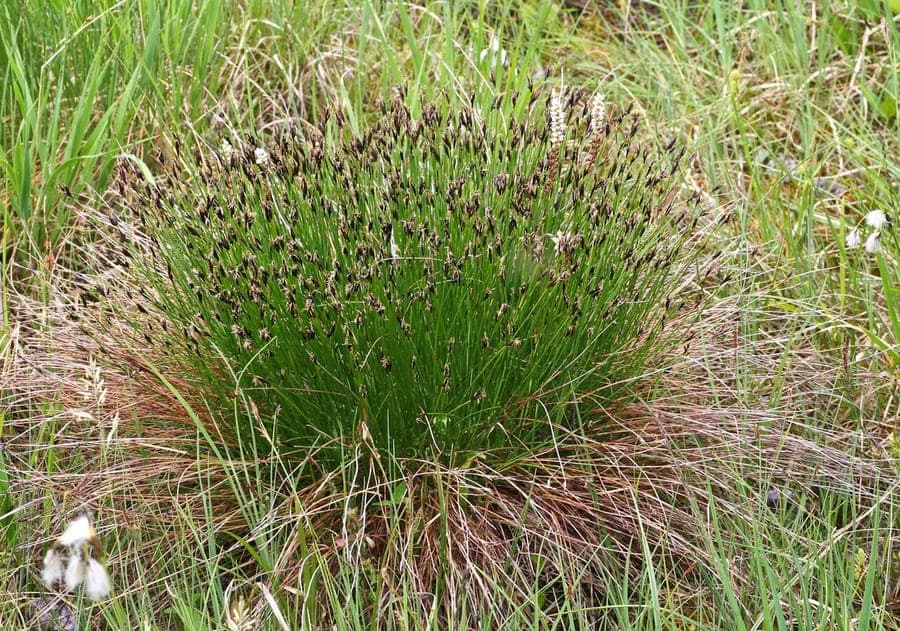
Ragnhild&Neil Crawford from Sweden / CC BY-SA 2.0, via Wikimedia Commons
Brown bog-rush: complete guide
Schoenus ferrugineus
Want to see Brown bog-rush: complete guide in your garden?
Full design in HD: €7.99
Look after your Brown bog-rush with the GardenWorld app
Identify plants with your camera and get a care calendar with reminders for this plant.


Brown Bog-Rush: Complete Guide
Overview
The Brown Bog-Rush (Schoenus ferrugineus), also known as Rusty Bog-Rush, is a delicate and elegant marsh flower from the Cyperaceae family. This plant is endemic to Europe and prefers to grow in wet, acidic marshes. Despite its small stature, this plant is an important part of very specific marsh ecosystems.
This plant is less well-known than many other garden plants, but offers unique value to lovers of rare and native flora. It grows best in wet, acidic conditions and can be a charming addition to special water gardens.
Appearance & Bloom
The Brown Bog-Rush is a small to medium plant that typically grows 15-50 cm tall. The plant displays fine, stiff, branched stems with small, drooping leaves. This gives it a characteristic appearance that is immediately recognizable.
The flowers appear as small, rust-red spikelets at the tops of the stems. These flowers are subtle but have their own delicate beauty. The flowering period is in summer, making it a seasonal attraction.
The plant forms dense clumps and can form small groups in marsh landscapes. This growth pattern makes it suitable for natural marsh projects and wild gardens.
Ideal Location
The Brown Bog-Rush thrives best in very wet, acidic marshes with a pH below 5.5. This plant's preference for acidic conditions places it outside the reach of many standard gardens, though specialized wetland gardens can accommodate it perfectly.
The plant feels at home in areas with full sun to partial shade. It accepts shallow water and permanent water saturation. In drier seasons, it still accepts moist conditions.
Protection from strong winds is beneficial given the delicate nature of the plant.
Free preview
Want to see Brown bog-rush: complete guide in your garden? Make a free preview of your design.
Soil Requirements
The Brown Bog-Rush requires very acidic, wet soils. A pH of 4.5-5.5 is ideal, though it can thrive up to pH 6.0. The soil must be permanently wet with low nutrient levels. These specific requirements make it less suitable for standard gardens.
Organic, acidic sediments or peaty soils are perfect. The soil must not be fertilized, as the plant is adapted to nutrient-poor conditions.
Watering
The plant requires permanently wet conditions. Ensure the soil always remains saturated. Standing water is acceptable, even preferred. The plant does not accept dry periods.
In artificial marsh projects, rainwater or additional water purification can be used to maintain acidity.
Pruning
Pruning is not necessary. The plant is small and maintenance-free. Dead stems can be removed in spring.
Maintenance Calendar
The maintenance calendar is simple:
- Spring: Remove dead stems
- Summer: Monitor water status
- Fall: Preparation for winter
- Winter: Minimal maintenance, prevent ice formation
Winter Hardiness
The Brown Bog-Rush is very winter-hardy and can survive under ice. The plant regrows from roots in spring.
Companion Plants
The Brown Bog-Rush grows well with:
- Peatmoss roots
- Acidic water vegetation
- Drosera species (sundew)
- Other acidic marsh endemics
Closing
The Brown Bog-Rush is a special plant for lovers of rare, native flora. Its requirements for very acidic, wet conditions make it unsuitable for all gardens, but it can be a fascinating addition to specialized marsh projects. Visit gardenworld.app for more tips on wild gardens. Also discover gardenworld.app/en.
Frequently asked questions about Brown bog-rush
Is Brown bog-rush winter hardy?
The Brown Bog-Rush is very winter-hardy and can survive under ice. The plant regrows from roots in spring.
When and how do you prune Brown bog-rush?
Pruning is not necessary. The plant is small and maintenance-free.
How much water does Brown bog-rush need?
The plant requires permanently wet conditions. Ensure the soil always remains saturated.
Where does Brown bog-rush grow best?
The Brown Bog-Rush thrives best in very wet, acidic marshes with a pH below 5.5. This plant's preference for acidic conditions places it outside the reach of many standard gardens, though specialized wetland gardens can accommodate it perfectly.
What soil does Brown bog-rush need?
The Brown Bog-Rush requires very acidic, wet soils. A pH of 4.5-5.5 is ideal, though it can thrive up to pH 6.0.

See it in your garden
See Brown bog-rush in your garden
One photo of your garden and a few questions. You see the result in about a minute.
Try it with a photoIdentify this plant in your own garden. Identify a plant
Similar plants
Carex conica: a small evergreen sedge for edges
Carex conica
Carex conica is a compact evergreen sedge from Japan and Korea. A guide to 'Snowline', where to plant it, soil, tidying, dividing and how hardy it really is.
Carex oshimensis: the evergreen striped sedge
Carex oshimensis
Carex oshimensis is an evergreen Japanese sedge with fine, striped leaves. How to plant, place, tidy and divide 'Evergold' and the EverColor series in your garden.
Orange New Zealand sedge (Carex testacea): a guide
Carex testacea
Orange New Zealand sedge (Carex testacea) turns copper and orange in sun and cold. Where to plant it, which soil it likes, how to tidy it and how hardy it is.
