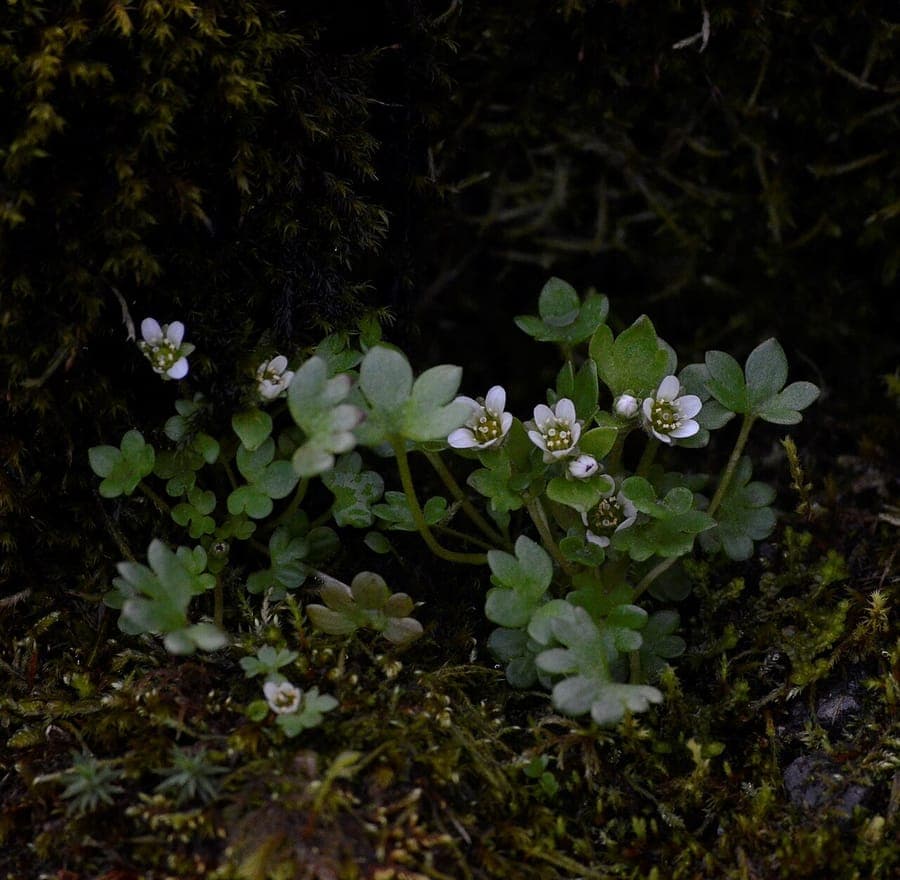
Iangpark / CC BY-SA 4.0, via Wikimedia Commons
Weak Saxifrage: complete guide
Saxifraga rivularis
Want to see Weak Saxifrage: complete guide in your garden?
Full design in HD: €7.99
Look after your Weak Saxifrage with the GardenWorld app
Identify plants with your camera and get a care calendar with reminders for this plant.


Overview
The weak saxifrage (Saxifraga rivularis) is a delicate alpine plant from the saxifrage family. This tiny plant occurs naturally in subarctic areas and high mountain regions of the northern hemisphere. With its delicate appearance but hardiness, it is a special choice for the rocky garden.
The plant grows wild along mountain streams and in wet rock crevices. The name "rivularis" refers to this preference for water-rich environments. For gardeners who love alpine plants, this is a singular specimen.
Appearance and Bloom
The weak saxifrage is a tiny, rosette-forming plant reaching only 5 to 10 cm tall. It grows in compact mats with very small, round leaves. The leaves are fresh green to reddish-tinged, especially in cold seasons.
Summer blooming is very delicate with thin, red or pink stems and small white flowers. Though tiny, the flowers are very elegant and attract small pollinators. The bloom period runs from June to August.
Ideal Location
The weak saxifrage prefers light shade to partial shade. In full sun, the foliage can become scorched. A position with morning sun and afternoon shade is ideal. Strong direct sun should be avoided.
The plant feels at home in cool, moist environments. This can be in a rocky sloped garden. It also thrives in troughs or pots by the door. Protection from strong wind is welcome.
Soil
The weak saxifrage is particular about soil type. It grows best on very well-draining, acidic soils. Standard potting soil mixed with plenty of gravel, sand and shards provides perfect conditions.
The pH should be acidic, ideally 5.0 to 5.5. Water availability must be consistent, but excess must absolutely be avoided. A substrate composition of 30% compost, 30% sand, 40% gravel gives optimal results.
Watering
The weak saxifrage feels at home in moist conditions, but this should not mean waterlogging. Regular moisture is essential. During the growing season, soil should always be slightly moist.
Although mountain stream preference, water must not stagnate around roots. Drip irrigation or regular misting works perfectly. In dry seasons, daily watering may be needed.
Pruning
Pruning is not worthwhile for this small plant. Dead foliage may be carefully removed, but otherwise the plant grows very compact and does not tolerate pruning well. The plant should retain its natural form.
Free preview
Want to see Weak Saxifrage: complete guide in your garden? Make a free preview of your design.
Maintenance Calendar
March to April: Check for winter damage. Carefully remove dead material.
May to June: Growth starts; ensure consistent moisture. No fertilizer needed.
July to August: Bloom period; enjoy the tiny flowers. Manually remove weeds.
September to October: Winter preparation; gradually reduce watering.
November to February: Winter dormancy; minimal care.
Winter Hardiness
The weak saxifrage is very winter hardy, fully adapted to arctic conditions. Temperatures down to -30 degrees Celsius are tolerated. In Dutch gardens it survives without special protection.
However, moist conditions in winter combined with freezing can cause problems. Ensure good drainage. Coverage with stone or gravel provides protection.
Companion Plants
The weak saxifrage grows well with other alpine ground covers like moss campion, alpine violet and tiny sedum species. Together they create a bewitching mountain landscape.
In rock crevices it fits perfectly. Also in stream-like setups of troughs. Avoid heavy neighbors that would overshadow it.
Closing Thoughts
The weak saxifrage is a tiny jewel for the enthusiastic alpine plant lover. With its delicate appearance and special requirements, it asks for careful attention. But for those willing to take the trouble, it rewards with years of tiny elegance.
Ordering from specialized alpine nurseries gives the best results. Gardenworld.app helps with finding suitable combinations for your alpine garden. This is not a plant for inexperienced gardeners, but for those who dare the challenge.
Additional Information
This plant offers numerous advantages for the garden enthusiast. With its robust character and minimal maintenance needs, it is an excellent choice for both novice and experienced garden owners. The plant fits well into diverse garden styles, from informal woodland gardens to more formal hedgerow designs.
The adaptability of this plant to different growing conditions makes it versatile and easy to place. Whether you have a small city garden or a large estate, this plant will prove itself. The possibilities for integration with other plants are numerous.
For those pursuing an ecological garden, this plant is invaluable. By attracting birds and insects, you contribute to biodiversity conservation in your immediate environment. This aspect alone justifies the plant selection.
Frequently asked questions about Weak Saxifrage
Is Weak Saxifrage winter hardy?
The weak saxifrage is very winter hardy, fully adapted to arctic conditions. Temperatures down to -30 degrees Celsius are tolerated.
When and how do you prune Weak Saxifrage?
Pruning is not worthwhile for this small plant. Dead foliage may be carefully removed, but otherwise the plant grows very compact and does not tolerate pruning well.
How much water does Weak Saxifrage need?
The weak saxifrage feels at home in moist conditions, but this should not mean waterlogging. Regular moisture is essential.
Where does Weak Saxifrage grow best?
The weak saxifrage prefers light shade to partial shade. In full sun, the foliage can become scorched.
What soil does Weak Saxifrage need?
The weak saxifrage is particular about soil type. It grows best on very well-draining, acidic soils.

See it in your garden
See Weak Saxifrage in your garden
One photo of your garden and a few questions. You see the result in about a minute.
Try it with a photoIdentify this plant in your own garden. Identify a plant
Similar plants
Chinese Astilbe: complete guide
Astilbe chinensis
Everything about Chinese astilbe (Astilbe chinensis), the late-flowering astilbe with narrow lilac plumes: site, soil, watering, pruning and hardiness.
Astilboides tabularis: giant leaves for shady gardens
Astilboides tabularis
Astilboides tabularis grows round leaves up to a metre across and creamy plumes in summer. Learn which site, moist soil and simple care this hardy perennial needs.
Bergenia purpurascens: complete guide to this evergreen bergenia
Bergenia purpurascens
Everything about Bergenia purpurascens, an evergreen elephant's ears with claret winter foliage and purple-pink spring flowers: position, soil, division and care.
