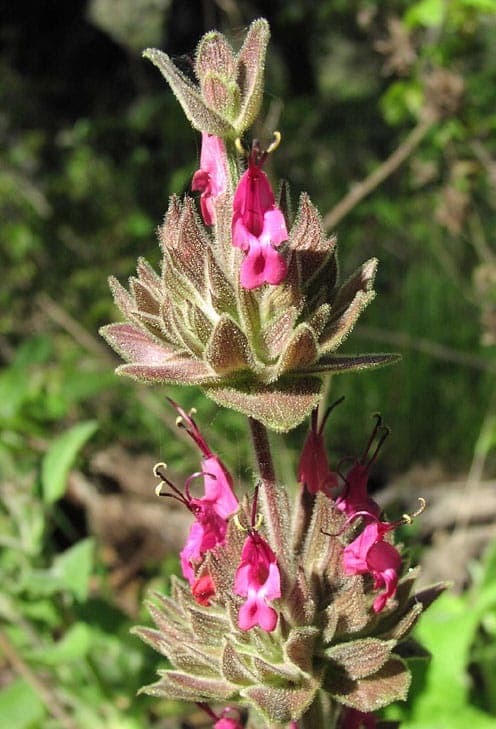
Taken by Antandrus / Public domain, via Wikimedia Commons
Salvia spathacea: complete guide
Salvia spathacea
Want to see Salvia spathacea: complete guide in your garden?
Full design in HD: €7.99
Look after your Salvia spathacea with the GardenWorld app
Identify plants with your camera and get a care calendar with reminders for this plant.


Overview
Salvia spathacea, better known as Hummingbird sage, is an impressive low-growing groundcover from Western and Southwestern California. This remarkable plant attracts hummingbirds with its intense scarlet red flowers and forms a lush, green carpet. Perfect for wild gardens and ecologically conscious garden designs that support native pollinators.
Appearance and Bloom
Hummingbird sage grows to 30-45 cm in height and spreads to about 60-90 cm wide. The leaves are deep green, wrinkled, and softly aromatic. The flowers appear in spectacular scarlet red and bloom from March to May, sometimes into June. These flowers are specially adapted to hummingbirds and are rarely visited by bees.
Ideal Location
Plant Salvia spathacea in full sun to partial shade. The plant thrives with at least 4-6 hours of direct sunlight. In very hot, dry climates, some afternoon shade may be beneficial. Place the plant where you can see hummingbirds; this plant demonstrably attracts them with its flowers.
Soil
Well-drained soil is crucial. This California sage grows optimally in sandy, lean, or rocky soil. In heavier soils, add gravel or sand. A pH between 6.0 and 8.0 is suitable. The plant tolerates poor soil well and does not need fertilizing.
Watering
Once well established, Hummingbird sage is highly drought tolerant. Water when the top 3-4 cm of soil feels dry, especially during the growing season. In winter, water minimally. The plant is very sensitive to overwatering, especially in winter.
Free preview
Want to see Salvia spathacea: complete guide in your garden? Make a free preview of your design.
Pruning
Minimal pruning is needed. Remove faded flowers in spring to encourage continuous blooming. After the peak of bloom (June), you can remove dead stems. A light shaping trim in spring can help maintain form.
Maintenance Calendar
- January-February: Light inspection after winter
- March-May: Beautiful bloom period, water management
- June-August: Growth slows, minimal care
- September-October: Winter preparation
- November-December: Dormant period
Winter Hardiness
Salvia spathacea is hardy to about -8 to -12 degrees Celsius, suitable for many parts of Europe. In very severe winters, extra protection may be needed. Good drainage is essential for winter survival.
Companion Plants
Pair with other wild plants: native grasses, other California sages, and alpine flowers. Hummingbird sage works beautifully in wildflower borders and ecological gardens. The flowers not only attract hummingbirds but also support local biodiversity.
Closing Thoughts
Salvia spathacea is more than a beautiful plant; it's an invitation for hummingbirds to visit your garden. Perfect for those who want to combine nature and gardening. Available at specialized garden centers and online. Consult gardenworld.app for integration into your garden design. This California jewel brings life and color to any garden. Plant in full sun, keep dry, and enjoy the hummingbirds. Gardenworld.app will help you optimize this special plant in your garden design.
Frequently asked questions about Salvia spathacea
Is Salvia spathacea winter hardy?
Salvia spathacea is hardy to about -8 to -12 degrees Celsius, suitable for many parts of Europe. In very severe winters, extra protection may be needed.
When and how do you prune Salvia spathacea?
Minimal pruning is needed. Remove faded flowers in spring to encourage continuous blooming.
How much water does Salvia spathacea need?
Once well established, Hummingbird sage is highly drought tolerant. Water when the top 3-4 cm of soil feels dry, especially during the growing season.
Where does Salvia spathacea grow best?
Plant Salvia spathacea in full sun to partial shade. The plant thrives with at least 4-6 hours of direct sunlight.
What soil does Salvia spathacea need?
Well-drained soil is crucial. This California sage grows optimally in sandy, lean, or rocky soil.

See it in your garden
See Salvia spathacea in your garden
One photo of your garden and a few questions. You see the result in about a minute.
Try it with a photoIdentify this plant in your own garden. Identify a plant
Similar plants
Agastache rupestris: sunset hyssop for hot, dry borders
Agastache rupestris
Growing Agastache rupestris, sunset hyssop: salmon-orange flowers from July to October, aniseed foliage, drainage, pruning and getting it through a wet winter.
Beautyberry (Callicarpa bodinieri): complete guide
Callicarpa bodinieri
Everything about beautyberry (Callicarpa bodinieri) and 'Profusion': position, soil, pruning and hardiness for the shrub with vivid violet berries in autumn and winter.
Bluebeard (Caryopteris × clandonensis): complete guide
Caryopteris × clandonensis
Everything about bluebeard (Caryopteris × clandonensis): sunny position, well-drained soil, spring pruning and hardiness for this late summer, bee-friendly shrub.
