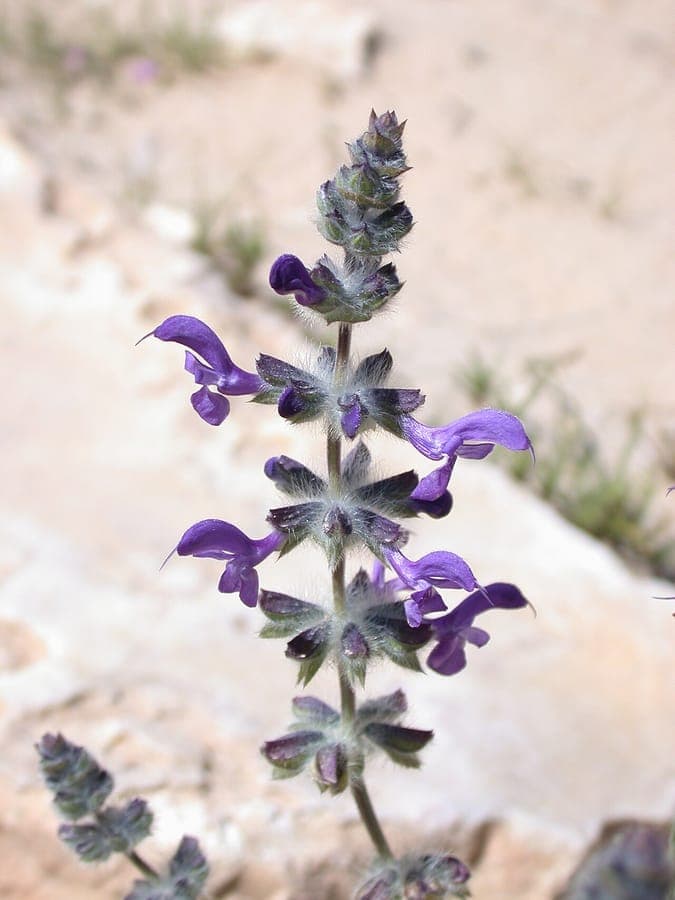
Gideon Pisanty (Gidip) גדעון פיזנטי / CC BY 3.0, via Wikimedia Commons
Salvia lanigera: complete guide
Salvia lanigera
Want to see Salvia lanigera: complete guide in your garden?
Full design in HD: €7.99
Look after your Salvia lanigera with the GardenWorld app
Identify plants with your camera and get a care calendar with reminders for this plant.


Overview
Salvia lanigera, known as verbena sage, vervain sage, or wild clary, is a Mediterranean sage naturally occurring from North Africa to western Iran. This plant is recognized for its impressive hairy, woolly leaves and alluring red to pink flowers. The plant serves as a valuable addition to Mediterranean gardens, dry landscapes, and pollinator-friendly environments.
Appearance and Bloom
Salvia lanigera grows to approximately 30-60 cm in height and spread, forming a compact shrub with thick, woolly-hairy foliage. The leaves are oblong, approximately 3-6 cm long, displaying gray-green coloration from the density of extremely fine hairs that glitter silver in light.
Flowers appear from March-May in warm climates and June-August in temperate regions. They are approximately 1-1.5 cm long, in shades of pink to red with purple-edged markings. Flowers stand in loose spikes along the upper stems and are exceptionally attractive to bees and butterflies.
Ideal Location
Place Salvia lanigera in full sun (minimum 8 hours direct sunlight daily) for optimal growth and flowering. The plant tolerates no shade; partial shade reduces blooming and causes leggy growth. Ensure good ventilation to prevent fungal diseases during humid periods.
Soil
Salvia lanigera thrives in well-draining soil of average fertility. Heavy clay soils must be substantially improved with sand and gravel for drainage. The plant accepts pH 6.0-7.5 but also tolerates slightly alkaline soils.
Amend soil initially with 25-30% sand and gravel to enhance drainage. A light addition of compost helps, but over-fertile soil leads to lush leaf growth at the expense of flowering.
Free preview
Want to see Salvia lanigera: complete guide in your garden? Make a free preview of your design.
Watering
Once established, Salvia lanigera is very drought-tolerant and endures extended dry periods. During the first growing season (2-3 months), water when the top 2-3 cm of soil feels dry. Thereafter, minimal watering is necessary.
Overwatering can cause damage, especially in winter when growth slows. It is better to under-water than over-water. During extreme heat, supplemental water is beneficial, but avoid nighttime watering.
Pruning
Pruning can occur in spring after flowering (May-June). Remove spent flower spikes and any weak or damaged growth. Heavy pruning can be performed to restore form.
The plant grows naturally compact; excessive pruning is not required. Regular pinching of young growth encourages more compact formation.
Maintenance Calendar
January-February: Dormancy; no maintenance. March-May: Peak blooming; deadhead spent flowers. June-August: Growth; minimal watering. August-October: Winter preparation; reduce watering. October-December: Winter rest; no maintenance needed.
Winter Hardiness
Salvia lanigera is winter-hardy to approximately -5°C to -8°C (USDA zones 8-9). In colder climates such as Netherlands, Belgium, and much of Germany and France, the plant must be brought indoors or very carefully protected. In warmer Mediterranean regions, it overwinters outdoors.
Companion Plants
The verbena sage pairs beautifully with other Mediterranean plants such as lavender, santolina, roses, and other drought-tolerant shrubs. Group with silver-foliaged plants for textural contrast. Also suitable in gravel or rock gardens.
Closing
Salvia lanigera provides elegance, drought-tolerance, and value for pollinators in Mediterranean and semi-dry gardens. This plant suits climate-conscious gardeners. Learn more at gardenworld.app/en and gardenworld.app/nl.
Frequently asked questions about Salvia lanigera
Is Salvia lanigera winter hardy?
Salvia lanigera is winter-hardy to approximately -5°C to -8°C (USDA zones 8-9). In colder climates such as Netherlands, Belgium, and much of Germany and France, the plant must be brought indoors or very carefully protected.
When and how do you prune Salvia lanigera?
Pruning can occur in spring after flowering (May-June). Remove spent flower spikes and any weak or damaged growth.
How much water does Salvia lanigera need?
Once established, Salvia lanigera is very drought-tolerant and endures extended dry periods. During the first growing season (2-3 months), water when the top 2-3 cm of soil feels dry.
Where does Salvia lanigera grow best?
Place Salvia lanigera in full sun (minimum 8 hours direct sunlight daily) for optimal growth and flowering. The plant tolerates no shade; partial shade reduces blooming and causes leggy growth.
What soil does Salvia lanigera need?
Salvia lanigera thrives in well-draining soil of average fertility. Heavy clay soils must be substantially improved with sand and gravel for drainage.

See it in your garden
See Salvia lanigera in your garden
One photo of your garden and a few questions. You see the result in about a minute.
Try it with a photoIdentify this plant in your own garden. Identify a plant
Similar plants
Agastache rupestris: sunset hyssop for hot, dry borders
Agastache rupestris
Growing Agastache rupestris, sunset hyssop: salmon-orange flowers from July to October, aniseed foliage, drainage, pruning and getting it through a wet winter.
Beautyberry (Callicarpa bodinieri): complete guide
Callicarpa bodinieri
Everything about beautyberry (Callicarpa bodinieri) and 'Profusion': position, soil, pruning and hardiness for the shrub with vivid violet berries in autumn and winter.
Bluebeard (Caryopteris × clandonensis): complete guide
Caryopteris × clandonensis
Everything about bluebeard (Caryopteris × clandonensis): sunny position, well-drained soil, spring pruning and hardiness for this late summer, bee-friendly shrub.
