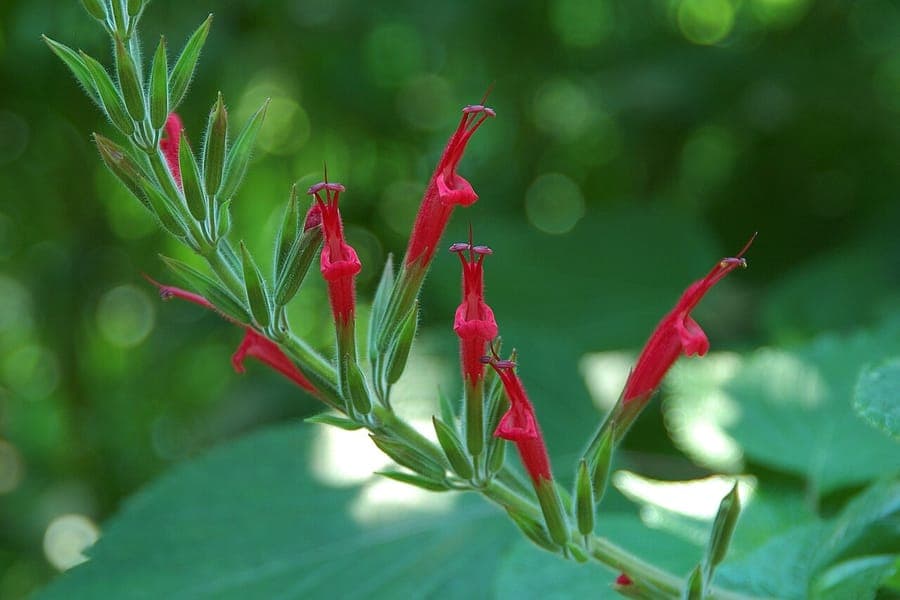
Eric Hunt / CC BY 2.5, via Wikimedia Commons
Pineapple sage: complete guide
Salvia elegans
Want to see Pineapple sage: complete guide in your garden?
Full design in HD: €7.99
Look after your Pineapple sage with the GardenWorld app
Identify plants with your camera and get a care calendar with reminders for this plant.


Overview
Pineapple sage (Salvia elegans) is a charming, semi-tropical sage native to Mexico. This plant is known for its delightful pineapple scent when you brush against the leaves, and its bright red flowers that bloom from fall into winter. The plant is ideal for sunny borders, containers, and gardens in temperate climates where frost protection can be provided.
Appearance & Bloom Cycle
Pineapple sage grows as an upright, semi-woody shrub to about 90-120 cm tall. The leaves are green, elliptical, and soft with red-tinted veins. The leaves emit a unique pineapple scent when you touch them. The flowers are bright red, tubular, and appear in long spikes that bloom from October to December. This makes it a valuable fall and winter-flowering plant when many others are not in bloom.
Ideal Location
Pineapple sage thrives best in a warm, very sunny spot where it receives at least 6-8 hours of direct sunlight daily. Heat is important for flowering, so place it against a south-facing wall or in a sheltered spot. In cooler climates, it benefits from extra warmth, such as against a warm wall. Partial shade is tolerated but may reduce flowering.
Soil Requirements
Well-draining, fertile soil is important for pineapple sage. The plant dislikes wet situations but feels at home in nutrient-rich, humus-filled soil. Sandy loam with good drainage is ideal. Ensure a regular supply of organic matter during the growing season. The plant also accepts growth in containers in potting mix with good drainage.
Watering
Pineapple sage needs regular watering during the growing season, especially in containers. Keep the soil moister than Mediterranean plants, but not waterlogged. Water regularly during dry periods, especially when the plant is in full sun. In winter, when the plant grows more slowly, watering can be reduced. Always ensure good drainage.
Free preview
Want to see Pineapple sage: complete guide in your garden? Make a free preview of your design.
Pruning
Regular pruning helps maintain a full, compact shape. Pinch the tips of young plants to encourage branching. After the blooming period (January), larger stems can be cut back. In early spring, all stems can be cut back by about one third. This stimulates new growth and better flowering.
Maintenance Calendar
January-March: After blooming, prune back. Water carefully.
April-May: Start of growing season. Feed regularly with balanced fertilizer.
June-August: Growth and feeding. Water regularly in warm periods.
September-October: Preparation for blooming. Less nitrogen, more phosphorus.
November-December: Blooming period. Normal water management.
Winter Hardiness
Pineapple sage is not frost-hardy and can only grow outdoors permanently in USDA zones 9-11. In temperate climates (zones 7-8), it should be grown in containers and brought indoors during frost periods. In colder zones, it is best as a houseplant or in a greenhouse. Temperatures below 5°C cause leaf drop and death.
Companion Plants
Pineapple sage works well in warm borders with other sun-lovers. Combine with verbena, zinnia, cosmos, or other heat-loving flowering plants for a tropical feel. In containers, it works excellently with silvery-foliaged plants like senecio and helichrysum. The red flowers contrast beautifully with silver or white-flowering plants.
Closing
Pineapple sage is a delight for gardeners who want to combine warm seasonal warmth with exotic scent and late blooms. The plant is easy to cultivate and provides pleasure for years. In warm climates, it can overwinter outdoors; in cold zones, treat it as an annual plant or bring indoors. Check gardenworld.app for more information about heat-loving plants. Find out at gardenworld.app which other exotic plants bring more scent and color to your garden.
Frequently asked questions about Pineapple sage
Is Pineapple sage winter hardy?
Pineapple sage is not frost-hardy and can only grow outdoors permanently in USDA zones 9-11. In temperate climates (zones 7-8), it should be grown in containers and brought indoors during frost periods.
When and how do you prune Pineapple sage?
Regular pruning helps maintain a full, compact shape. Pinch the tips of young plants to encourage branching.
How much water does Pineapple sage need?
Pineapple sage needs regular watering during the growing season, especially in containers. Keep the soil moister than Mediterranean plants, but not waterlogged.
Where does Pineapple sage grow best?
Pineapple sage thrives best in a warm, very sunny spot where it receives at least 6-8 hours of direct sunlight daily. Heat is important for flowering, so place it against a south-facing wall or in a sheltered spot.
What soil does Pineapple sage need?
Well-draining, fertile soil is important for pineapple sage. The plant dislikes wet situations but feels at home in nutrient-rich, humus-filled soil.

See it in your garden
See Pineapple sage in your garden
One photo of your garden and a few questions. You see the result in about a minute.
Try it with a photoIdentify this plant in your own garden. Identify a plant
Similar plants
Agastache rupestris: sunset hyssop for hot, dry borders
Agastache rupestris
Growing Agastache rupestris, sunset hyssop: salmon-orange flowers from July to October, aniseed foliage, drainage, pruning and getting it through a wet winter.
Beautyberry (Callicarpa bodinieri): complete guide
Callicarpa bodinieri
Everything about beautyberry (Callicarpa bodinieri) and 'Profusion': position, soil, pruning and hardiness for the shrub with vivid violet berries in autumn and winter.
Bluebeard (Caryopteris × clandonensis): complete guide
Caryopteris × clandonensis
Everything about bluebeard (Caryopteris × clandonensis): sunny position, well-drained soil, spring pruning and hardiness for this late summer, bee-friendly shrub.
