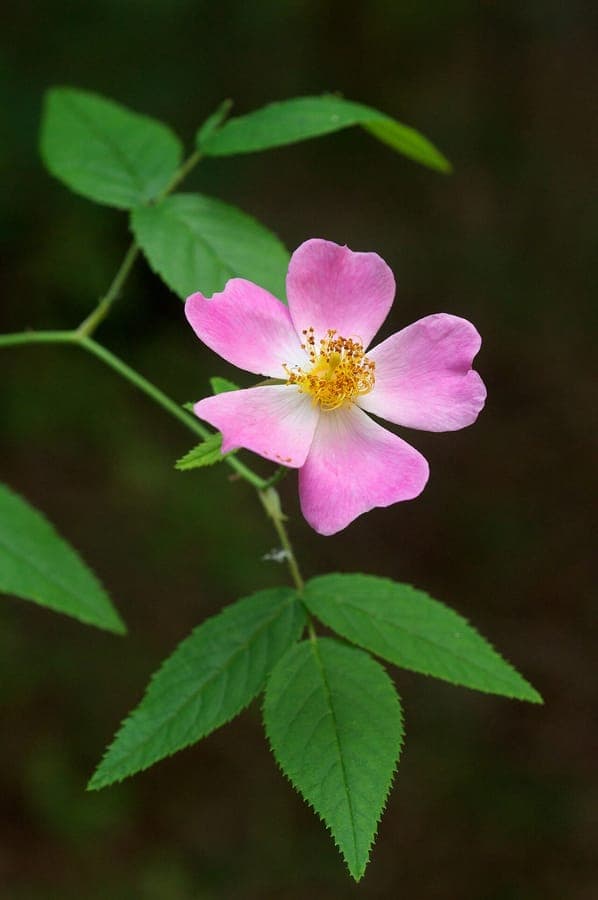
Eric Hunt / CC BY-SA 4.0, via Wikimedia Commons
Prairie Rose: complete guide
Rosa setigera
Want to see Prairie Rose: complete guide in your garden?
Full design in HD: €7.99
Look after your Prairie Rose with the GardenWorld app
Identify plants with your camera and get a care calendar with reminders for this plant.


Overview
The Prairie Rose, scientifically Rosa setigera, is a beautiful American climbing rose from the Rosaceae family. Also called "Climbing Prairie Rose," this robust rose loves vertical growth and produces abundant pink flowers. Perfect for pergolas, fences, and garden walls, this rose offers minimal maintenance requirements with reliable annual flowering.
Appearance and Bloom
The Prairie Rose grows to 2-3 meters tall, forming long, flexible canes. Foliage is small, bright green, and glossy with fine texture. Flowers are pink to pale pink, semi-double blooms with strong, pleasant fragrance. Flowering occurs June-July with possible repeat blooming in September-October. Red hips follow in autumn.
Ideal Location
Plant the Prairie Rose in full sun to partial shade. Perfect for southwest-facing walls, pergolas, and espaliers. Thrives in locations with good air circulation. Avoid excessive moisture and windy exposures.
Soil
Position in fertile, well-draining soil. Suits neutral to slightly alkaline soils. Improve poor soils with compost or peat moss for better growth. Add mulch annually for soil enrichment.
Free preview
Want to see Prairie Rose: complete guide in your garden? Make a free preview of your design.
Watering
Water regularly during first year establishment. Once established, tolerates moderate drought. Water deeply but infrequently for strong root development. Avoid wet foliage situations promoting fungal diseases.
Pruning
Prune after flowering by cutting back excessive growth. Remove dead canes in spring. Shape by shortening side shoots for more compact growth.
Maintenance Calendar
Spring: prune, apply compost around base. Summer: regular watering, enjoy blooming. Autumn: possible second blooming. Winter: minimal care, frost protection for young plants.
Winter Hardiness
Hardy to -20°C depending on cultivar. Fully hardy in temperate zones. Young plants may need mulch protection against frost.
Companion Plants
The Prairie Rose combines beautifully with clematis and other bloomers. Underplant with lavender or catnip for complementary flowers. Displays attractively against aged brick walls.
Closing
The Prairie Rose offers charm and blooms for classic gardens without demanding care. This robust climbing rose adds character and beauty to garden structures year after year. Visit gardenworld.app for more rose guides. Discover gardenworld.app for garden design ideas!
Frequently asked questions about Prairie Rose
Is Prairie Rose winter hardy?
Hardy to -20°C depending on cultivar. Fully hardy in temperate zones.
When and how do you prune Prairie Rose?
Prune after flowering by cutting back excessive growth. Remove dead canes in spring.
How much water does Prairie Rose need?
Water regularly during first year establishment. Once established, tolerates moderate drought.
Where does Prairie Rose grow best?
Plant the Prairie Rose in full sun to partial shade. Perfect for southwest-facing walls, pergolas, and espaliers.
What soil does Prairie Rose need?
Position in fertile, well-draining soil. Suits neutral to slightly alkaline soils.

See it in your garden
See Prairie Rose in your garden
One photo of your garden and a few questions. You see the result in about a minute.
Try it with a photoIdentify this plant in your own garden. Identify a plant
Similar plants
New Zealand bur (Acaena microphylla): care guide
Acaena microphylla
Acaena microphylla forms a low, bronze-green carpet with red spiny burs in summer. Advice on position, soil, trimming, hardiness and keeping its spread in check.
Apple serviceberry: complete guide
Amelanchier × grandiflora
Everything about apple serviceberry (Amelanchier × grandiflora): white April flowers, edible berries, autumn colour, position, pruning and cultivars such as 'Ballerina'.
Dwarf goat's beard (Aruncus aethusifolius): complete guide
Aruncus aethusifolius
Everything about dwarf goat's beard (Aruncus aethusifolius): position, soil, watering, pruning and hardiness. A compact perennial with lacy leaves for shade and rock gardens.
