
Nadiatalent / CC BY-SA 3.0, via Wikimedia Commons
American gooseberry: complete guide
Ribes cynosbati
Want to see American gooseberry: complete guide in your garden?
1 minute, no credit card
Overview
The American gooseberry (Ribes cynosbati) is a native shrub found throughout the eastern and central regions of North America. This robust plant is renowned for its resilience and ability to adapt to various growing conditions. Despite its somewhat untamed appearance, this species delivers valuable berries and attracts beneficial insects to your garden.
This is not a conventional ornamental, but a true survivor with practical benefits. The plant owes its popularity not to aesthetic beauty, but to its hardiness and ecological value.
Appearance & bloom
The American gooseberry grows into a shrub approximately 1 to 1.5 meters tall. The branches are covered with fine spines, particularly on young growth. The leaves are 3 to 5-lobed, green, and relatively small, giving the plant an airy appearance.
Flowering occurs in spring (May to June). The flowers are small, discrete greenish-red or purplish, and group into short clusters. These flowers are highly welcomed by bird pollinators.
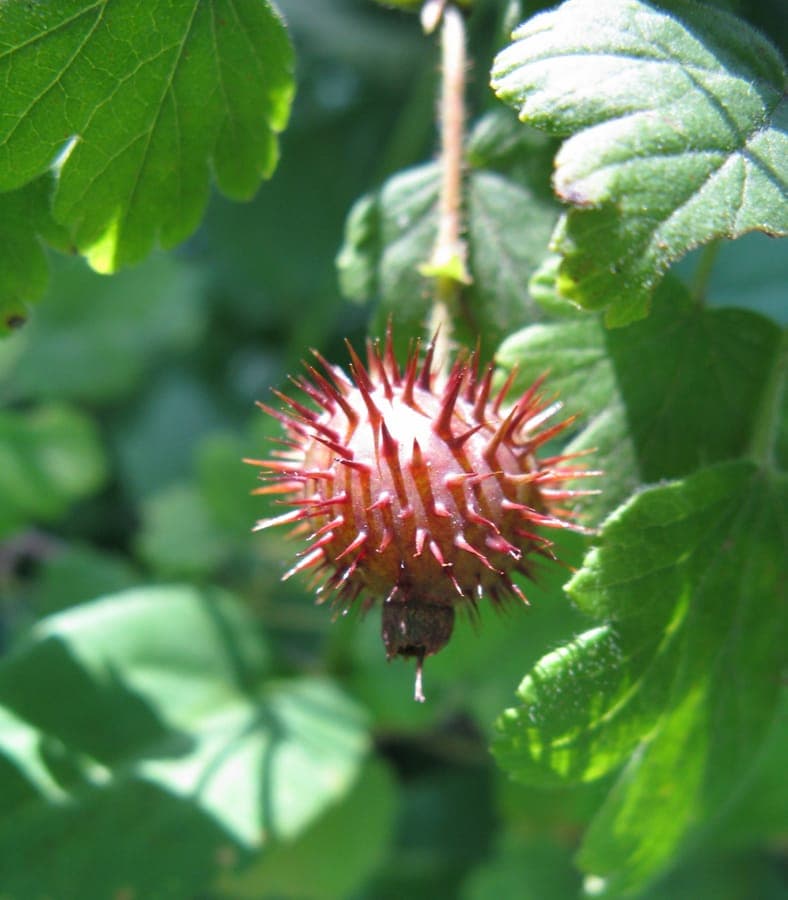
In summer, berries emerge. Initially green and red, they eventually turn purple to black when ripe. The berries are edible, though not always equally sweet.
Ideal location
The American gooseberry thrives best in a spot with full sun to light partial shade. Ensure the plant receives at least 4-6 hours of direct sunlight. In shadier locations, the plant grows slowly and fruits less abundantly.
This plant is exceptionally suitable for bird gardens and naturalistic designs. Avoid placing it directly against walls or other plants due to its spines.
Soil
The American gooseberry is not particularly fussy about soil type. The plant thrives in both sandy and clayey soils, as long as they are well-draining. The ideal pH range is between 5.5 and 7.5.
Ensure a spacious planting hole of approximately 40 centimeters deep and equally wide. Improve the soil with compost or peat if the ground is very poor.
Watering
Once established, the plant is fairly drought-tolerant. During the first growing season, young plants should be watered regularly, especially during dry periods. Water when the soil surface feels dry.
Mature plants require minimal supplementary watering, except in very dry summers. Ensure water does not stagnate around the roots, as this can cause root rot.
Pruning
Pruning the American gooseberry is not necessary, but it can keep the shrub vital. Remove old branches after flowering to maintain shape. This can be done every 3-4 years.
Remove damaged or diseased branches immediately. The spines make pruning work somewhat challenging, so ensure proper protection.
Free design
Want to see American gooseberry: complete guide in your garden? Make a free design now.
Maintenance calendar
February-March: Clean up the shrub, remove dead wood. May-June: Flowering and pollination period. Ensure adequate water. July-September: Fruit formation. Monitor for pests and diseases. October-January: Rest and preparation period.
Winter hardiness
The American gooseberry is highly winter-hardy and can tolerate temperatures down to -30 degrees Celsius. This makes it ideal for northern and central Europe. The plant requires no special winter protection.
Companion plants
The American gooseberry grows well alongside other wild shrubs such as hawthorn or hazel. In a more formal garden, it can be combined with bird-attracting shrubs.
Avoid planting it near fruit orchards, as they may compete for nutrients.
Closing
While the American gooseberry is no showstopper, it forms a valuable addition to any sustainable garden project. Its winter hardiness, easy maintenance, and bird-friendly character make it a worthwhile investment. You can find this plant at garden centers and nurseries.
Consider planting it for a more naturalistic garden style. Despite its modest appearance, it offers much more than fruit alone. Visit gardenworld.app for more information on this and other North American shrubs.
Want to learn more about native plant combinations? See gardenworld.app for ideas and designs that fit your garden.
Nutrition and fertilization
The American gooseberry is not particularly fussy about nutrition. In rich soils, the plant grows excellently without additional fertilization. In poor soils, a single application of compost in early spring can be beneficial.
Avoid nitrogen-rich fertilizers, as this can cause excessive growth at the expense of fruit production. An annual mulch layer of 5-10 centimeters of organic material is sufficient.
Pests and diseases
The American gooseberry is generally very healthy and fairly resistant to many plant and fungal pests. Spider mites can sometimes occur in dry years, but this is usually not serious.
Fungal infections are rare. Good air circulation and avoidance of excessive moisture help prevent problems. Remove affected branches immediately.
Propagation
The American gooseberry can be propagated in several ways. Seeds are a good option, although seedlings can be variable. Sowing in late spring gives the best results.
Cuttings from young wood can also work well. Softwood cuttings in June to July have the best success rates.
Want to see American gooseberry: complete guide in your garden? Make a free design now.
Upload a photo, pick a style, and get a photorealistic design with plant list in under a minute.
No credit card required


Similar plants
Canadian gooseberry: complete guide
Ribes oxyacanthoides
Discover the Canadian gooseberry, an extremely hardy North American fruit shrub with bristly stems and tart berries for jams and orchards.
Ribes bracteosum: complete guide to this Pacific Northwest shrub
Ribes bracteosum
Grow stink currant, a hardy Pacific Northwest shrub with deep-lobed foliage, fragrant blooms, and dark berries attractive to birds.
Ribes acerifolium: complete guide
Ribes acerifolium
Discover Mapleleaf currant - a stunning native shrub with maple-like leaves and interesting berries. Ideal for natural gardens.