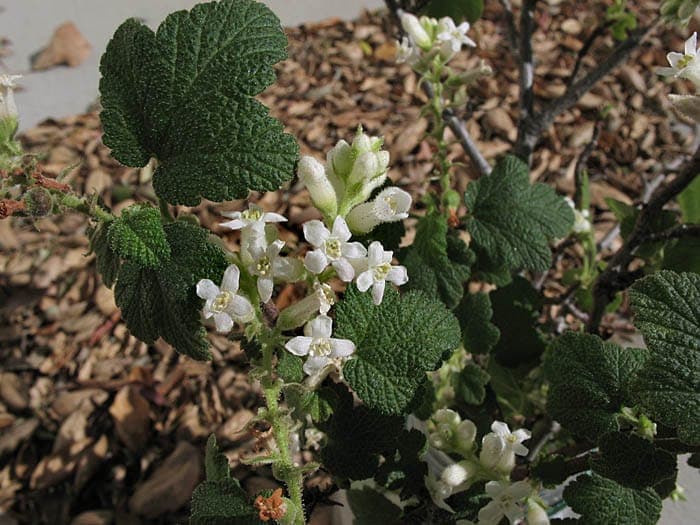
Anthony Valois and the National Park Service / Public domain, via Wikimedia Commons
Ribes indecorum: complete guide
Ribes indecorum
Want to see Ribes indecorum: complete guide in your garden?
Full design in HD: €7.99
Look after your Ribes indecorum with the GardenWorld app
Identify plants with your camera and get a care calendar with reminders for this plant.


Overview
Ribes indecorum, commonly called White-flower currant or Whiteflower currant, is an attractive deciduous shrub native to Southern California and Mexico. Belonging to the Grossulariaceae family, this shrub is distinguished by its delicate white flowers and interesting dark berries that attract birds and pollinators alike.
This Mediterranean shrub is perfectly suited to dry gardens and xeriscape designs where water is a precious resource. White-flower currant thrives in warmer climates and offers extended bloom periods with minimal care.
Appearance and Bloom
Ribes indecorum grows as an open, spreading shrub with grayish young stems. The foliage is small, round and deeply lobed, very characteristic of this species. The most distinctive feature is the numerous white flowers clustered in leaf axils throughout the plant.
Flowers appear in spring and attract bees and other beneficial insects abundantly. Following flowering, dark, delicious-looking berries develop that birds find irresistible. The plant sheds its leaves in winter.
Ideal Location
White-flower currant performs best in full sun to partial shade. In hot climates, light afternoon shade can be beneficial. The plant is extremely drought-tolerant once established and prefers open, sunny positions.
This shrub is ideal for dry slopes, xeriscapes, and Mediterranean gardens where water availability is limited.
Soil
Ribes indecorum is exceptionally tolerant of various soil types, including poor, dry soils. The plant thrives in sandy, gravelly, or clay-rich soils. Drainage is critical, though the plant tolerates drought extremely well.
Minimal feeding required. Simply plant in existing soil without extensive preparation. This drought-tolerant plant fits perfectly into water-conservation plantings.
Free preview
Want to see Ribes indecorum: complete guide in your garden? Make a free preview of your design.
Watering
Once established, Ribes indecorum is extremely drought-tolerant. Water regularly during the first growing season until a deep root system becomes established. Subsequently, minimal watering is needed outside extremely dry periods.
This plant is perfect for regions with limited water availability and can thrive many months without supplemental water.
Pruning
White-flower currant requires minimal pruning. The plant grows in a natural, spreading form that is quite attractive. Remove only dead branches in spring.
Heavy pruning is not needed and can misshape the plant. Allow the plant to develop in its own natural form.
Maintenance Calendar
Simple care schedule: Spring: Water during establishment, minimal pruning Summer: Extremely drought-tolerant, no water needed Fall: Prepare for dormancy Winter: Rest period, no maintenance required
Winter Hardiness
Ribes indecorum is moderately winter-hardy. Suitable for zones with temperatures not below -10 to -12 degrees Celsius. In colder regions of the Netherlands and Belgium, winter protection may be needed or the plant can be grown in containers that can be moved indoors.
Companion Plants
Suitable for combining with:
- Other drought-tolerant shrubs
- Succulent species
- Mediterranean herbs
- Drought-tolerant groundcovers
- Yucca and agave varieties
Closing
Ribes indecorum is an excellent choice for gardeners in warmer climates or for water-conservation gardens. The delicate white flowers and drought-tolerance make it ideal for Mediterranean garden designs. Available through gardenworld.app for expert dry garden design consultation.
Frequently asked questions about Ribes indecorum
Is Ribes indecorum winter hardy?
Ribes indecorum is moderately winter-hardy. Suitable for zones with temperatures not below -10 to -12 degrees Celsius.
When and how do you prune Ribes indecorum?
White-flower currant requires minimal pruning. The plant grows in a natural, spreading form that is quite attractive.
How much water does Ribes indecorum need?
Once established, Ribes indecorum is extremely drought-tolerant. Water regularly during the first growing season until a deep root system becomes established.
Where does Ribes indecorum grow best?
White-flower currant performs best in full sun to partial shade. In hot climates, light afternoon shade can be beneficial.
What soil does Ribes indecorum need?
Ribes indecorum is exceptionally tolerant of various soil types, including poor, dry soils. The plant thrives in sandy, gravelly, or clay-rich soils.

See it in your garden
See Ribes indecorum in your garden
One photo of your garden and a few questions. You see the result in about a minute.
Try it with a photoIdentify this plant in your own garden. Identify a plant
Similar plants
Jostaberry: complete guide to planting, pruning and harvest
Ribes × nidigrolaria
Everything about the jostaberry (Ribes × nidigrolaria), the thornless blackcurrant and gooseberry cross: position, soil, pruning, harvest and care month by month.
Canadian gooseberry: complete guide
Ribes oxyacanthoides
Discover the Canadian gooseberry, an extremely hardy North American fruit shrub with bristly stems and tart berries for jams and orchards.
Ribes bracteosum: complete guide to this Pacific Northwest shrub
Ribes bracteosum
Grow stink currant, a hardy Pacific Northwest shrub with deep-lobed foliage, fragrant blooms, and dark berries attractive to birds.
