
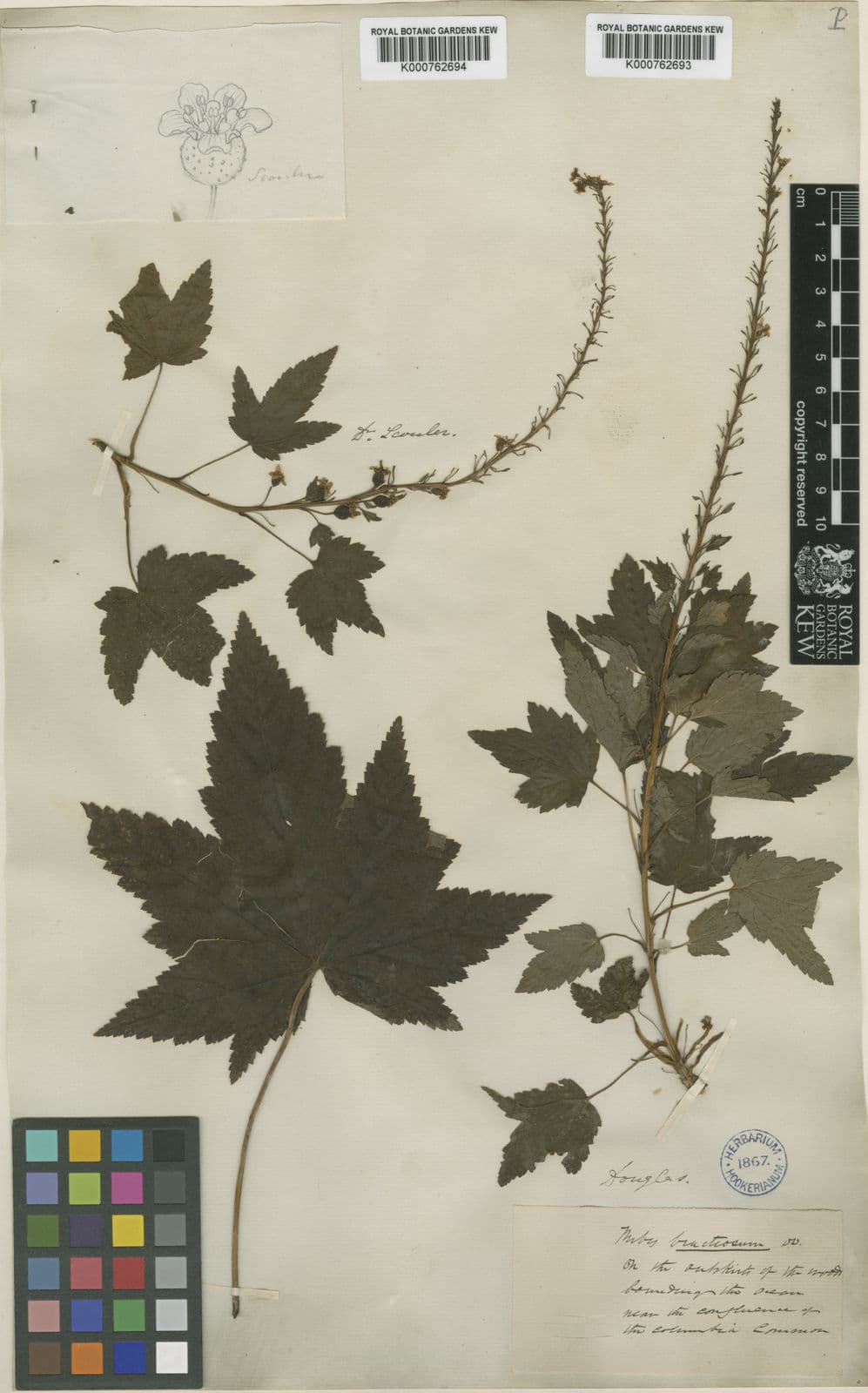
Ribes bracteosum: complete guide to this Pacific Northwest shrub
Ribes bracteosum
Want to see Ribes bracteosum: complete guide to this Pacific Northwest shrub in your garden?
1 minute, no credit card
Overview
Ribes bracteosum, commonly called stink currant, California black currant, or blue currant, is a distinctive shrub native to western North America. The plant grows naturally from southern Alaska to northern California and Oregon. Ribes bracteosum belongs to the Grossulariaceae family, closely related to gooseberries and currants.
This plant offers unique advantages for North American gardens. While many cultivated varieties originate from relatively warm regions, Ribes bracteosum provides exceptional winter hardiness and adaptability to diverse growing conditions.
Appearance and Bloom
Ribes bracteosum is a deciduous to semi-evergreen shrub reaching 2 to 4 meters in height depending on growing conditions. The plant develops an open to dense habit based on nutrition and light levels.
The leaves are large, deeply lobed with five to seven lobes, creating a distinctly coarse texture. This lobed structure gives the plant a robust appearance. Foliage is green during the growing season, transitioning to yellow and red tones in autumn.
Flowers appear in late spring to early summer, arranged in drooping clusters. Flower color ranges from greenish to yellow, relatively inconspicuous. Following pollination, dark berries develop, turning from blue to nearly black at maturity. These berries attract numerous bird species, making this plant particularly valuable for wildlife gardens.
Ideal Location
Ribes bracteosum prefers full sun to light partial shade. The plant tolerates shade better than many related species, useful for woodland edges and underplanting beneath taller trees.
The plant is exceptionally wind-tolerant and is used traditionally as a windbreak in many North American gardens. This makes it ideal for exposed coastal locations and windy sites.
The plant excels as a focal accent in landscape plantings, as part of wildlife gardens, in woodland edge plantings, and mixed with other North American native shrubs.
Soil
Ribes bracteosum is not fussy about soil type and grows well in both sandy and clay soils. The plant tolerates acidic to neutral pH values from about 4.5 to 7.0.
Heavy clay soils should be improved by adding sand and organic matter. Good soil drainage is important, though this species tolerates wetter conditions better than many other Ribes species.
In nutrient-poor soils, the plant grows slowly but steadily. Heavy feeding can encourage lush growth that is more susceptible to disease.
Watering
Once established, Ribes bracteosum is quite drought-tolerant. Regular watering is necessary during the first growing seasons until the root system develops fully.
During dry summer periods, young plants benefit from supplemental watering, especially in continental climates. Mature specimens usually require no additional water except during exceptional droughts.
In very wet seasons, avoid waterlogging by ensuring proper drainage of rainfall and irrigation water. Good site drainage prevents root rot.
Pruning
Ribes bracteosum responds well to pruning and thrives with regular maintenance. After flowering, long straggly shoots can be shortened to encourage bushier growth and better structure.
Each year, remove a few of the oldest stems at ground level to encourage new, vigorous growth. This rejuvenates the shrub and reduces disease pressure.
The plant tolerates hard pruning and will regrow from the base. This enables complete renovation if the plant becomes overgrown.
Maintenance Calendar
Spring (April-May): Prune winter-damaged branches. Add organic matter around the base. Watch for bird activity.
Summer (June-August): Monitor moisture and water as needed. Enjoy blooms. Observe berry formation.
Autumn (September-October): Harvest berries for wildlife and personal use. Add autumn leaf layer mulch. Prepare for winter.
Winter (November-March): Perform pruning on dormant plants. Check structural integrity. Mulch roots in very cold regions.
Free design
Want to see Ribes bracteosum: complete guide to this Pacific Northwest shrub in your garden? Make a free design now.
Winter Hardiness
Ribes bracteosum is extremely hardy, surviving temperatures down to -20 degrees Celsius and lower. In their native habitats in Alaska and mountain regions, they endure much harsher winters without issue.
In the UK, Northern Europe, and similar climates, this plant survives all winters without any protection. The plant tolerates freeze-thaw cycles without damage.
Winter injury occurs only under exceptional circumstances, particularly when severe frosts arrive suddenly without protective snow cover.
Companion Plants
Ribes bracteosum pairs well with other North American shrubs and wildflowers. Consider:
- Other native Ribes species for understory planting
- Sambucus nigra (European elder) for height and wildlife value
- Prunus spinosa (blackthorn) for flowers and berries
- Cornus alba (red-barked dogwood) for winter interest
- Crataegus species (hawthorn) for ecological value
Propagation
Ribes bracteosum propagates most easily from cuttings, the standard method for this shrub. Take hardwood cuttings 20 to 25 centimeters long from one-year-old wood in November or December, remove the lowest buds, and insert two-thirds of their length into a free-draining mix of sand and compost. Store them outdoors in a sheltered spot or in a cold frame; by spring most cuttings will have rooted.
Softwood propagation also works: take semi-ripe cuttings 10 to 15 centimeters long in June or July, treat the base with rooting hormone, and keep them moist under plastic cover until rooting occurs, usually within four to six weeks. Seed propagation is slower and less reliable, requiring twelve to sixteen weeks of cold stratification followed by irregular germination. Unlike cultivated black currants such as Ribes nigrum 'Titania' or 'Ben Sarek', which are propagated vegetatively for guaranteed fruit quality, Ribes bracteosum is usually offered in its wild form through native plant nurseries. For anyone wanting to establish a hedge or windbreak quickly, cuttings sourced through specialist growers, along with propagation guides on gardenworld.app, are the most reliable route.
Pests and Diseases
Like most Ribes species, Ribes bracteosum is susceptible to white pine blister rust (Cronartium ribicola), a fungal disease for which Ribes species serve as the alternate host for five-needle pines. In regions where this rust threatens commercial forestry, planting restrictions on Ribes species may apply; check local regulations before planting in quantity.
Currant aphid (Cryptomyzus ribis) causes characteristic red blisters on leaves in spring; a strong water spray or insecticidal soap usually keeps populations in check. Gooseberry sawfly (Nematus ribesii) larvae can strip leaves bare within days; inspect the undersides of leaves regularly and remove eggs and larvae by hand for light infestations. Powdery mildew can occur in overly dense plantings with poor air circulation; prune promptly to prevent this. Visit gardenworld.app for a detailed guide on recognizing rust diseases in Ribes species and how best to manage them.
Closing Thoughts
Ribes bracteosum offers numerous advantages: native North American origin, winter hardiness, minimal maintenance, and excellent ecological value. For gardeners seeking to make their gardens more wildlife-friendly or to incorporate interesting native shrubs, Ribes bracteosum is a worthwhile investment.
The plant is easily propagated from seed or cuttings. Start with prepared soil and patience. Find young plants at specialized native plant nurseries.
Discover Ribes bracteosum plants and seeds for a more natural, wildlife-friendly garden.
Want to see Ribes bracteosum: complete guide to this Pacific Northwest shrub in your garden? Make a free design now.
Upload a photo, pick a style, and get a photorealistic design with plant list in under a minute.
10,000+ gardens designed already
No credit card required


Similar plants
Canadian gooseberry: complete guide
Ribes oxyacanthoides
Discover the Canadian gooseberry, an extremely hardy North American fruit shrub with bristly stems and tart berries for jams and orchards.
Ribes acerifolium: complete guide
Ribes acerifolium
Discover Mapleleaf currant - a stunning native shrub with maple-like leaves and interesting berries. Ideal for natural gardens.
Ribes indecorum: complete guide
Ribes indecorum
Learn about White-flower currant - a Mediterranean shrub with delicate white blooms and attractive berries. Perfect for dry Mediterranean gardens.