
Adamschneider / CC BY-SA 4.0, via Wikimedia Commons
Ribes acerifolium: complete guide
Ribes acerifolium
Want to see Ribes acerifolium: complete guide in your garden?
1 minute, no credit card
Overview
Ribes acerifolium, commonly known as Mapleleaf currant or Maple-leaved black currant, is an attractive deciduous shrub native to western Canada and the northwestern United States. Belonging to the Grossulariaceae family, this shrub is distinguished by its unique maple-like leaves and interesting dark berries that birds find irresistible.
This shrub grows slowly to moderately and offers many benefits for bird gardens and natural landscapes. The mapleleaf currant provides year-round interest for garden enthusiasts seeking ecological value.
Appearance and Bloom
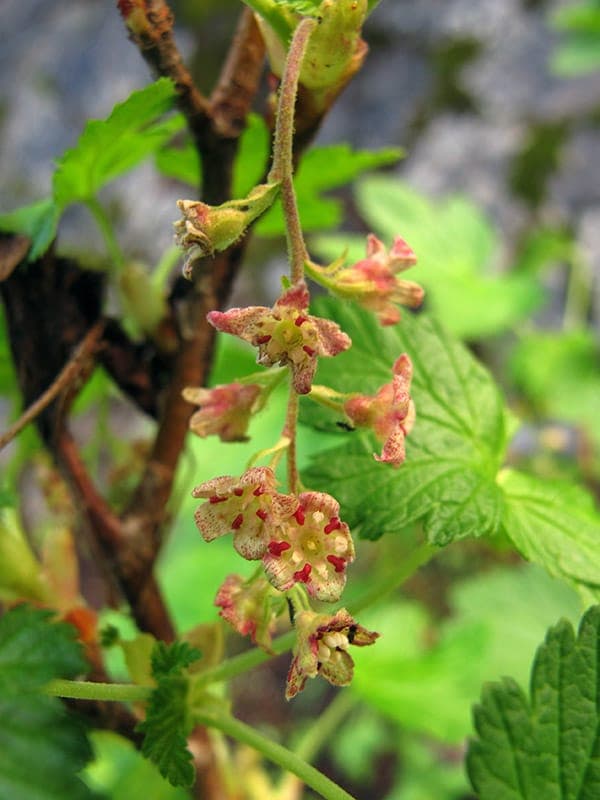
Ribes acerifolium grows as a densely-branched shrub with a compact to moderate form. The most distinctive feature is the foliage with deeply-lobed leaves strongly resembling maple leaves, hence the common name. In spring, small clustered flowers appear in subtle tones.
Following bloom, dark purple to black berries develop that are highly attractive to birds. These berries persist well into fall and winter, adding significant ornamental value to the overall plant display.
Ideal Location
Mapleleaf currant performs best in partial shade to moderate sun. Protect from hot midday sun in warm regions. The plant can also grow in full shade, though flowering and fruiting are better with more sunlight.
Position in sheltered, wind-protected locations. This shrub is suitable for planting beneath larger trees and in mixed borders throughout the garden.
Soil
Ribes acerifolium is quite tolerant of various soil types, though it prefers well-draining soil. The plant thrives in both acidic and neutral soils. Avoid heavy waterlogged situations that cause root stress.
Incorporate organic matter when planting to support establishment. The plant requires no special feeding and grows in most standard garden soils with minimal amendment.
Free design
Want to see Ribes acerifolium: complete guide in your garden? Make a free design now.
Watering
Once established, Ribes acerifolium is quite drought-tolerant. Water regularly during the first growing season to encourage root development. Subsequently, regular watering during dry periods is advisable for optimal growth.
Mulching around the plant base helps retain moisture and supports the slow root development characteristic of this native shrub.
Pruning
Mapleleaf currant requires minimal pruning. Remove only dead or damaged branches in spring. Allow the plant to develop in its natural form, which is most attractive and ecologically valuable.
Be cautious with pruning as this shrub grows slowly and recovers gradually from pruning wounds.
Maintenance Calendar
Seasonal care phases: Spring: Prune dead material, water if dry Summer: Monitor for bird activity and berry production Fall: Prepare for winter dormancy Winter: Minimal maintenance needed, winter protection unnecessary
Winter Hardiness
Ribes acerifolium is extremely cold-hardy being native to cold mountain regions. Temperatures to -20 degrees Celsius present no problem. This plant grows well in all Dutch and Belgian regions.
Companion Plants
Suitable for combining with:
- Other native berry shrubs
- Conifers and evergreens
- Deciduous trees
- Shade-loving shrubs
- Natural understory plantings
Closing
Ribes acerifolium is a bird-friendly native shrub that perfectly fits ecological garden designs. The maple-like foliage and persistent berries make it an attractive addition to any landscape. Available through gardenworld.app for native plant experts and ecological garden design.
Want to see Ribes acerifolium: complete guide in your garden? Make a free design now.
Upload a photo, pick a style, and get a photorealistic design with plant list in under a minute.
No credit card required


Similar plants
Canadian gooseberry: complete guide
Ribes oxyacanthoides
Discover the Canadian gooseberry, an extremely hardy North American fruit shrub with bristly stems and tart berries for jams and orchards.
Ribes bracteosum: complete guide to this Pacific Northwest shrub
Ribes bracteosum
Grow stink currant, a hardy Pacific Northwest shrub with deep-lobed foliage, fragrant blooms, and dark berries attractive to birds.
Ribes indecorum: complete guide
Ribes indecorum
Learn about White-flower currant - a Mediterranean shrub with delicate white blooms and attractive berries. Perfect for dry Mediterranean gardens.