
Wikimedia Commons / CC BY-SA 3.0, via Wikimedia Commons
Ribes malvaceum: complete guide
Ribes malvaceum
Want to see Ribes malvaceum: complete guide in your garden?
1 minute, no credit card
Overview
Ribes malvaceum, commonly called Chaparral currant, is a beautiful deciduous shrub native to California and Mexico. Belonging to the Grossulariaceae family, this shrub is distinguished by its pink flowers and attractive dark purple berries.
This shrub is perfectly adapted to warm, dry climates and thrives in Mediterranean and chaparral-themed designs. Chaparral currant provides year-round interest with its structural form and seasonal blooms.
Appearance and Bloom
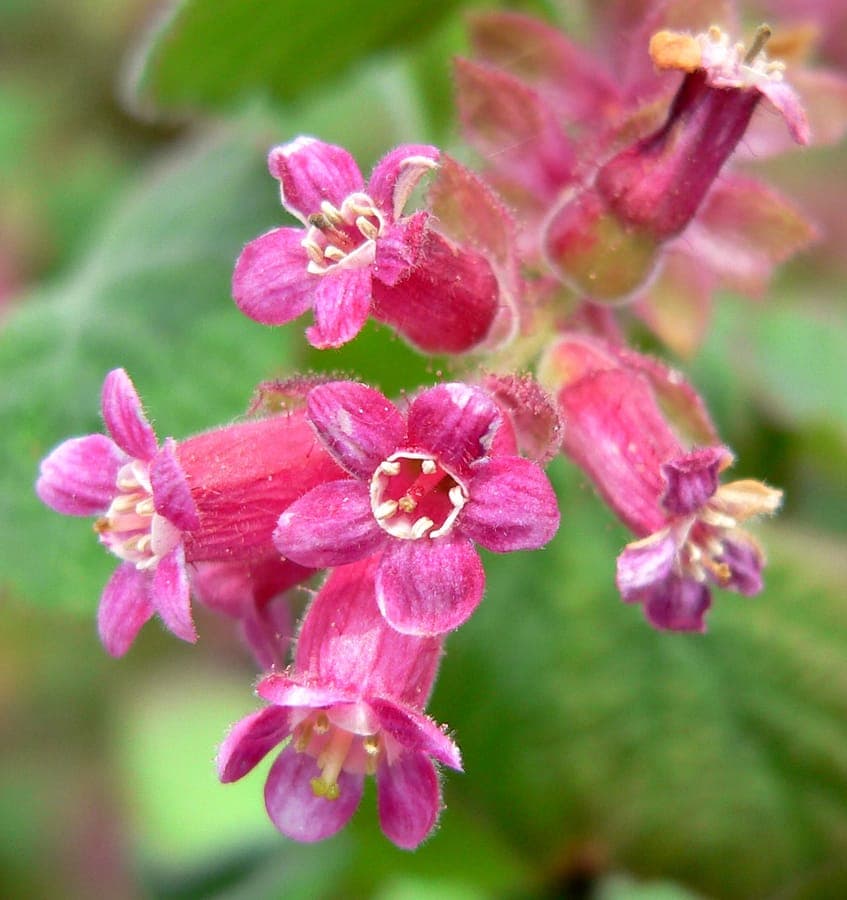
Ribes malvaceum grows as an open, spreading shrub with dark gray young stems. The foliage is round to kidney-shaped, usually smooth or lightly hairy, giving the plant its characteristic texture. The most striking feature is the densely-packed clusters of pink to red flowers.
Flowers appear in early spring (January-March) and attract bees abundantly. Following bloom, dark purple to black berries develop that birds find irresistible and persist well into late season.
Ideal Location
Charparral currant performs best in full sun. The plant loves open, sunny positions with good air circulation. Protect from strong winds in very exposed areas.
This shrub is ideal for dry slopes, rocky outcrops, and xeriscapes where water is scarce. Plant in groups for maximum visual impact.
Soil
Ribes malvaceum is exceptionally tolerant of various soil types. Thrives in sandy, gravelly, clay, or rocky soils. Good drainage is essential, though the plant can grow in poor, dry soils.
Minimal feeding required. Plant in existing soil without extensive preparation. This plant fits perfectly into water-conservation gardens.
Free design
Want to see Ribes malvaceum: complete guide in your garden? Make a free design now.
Watering
Once established, Ribes malvaceum is extremely drought-tolerant. Water regularly during the first growing season until a strong root system becomes established (approximately 1-2 years). Subsequently, minimal watering is needed.
This plant can endure long periods without supplemental water and is ideal for regions with limited water availability.
Pruning
Charparral currant requires very minimal pruning. The plant grows in a natural, open form that is attractive. Remove only dead branches in spring after blooming ends.
Heavy pruning is not needed and can disturb the natural form. Allow this plant to develop in its natural shape.
Maintenance Calendar
Minimal care required Winter-Spring: Blooming period, minimal pruning, no watering needed Summer: Extremely drought-tolerant, no maintenance Fall: Prepare for dormancy period
Winter Hardiness
Ribes malvaceum is moderately winter-hardy. Suitable for zones with temperatures not below -8 to -10 degrees Celsius. In colder parts of the Netherlands and Belgium, it grows better in protected microclimates or in containers.
Companion Plants
Suitable for combining with:
- California wildflowers
- Drought-tolerant shrubs
- Succulent species
- Mediterranean herbs
- Yucca and agave varieties
- Sandy soil plants
Closing
Ribes malvaceum is an excellent addition to warm, dry gardens. The early pink blooms and drought-tolerance make it perfect for Mediterranean and chaparral-themed designs. Available through gardenworld.app for xeriscape and warm-climate garden design.
Want to see Ribes malvaceum: complete guide in your garden? Make a free design now.
Upload a photo, pick a style, and get a photorealistic design with plant list in under a minute.
No credit card required


Similar plants
Canadian gooseberry: complete guide
Ribes oxyacanthoides
Discover the Canadian gooseberry, an extremely hardy North American fruit shrub with bristly stems and tart berries for jams and orchards.
Ribes bracteosum: complete guide to this Pacific Northwest shrub
Ribes bracteosum
Grow stink currant, a hardy Pacific Northwest shrub with deep-lobed foliage, fragrant blooms, and dark berries attractive to birds.
Ribes acerifolium: complete guide
Ribes acerifolium
Discover Mapleleaf currant - a stunning native shrub with maple-like leaves and interesting berries. Ideal for natural gardens.