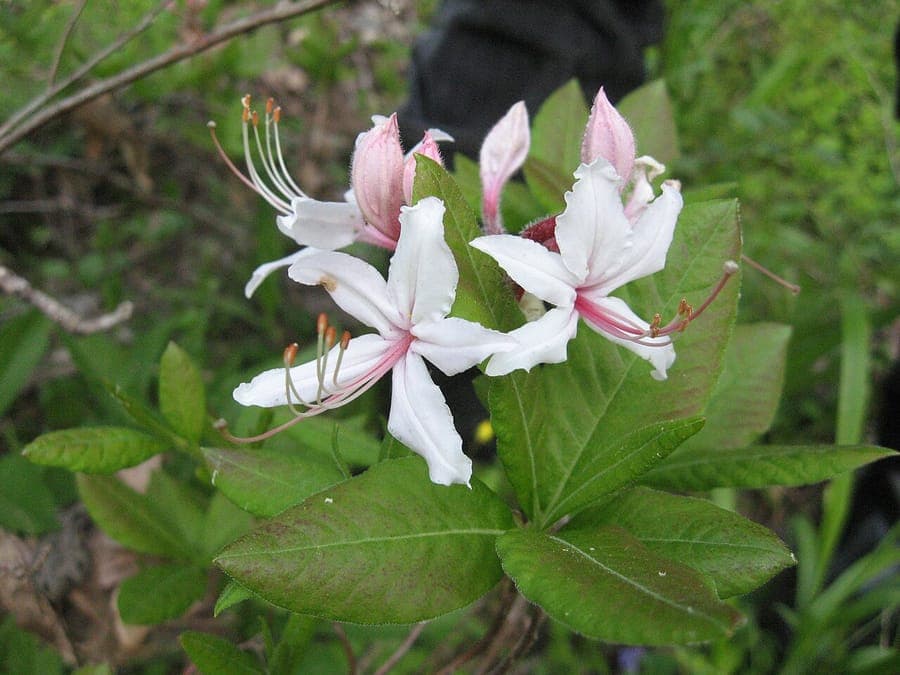
Mason Brock (Masebrock) / Public domain, via Wikimedia Commons
Rhododendron periclymenoides: complete guide
Rhododendron periclymenoides
Want to see Rhododendron periclymenoides: complete guide in your garden?
Full design in HD: €7.99
Look after your Rhododendron periclymenoides with the GardenWorld app
Identify plants with your camera and get a care calendar with reminders for this plant.


Overview
Rhododendron periclymenoides, commonly called Pinxterbloom Azalea or Pinxter-flower, is a vibrant deciduous shrub from the Ericaceae family. Native to the eastern United States from Connecticut to Tennessee and westward to Illinois, this plant provides striking color accents to contemporary gardens. With its vivid rose-red flowers appearing May through June, it delivers intense color and visual impact.
The plant's name derives from its coinciding bloom with American elections in May and its honeysuckle-like fragrance. It remains popular among European and North American gardeners for its brilliantly colored flowers and elegant form.
Appearance and Bloom
Pinxterbloom Azalea develops into a deciduous shrub with an open, elegantly branched structure. During the growing season, it displays narrow, lanceolate green foliage. In autumn, leaves transform red-purple before dropping, providing attractive fall interest.
The flowering display is spectacular: from May through June, clusters of trumpet-shaped rose-red to fuchsia flowers emerge. Flower color varies from pale rose to deep fuchsia depending on specific cultivars. Each flower reaches 3-5 centimeters across and offers subtle sweet fragrance, particularly strong in evening. Flowers enthusiastically attract pollinators.
After flowering, small seed capsules develop, ripening by late summer. Seed production is limited as plants invest energy in copious flowering.
Ideal Location
Pinxterbloom Azalea performs best in dappled to lightly shaded positions. Minimum 3-4 hours direct sunlight daily is optimal. In extremely hot climates, afternoon shade protection is essential.
This shrub excels in modern dappled-shade gardens, woodland edges, mixed shrub plantings, and informal landscape designs. Its elegant branching form works beautifully as a specimen plant. Ensure adequate air circulation.
Soil
Rhododendron periclymenoides specifically demands acidic, humus-rich soil. This is essential for healthy growth. Optimal conditions exist in pH 4.3-5.5 range. In neutral to alkaline soils, growth deteriorates and foliage yellows.
The species prefers well-draining acidic soil mixture. Use garden loam mixed with peat moss or rhododendron compost. In regions with naturally alkaline soils, construct raised beds using acidic soil mixes.
Free preview
Want to see Rhododendron periclymenoides: complete guide in your garden? Make a free preview of your design.
Watering
Pinxterbloom Azalea appreciates moist, well-drained soil. This crucial balance requires abundant moisture without waterlogging. Water regularly throughout growing and flowering seasons.
Provide supplemental irrigation during dry weeks. The species accepts higher precipitation but requires excellent drainage. In winter, provide moderate watering; avoid complete desiccation. Mulch around the base aids moisture retention.
Pruning
Light pruning after flowering (June-July) promotes shape maintenance. Remove spent flower clusters and prune overextended branches back to suitable buds. This stimulates bushier growth and encourages abundant next-year flowering.
Extensive pruning is not recommended. Remove only dead or damaged wood in spring.
Maintenance Calendar
Winter (November-February): Dormant period. Minimal watering. Check for winter damage. Spring (March-May): Active growth commences. Regular watering begins. Vivid flowering appears. Summer (June-August): Prune after flowering. Regular watering continues. Fall (September-October): Foliage color transformation. Gradually reduce watering. Winter rest preparation.
Winter Hardiness
Pinxterbloom Azalea is winter-hardy to approximately -15 to -20 degrees Celsius, making it suitable for most UK and northern European gardens. The species tolerates frost provided drainage is excellent.
In extremely wet winters, protection of young plants may prove beneficial. Generally, it exhibits good winter hardiness once established.
Companion Plants
Combine Pinxterbloom Azalea with complementary acid-soil species:
- Other Rhododendron species, for color variation
- Maianthemum, for understory texture
- Sarcococca, for winter fragrance
- Hedera (ivy), for green textural contrast
- Oxalis, for spring interest
Closing
Rhododendron periclymenoides is a vibrant dappled-shade shrub offering vivid rose-red blooms in May and June. Perfect for contemporary gardens seeking spectacular color. With proper acidic soil preparation and moderate pruning, expect years of brilliantly colored splendor.
Available from specialty rhododendron nurseries and garden centers.
Want more colorful dappled-shade garden inspiration? Visit gardenworld.app/en for shade garden expertise. Also check gardenworld.app/nl for Dutch language guidance.
Frequently asked questions about Rhododendron periclymenoides
Is Rhododendron periclymenoides winter hardy?
Pinxterbloom Azalea is winter-hardy to approximately -15 to -20 degrees Celsius, making it suitable for most UK and northern European gardens. The species tolerates frost provided drainage is excellent.
When and how do you prune Rhododendron periclymenoides?
Light pruning after flowering (June-July) promotes shape maintenance. Remove spent flower clusters and prune overextended branches back to suitable buds.
How much water does Rhododendron periclymenoides need?
Pinxterbloom Azalea appreciates moist, well-drained soil. This crucial balance requires abundant moisture without waterlogging.
Where does Rhododendron periclymenoides grow best?
Pinxterbloom Azalea performs best in dappled to lightly shaded positions. Minimum 3-4 hours direct sunlight daily is optimal.
What soil does Rhododendron periclymenoides need?
Rhododendron periclymenoides specifically demands acidic, humus-rich soil. This is essential for healthy growth.

See it in your garden
See Rhododendron periclymenoides in your garden
One photo of your garden and a few questions. You see the result in about a minute.
Try it with a photoIdentify this plant in your own garden. Identify a plant
Similar plants
Redvein enkianthus (Enkianthus campanulatus): complete guide
Enkianthus campanulatus
Redvein enkianthus (Enkianthus campanulatus): shrub for acid soil with hanging cream bells in May and fiery autumn colour. Site, soil, pruning, hardiness and companions.
Darley Dale Heath: complete guide
Erica × darleyensis
Everything about Darley Dale heath (Erica × darleyensis): planting, position, soil, pruning and care. Months of winter flowers in pots and borders.
Prickly heath (Gaultheria mucronata): growing guide
Gaultheria mucronata
Prickly heath (Gaultheria mucronata, formerly Pernettya) carries white, pink or red berries from autumn to spring. Dioecious and toxic: how to grow it well.
