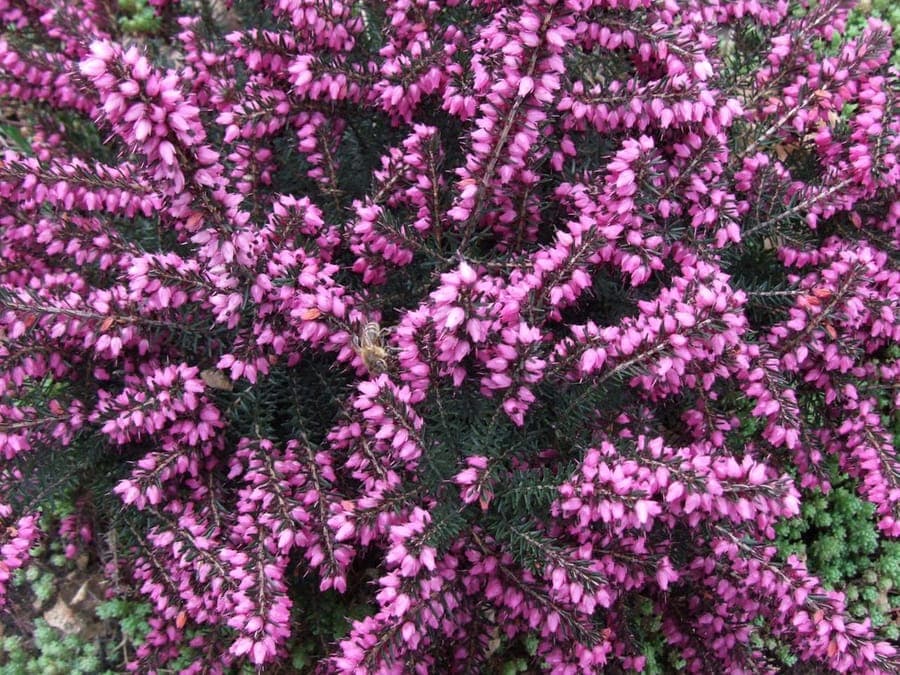
Jerzy Opioła / CC BY-SA 4.0, via Wikimedia Commons
Darley Dale Heath: complete guide
Erica × darleyensis
Want to see Darley Dale Heath: complete guide in your garden?
Full design in HD: €7.99
Look after your Darley Dale Heath with the GardenWorld app
Identify plants with your camera and get a care calendar with reminders for this plant.


Overview
Darley Dale heath (Erica × darleyensis) is the plant that brings colour to the garden when almost everything else has stopped. From late autumn well into spring, this low evergreen shrub is smothered in pink, purple or white bells. That is why garden centres fill up with it every autumn, ready for containers, balconies, rock gardens and borders. It is tough, needs little attention and is one of the first food sources of the year for bees and bumblebees.
Erica × darleyensis is a cross between two European heaths: Erica carnea, the winter heath of the Alps, and Erica erigena, which grows wild in Ireland and on the Iberian Peninsula. The hybrid arose spontaneously in the late nineteenth century at a nursery in Darley Dale, Derbyshire, which gave it its name. It belongs to the heather family (Ericaceae), alongside ling, rhododendrons and blueberries.
It inherited the best of both parents: the hardiness and long flowering season of Erica carnea and the larger, more vigorous growth of Erica erigena. Unlike most heaths, it also copes with soil that is not markedly acidic. Well-known cultivars include 'Kramer's Rote' (magenta, with bronze winter foliage), 'Darley Dale' (soft pink), 'Furzey' (deep pink), 'White Perfection' (pure white with bright green leaves) and 'Silberschmelze', also sold as 'Molten Silver' (white and noticeably scented).
Appearance and flowering season
Darley Dale heath forms a dense, rounded hummock 30 to 60 cm tall and 60 to 90 cm wide. The upright to slightly arching stems carry narrow, needle-like leaves 5 to 10 mm long. The foliage is dark green, and some varieties produce cream or yellowish shoot tips in spring.
Depending on variety and weather, flowering starts between November and January and carries on until April or even May. The bell-shaped flowers are 5 to 7 mm long and packed into long, dense spikes towards the tips of the stems. The dark anthers peeping out of each bell are a distinctive detail. Colours range from white through soft pink to deep magenta. The buds are already visible in autumn, so the plant gives colour even before it truly opens.
On mild winter days you will see bees and bumblebees working the flowers, just as in the photo. At a time when hardly anything else is in bloom, it is a valuable source of nectar and pollen.
Ideal position
Give it full sun. That is where it flowers most generously and stays compact. Partial shade is acceptable, but the plant becomes more open and the display less lavish. In deep shade under trees it gradually declines.
It stands up well to wind, making it a good choice for open front gardens, banks and roof terraces. For a solid carpet, plant 30 to 40 cm apart, which works out at six to eight plants per square metre. In containers and window boxes you can plant more closely, especially for a seasonal display.
Soil requirements
Most heaths insist on acid soil, but Erica × darleyensis is more forgiving. A slightly acid to neutral soil with a pH of roughly 5 to 7 is ideal, and it will tolerate mildly chalky ground too. On very alkaline soils the leaves may turn yellow.
More important than pH is a well-drained, humus-rich soil. On heavy clay, work grit and some leaf mould or compost into the top layer. It dislikes sitting wet in winter, when the roots can rot. In pots and troughs, use an ericaceous compost or a multipurpose compost mixed with a little grit. A mulch of bark or pine needles keeps the soil moist and the weeds down.
Free preview
Want to see Darley Dale Heath: complete guide in your garden? Make a free preview of your design.
Watering
Regular watering after planting is essential. Heaths have fine, shallow roots that dry out quickly. Keep the soil lightly moist during the first year and water thoroughly once a week in dry spells.
Once established in open ground, it usually fends for itself except during long, dry summers. Watch for dry, brown shoots: they are often a sign that the plant went thirsty for too long. In containers, watering remains necessary, even in winter. Wind and sun dry out the root ball, and when the compost is frozen the plant cannot take up water. Water on mild days when the compost feels dry, but never leave water standing in the saucer. Rainwater is best.
Pruning
Prune every year straight after flowering, in April or May. Use shears to remove the faded flower spikes, cutting just below the lowest dead flowers. This keeps the plant compact, encourages branching and leads to more flower buds for next season.
Never cut deep into old, bare wood. Heaths regrow poorly or not at all from there, leaving bald patches in the hummock. A plant that has gone unpruned for years and fallen open is better replaced than rejuvenated. After pruning, you can give a light feed with an ericaceous fertiliser.
Care calendar
January to February: Peak flowering. Enjoy it and leave the plant alone. Water containers on mild days.
March: Flowering continues. Weed between the plants and top up the mulch.
April to May: Prune immediately after flowering, then give a small dose of ericaceous fertiliser.
June to August: Growing season. Water young plants and containers in dry weather. Keep the soil covered with mulch.
September to October: The best time to plant. The soil is still warm, so roots can establish before winter. Fill containers and window boxes with fresh plants. The plant calendar at gardenworld.app shows you month by month what needs doing in the garden, heathers included.
November to December: The first flowers open. Check moisture levels in pots.
Hardiness
Erica × darleyensis is fully hardy and copes with frosts down to about -20 °C. The flowers are frost resistant too: after a cold night they may look a little dull, but they recover once the weather turns milder. Plants in open ground need no protection in Britain or the Low Countries.
Containers are another matter. The roots are less sheltered, and a root ball frozen solid can cause the plant to dry out. During hard frosts, move pots against a wall, stand them on wood or polystyrene, or wrap them in hessian or bubble wrap. The greatest winter threat, though, is not cold but permanently wet soil.
Companion plants
Darley Dale heath combines beautifully with other plants that earn their keep in the cold months. In containers the classic partners are Skimmia japonica, with its red buds or berries, and checkerberry (Gaultheria procumbens), with glossy red berries. The Christmas rose (Helleborus niger) adds white flowers at the same time.
In a rock or heather garden, dwarf mountain pine (Pinus mugo) makes a compact evergreen backdrop. Ling (Calluna vulgaris) flowers in late summer and autumn, handing over seamlessly to the winter heath: grow both and you have heather in bloom for most of the year. Ornamental grasses, dwarf conifers and spring bulbs such as crocuses fit in well too.
Would you like a garden that keeps its colour in winter? At gardenworld.app you can have a garden design made in which winter heath takes its place among other winter-flowering and evergreen plants.
Final thoughts
Darley Dale heath is one of the most rewarding plants for the cold months. With a sunny spot, well-drained soil and a single trim a year, Erica × darleyensis flowers for months on end, from the first frosts until spring. The bees will thank you, and you will have colour in the garden when you need it most.
Frequently asked questions about Darley Dale Heath
Is Darley Dale Heath winter hardy?
Erica × darleyensis is fully hardy and copes with frosts down to about -20 °C. The flowers are frost resistant too: after a cold night they may look a little dull, but they recover once the weather turns milder.
When and how do you prune Darley Dale Heath?
Prune every year straight after flowering, in April or May. Use shears to remove the faded flower spikes, cutting just below the lowest dead flowers.
How much water does Darley Dale Heath need?
Regular watering after planting is essential. Heaths have fine, shallow roots that dry out quickly.
What soil does Darley Dale Heath need?
Most heaths insist on acid soil, but Erica × darleyensis is more forgiving. A slightly acid to neutral soil with a pH of roughly 5 to 7 is ideal, and it will tolerate mildly chalky ground too.

See it in your garden
See Darley Dale Heath in your garden
One photo of your garden and a few questions. You see the result in about a minute.
Try it with a photoIdentify this plant in your own garden. Identify a plant
Similar plants
Heather: complete guide
Calluna vulgaris
Discover how to grow and care for Calluna vulgaris: ideal soil, pruning tips, companion plants and winter care. Perfect for UK and US gardens.
Skimmia japonica: complete guide
Skimmia japonica
Evergreen shrub with red berries and fragrant leaves that remain visible long. Winter hardy to -10C, perfect for shade.
Gaultheria procumbens: complete guide
Gaultheria procumbens L.
Wintergreen is an elegant low shrub with white flowers and glossy bright red berries. Perfect for shaded corners and beautiful woodland gardens today.
