
Aqwis (Aqwis) / CC BY-SA 3.0, via Wikimedia Commons
Heather: complete guide
Calluna vulgaris
Want to see Heather: complete guide in your garden?
1 minute, no credit card
Overview
Calluna vulgaris, commonly known as heather, is a staple in cottage gardens, rockeries, and low-maintenance landscapes. Native to parts of Europe but thriving far beyond, this evergreen dwarf shrub brings year-round structure and a long blooming season. Unlike Erica, which blooms in winter and spring, Calluna flowers in late summer to autumn, adding vibrant colour when many other plants are winding down.
Heather is hardy, resilient, and perfect for gardeners who want beauty without constant upkeep. It typically reaches 20–40 cm in height, making it ideal for front borders, ground cover, or container planting. Whether you're designing a naturalistic garden or a formal bed, heather fits right in. On gardenworld.app, you can create a custom planting plan that integrates heather seamlessly with other acid-loving plants and complementary textures.
Appearance & bloom cycle
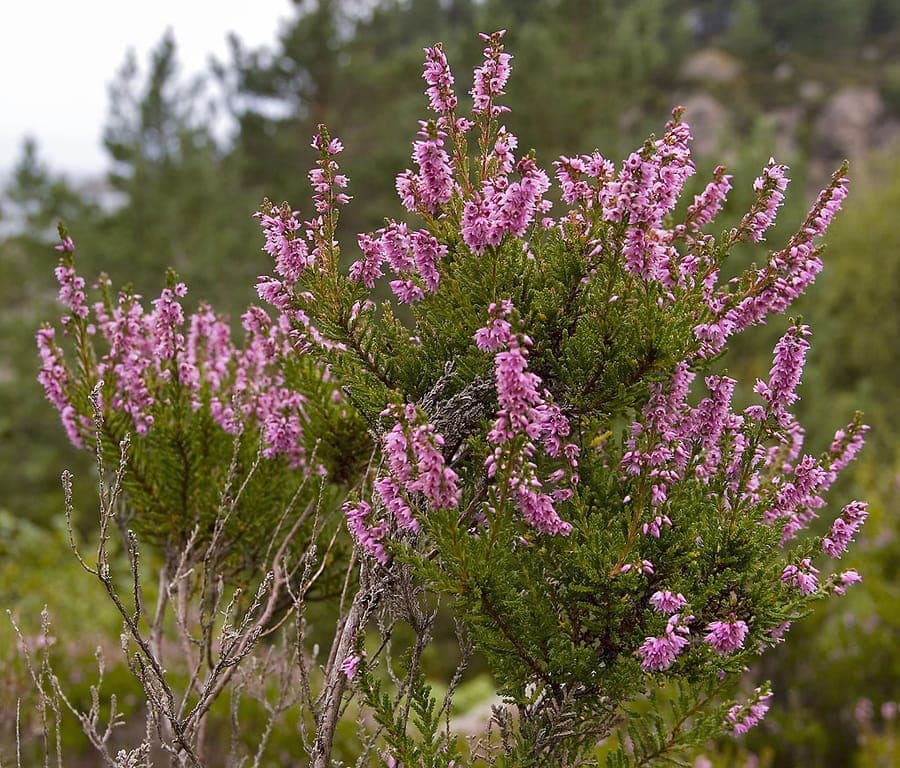
Heather features tiny, scale-like leaves that grow tightly along the stems in four vertical rows. These leaves range from deep green to bronze or even silvery, depending on the cultivar. From late July through November, depending on variety, dense spikes of small bell-shaped flowers appear in shades of pink, purple, white, or crimson.
The flowering period peaks in August and September, with some newer cultivars like 'Winter Beauty' or 'Silver Cloud' extending bloom time into early winter. The flowers persist well, and even after petal drop, the seed capsules remain, adding winter interest. New growth in spring often emerges in bright copper or gold, creating a multi-season display.
Ideal location
Heather thrives in full sun to light shade. Aim for at least 5–6 hours of direct sunlight daily. Too much shade results in leggy growth and fewer blooms. In hotter climates (USDA zones 7+), afternoon shade can prevent foliage scorch, especially in container-grown plants.
Good air circulation is crucial. Avoid planting heather in tight, humid corners where fungal diseases like grey mould can take hold. Elevated spots, slopes, or raised beds work best. If you're designing a mixed border, use gardenworld.app to visualise how heather will sit alongside taller shrubs and perennials, ensuring proper spacing and light access.
Soil requirements
Calluna vulgaris needs acidic soil with a pH between 4.5 and 6.0. It prefers sandy, well-drained soil rich in organic matter. Heavy clay or waterlogged ground spells trouble-root rot is a common killer. When planting in heavy soil, amend the hole with ericaceous compost or pine bark fines.
Avoid liming the soil around heather. Mulch annually with pine needles, leaf mould, or peat-free ericaceous mulch to maintain acidity and moisture levels. Keep mulch away from the crown to prevent rot.
Watering
Water newly planted heather regularly during its first growing season-about once a week if there's no rain. Once established, it's moderately drought-tolerant but performs best with consistent moisture. Avoid overhead watering; wet foliage encourages fungal issues. Instead, water at the base.
Potted heather dries out faster and needs more frequent watering, especially in summer. Check containers every few days. In winter, water only during prolonged dry spells with above-freezing temperatures.
Free design
Want to see Heather: complete guide in your garden? Make a free design now.
Pruning
Pruning is essential for keeping heather dense and blooming well. Do this annually in early spring, just as new growth begins to show. Cut back the previous season's flowering stems to just above the fresh green buds. Never cut into old, bare wood-Calluna won't regenerate from it.
Use sharp, clean secateurs to avoid tearing stems. Remove any dead or weak shoots. Regular trimming prevents the plant from becoming woody and sparse in the centre. If you miss a year, don't panic-just prune lightly and avoid over-cutting.
Maintenance calendar
- January: Check for winter damage. Shield container plants from harsh winds.
- February: Inspect plants. Prepare tools for pruning.
- March: Prune all Calluna varieties. Remove dead wood.
- April: Apply a light dressing of ericaceous fertiliser (NPK 5-10-10). Refresh mulch.
- May: Monitor for aphids or spider mites. Water during dry spells.
- June: No pruning-flower buds are forming.
- July: Watch for drought stress. Keep soil moist.
- August: Blooms begin. Avoid fertilising now.
- September: Peak bloom. Enjoy the display.
- October: Cut back any errant growth if needed-but no heavy pruning.
- November: Blooms fade. Leave seed heads for winter texture.
- December: Protect potted plants. Check for frost heave.
Winter hardiness
Heather is reliably hardy in USDA zones 5 to 8 (–20°C to –12°C). It stays evergreen and provides structure even in snow. In exposed or windy areas, foliage may bronze or scorch slightly, but it usually recovers in spring. Container-grown plants are more vulnerable-wrap pots in hessian or move to a sheltered spot.
Avoid de-icing salts near heather; they raise soil pH and damage roots. If growing near paths, use sand instead of salt in winter.
Companion plants
Heather pairs beautifully with other acid-lovers: dwarf rhododendrons, azaleas, and blueberries. Combine with ornamental grasses like Carex or Festuca for texture contrast. Lavender, catmint, and yarrow work well in sunnier spots. For year-round interest, plant alongside conifers like dwarf juniper or Chamaecyparis.
Space plants 30–40 cm apart to allow airflow. Avoid overcrowding, which leads to poor growth and disease. Use drifts of heather in rock gardens or as a low hedge. On gardenworld.app, you can simulate different companion planting schemes and see how they evolve over seasons.
Closing
Calluna vulgaris is a tough, beautiful, and versatile shrub that earns its place in any garden. With full sun, acidic soil, and a quick annual trim, it rewards you with months of colour and structure. It's perfect for borders, slopes, containers, or naturalised areas. Buy heather from trusted garden centres like those found across the UK, where it's widely available in spring and autumn. Plan your layout on gardenworld.app and make the most of this resilient, low-growing gem.
Want to see Heather: complete guide in your garden? Make a free design now.
Upload a photo, pick a style, and get a photorealistic design with plant list in under a minute.
No credit card required


Similar plants
Zenobia pulverulenta: complete guide
Zenobia pulverulenta
Everything about Zenobia pulverulenta (honeycup): siting, acid soil, pruning and the fragrant white bells, in this complete care guide.
Dwarf huckleberry: complete guide
Gaylussacia dumosa
Everything about dwarf huckleberry (Gaylussacia dumosa): acidic soil, partial shade, pruning and care for this compact North American berry shrub.
Drooping leucothoe: complete guide
Leucothoe fontanesiana
Everything about drooping leucothoe (Leucothoe fontanesiana): shade tolerance, soil, watering, pruning, hardiness and companion plants.